

Guest appearance
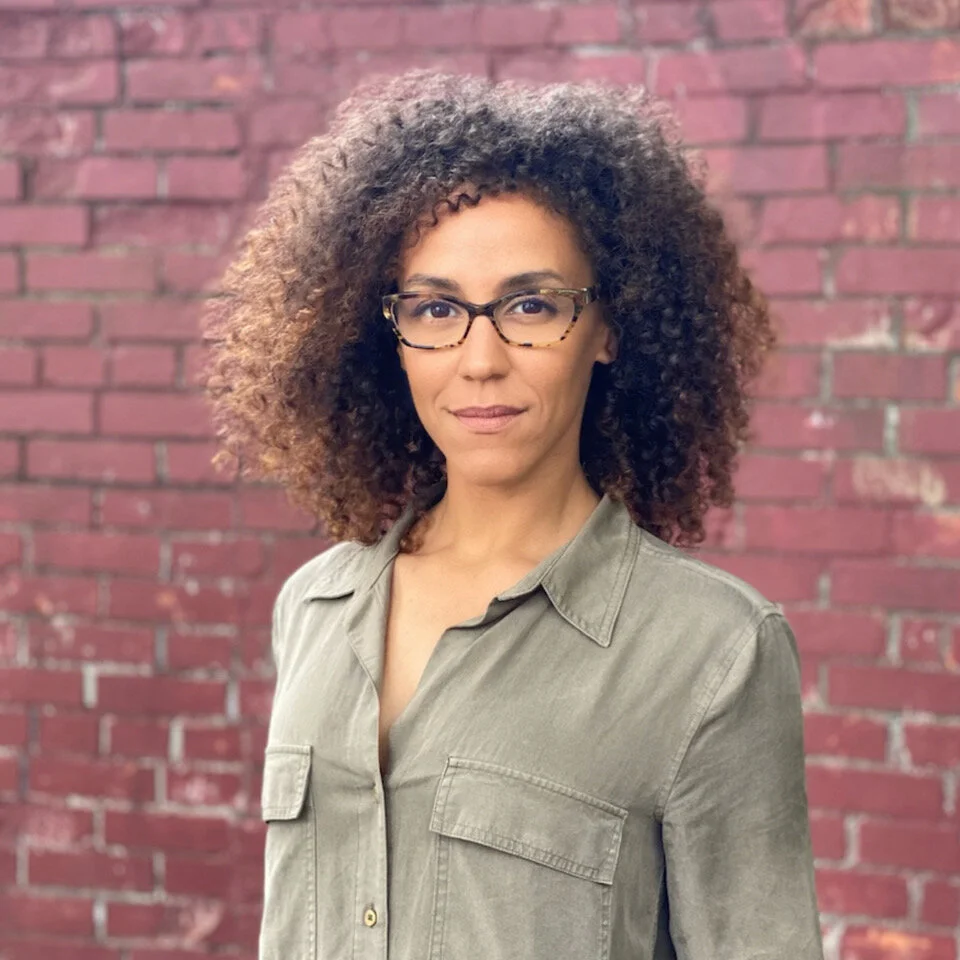
Gabrielle Martin is an executive arts and culture leader with over 20 years of experience guiding organizations through transformation.
Footnotes
Episode transcript
Gabrielle Martin 00:00
It's about this me as a person. Understanding the tension between will and agency and trying to figure that out, you know? And I think like there's this liberal ideology that you can put your mind to something and change the world around you. And I am very attracted to that, but there's also the, you know, the narratives, the tragedy narratives that like we fundamentally, like the Greek tragedies, like we can't, we can try but the gods have a different plan for us. And I think that I see the world around me and there's so much, so many, so many realities that we feel powerless in the face of, tragedies we feel powerless in the face of and like trying to make sense of the world, this world where there's so much suffering and so much injustice. And now a lot of the themes of my work as a choreographer, it's playing with like examining that tension between will and agency.
Mo Dhaliwal 01:16
The lights dim in a theatre, and for a moment, hundreds, maybe thousands of strangers breathe as one. They share in the same emotion, they revel in the same story. And this collective feeling might be one of the last truly communal experiences left in our fragmented world.While traditional arts institutions saw their subscription models collapse by almost 40% post-pandemic, it was festivals that were programming the culturally urgent pieces featuring bacteria as performers, or this theatrical explorations of neurodiversity, or contemporary dance dissecting systemic oppression. These were the things that were drawing unprecedented engagement. So the old model of the lone visionary artistic director is crumbling. And in its place is shared leadership teams, community-informed programming, and what one curator calls holding space for dissent. And this shift from presenting shows to curating with care represents more than just a semantic evolution. When a festival stages salt dunes alongside dancers' microbiomes, or asks how artificial intelligence might treat humans by examining our treatment of neurodivergent people, it's not just programming, it's secular ritual for processing our collective anxieties. And leading this transformation at Vancouver's Push International Performing Arts Festival is someone who's performed 1,400 shows with Cirque du Soleil, studied circus dramaturgy in France, and now leads a beloved cultural institution. Gabriel Martin is an executive arts and cultural leader with over 20 years of experience, guiding organizations through transformation. As co-lead and artistic director of the Push International Performing Arts Festival, Gabriel is shaping its artistic, strategic, and financial direction. In 2025, she received Canada Council's John Hobday Award in Arts Management, recognizing her exceptional leadership trajectory. With deep cross-sector expertise, Gabriel is creating purposeful experiences that foster connection, belonging, and imagination through live performance, one of society's vital and few ritual spaces for renewal. Gabriel, thanks for joining us.
Gabrielle Martin 03:49
Yeah, my pleasure. Hi.
Mo Dhaliwal 03:51
Um, so this episode is going to come out later, but you're right now, a week and a half out from the launch of the 2026 edition of this festival and it's 21st year.Um, are you doing what you intended to do in life? Did you always know that this would be it?
Gabrielle Martin 04:15
it does seem very aligned with the trajectory. Yes, I think that, I think the answer is yes.I think that I was always, while performing was a huge part of my career, because of my deep connection with embodied practice, because I'm a person who expresses myself and experiences the work, the world physically, I think that that's a huge reason to why I had a really fulsome physical practice, but also fundamentally, I'm drawn to the arts for how it brings people together, and I'm interested in the dramaturgy of creating space for exchange, and relationships, and transformation, and because of my lens, transformation through the arts, but I've always been interested in cultural producing. And so, while performance took a forefront for quite a while, I feel like I am very much in line with the trajectory that I've been working towards for a long time, yeah.
Mo Dhaliwal 05:16
See, something interesting there which was you experience the world through your body like physically. What does that mean?
Gabrielle Martin 05:26
Yeah. In this year's curatorial statement, I was talking about how I'm kind of, you know, the curation for the festival, it's something that I am intentional about what it is. And also, it reveals itself to me as it is being built. It's like a co-creation and like any creative process, it's like you're leading it, but also you need to be listening. And so often when I sit down to write a curatorial statement, I'm kind of listening to what has emerged as well.And this year it's really about non-dominant epistemology is like ways of knowing. And I think that that ties deeply into what has been a lifelong physical practice of like, you know, being in the world in an embodied way and the knowledge that the body holds, which is something that is definitely not foreign outside of Western epistemologies. So I think that body knowledge, you know, is something that keeps us deeply tied to spirituality, I think as well, to the world around us, to an experience of energy moving in the world, to a world that is alive with animism.
Mo Dhaliwal 06:40
non-dominant epistemology. I mean, I feel like there's places where those non-dominant and in some ways, you know, ancient and sort of traditional ways of thinking and being are starting to sort of sneak back in. Like every so often, I'll see some Instagram Reel or something that is matching like some recent scientific study to some Arabic practice that had been done for like a thousand years and then kind of poo-pooed in the last 30-40 decades as superstition, but then brought back into alignment to be like, oh, actually that thing that, you know, your grandmother told you to do all the time is actually really good for you and here's why. So I feel like, you know, there's places where that knowledge tries to reintroduce itself, but it sounds like, you know, that's the place where you're completely rooted and you're pulling out those threads all the time and trying to make something out of them.When did you recognize that that was going to be the thing for you?
Gabrielle Martin 07:39
When a physical practice as part of a career would be a thing or curation or producing.
Mo Dhaliwal 07:48
Well, I mean, you started in physical practice, right? Like the performance was your, was the first place you entered. Um, but when did you know that that was going to be a thing?
Gabrielle Martin 07:56
Yeah, I think, well, I started out in sports and I think I was really attracted to how we can surpass perceived limitations through sport, you know, like mind over matter and that kind of thing. And then I think I was, and then I found myself in performance through a kind of an indirect path of like fire dancing with friends in the park, which took me to circus, which took me to a more formalized technique training.But I think I realized there's something about transformative power. So I think through circus, like how we can, you know, through discipline of the mind really defy, defy death, defy the gods, defy gravity, defy these kinds of things. And then also through performance, like how we can create transformative experiences for ourselves and for the audiences. And I think I really experienced that as a performer in a profound way and then started to realize like what it can do for audiences. And there's something about space to surpass the world as we know it. So either through like how we relate to gravity and limitations or also through like how we experience time, how time is different on stage. Like Akram Khan, who is a incredible contemporary Kathak dancer and choreographer talks about like when you're on stage, there's an experience of vertical time, not just horizontal time. And so I think there's something about tapping into an experience of the world that is more expansive that ties those things together.
Mo Dhaliwal 09:48
Wow. So when you discovered that physical performance was going to be a thing for you, I think it would be helpful to actually fully understand like what your art is, right? I mean, when we met and I connected with you, I had some understanding of, you know, the world that you came from and what you were now going to be doing at the Push Festival. But what is your art?Because in the introduction and understanding and actually just, you know, researching your background for the first time coming across the word circus dramaturge. I didn't know that was the thing. You did 1400 shows with Cirque du Soleil. That seems like a very repetitive thing. And, you know, as much as this creative expression, I wonder what it means to be through that much sort of discipline and repetition. But on the performance side, what was your art? Like, what was your performance? What did you do?
Gabrielle Martin 10:45
Yeah, so I mean, dance and circus, high level way of saying it, but yeah, I came from sport to fire dancing, which took me to street arts, street circus arts, like still walking and hula hooping, which I did at rave parties, which then just made me really want to push my technique and my ability to tell stories through my body. And so that took me into, well, actually that in a roundabout way, it took me into somatic dance training, like body mind centering and things like that.And then took me into more modern contemporary technique training. I moved to Montreal, studied aerial dance, aerial circus technique with, you know, there's just so many great circus lay alumni there. And then really went in, you know, eight years toward the world as a circus artist specializing in aerial rope and aerial fabric. Yeah.
Mo Dhaliwal 11:43
And what was that like?
Gabrielle Martin 11:47
being a performer of aerial rope and fabric or touring the world, all of it. I mean, I am a person who is fundamentally curious, who likes new and challenging experiences. So I think that combination was really great.Like one, traveling the first four years I was performing in a big top tent production. So being in a different city for two months at a time. The next four years I was in an arena tour, so changing cities every week. So that definitely feeds an aspect of myself that fundamentally is interested in foreign perspectives and practices, which ties into my work with PushNow as I'm curating an international festival. So that passion for new ways of seeing the world by being exposed to foreign ideas and people and places is definitely there as a theme. And then also there's something like I just love an incredible challenge. Yeah, there's something about, part of it I think is this like defying the gods, which is what drew me to circus and part of how I define circus for myself. And it's different for different people, how they define circus and what drew them into circus, who are circus artists, but for me that's a huge part of it. And transformation, yeah, transforming mind through body and body through mind. Yeah, and I think that is a big part of my story at Push as well. Like I stepped into an organization in a really difficult time and here we are. So the kind of like Phoenix stories also, the underdog, the Phoenix story, like it's just, it's part of my story, yeah.
Mo Dhaliwal 13:42
I mean, not to sound like some sort of, you know, polytheist evangelist, but why is it important to defy the gods? Like, what are the gods done to you?
Gabrielle Martin 13:55
I think that I am fundamentally, so I also have a side choreographic practice, so on top of wearing a bunch of hats, I also am not a performer anymore, but I do go into the studio and create work. And I realized it's about this, me as a person, understanding the tension between will and agency and trying to figure that out.And I think fundamentally, there's this liberal ideology that you can put your mind to something and change the world around you. And I am very attracted to that, but there's also the narratives, the tragedy narratives that we fundamentally, the Greek tragedies, we can try, but the gods have a different plan for us. And I think that I see the world around me and there's so many realities that we feel powerless in the face of, tragedies we feel powerless in the face of, and trying to make sense of the world, this world where there's so much suffering and so much injustice. And where does personal power, where does it have the potential to transform the world around us and the limitations and the realities, and where are we powerless? Where do we hold power? Where are we powerless? So testing, I think the potential of my personal power has been something very interesting that I explored first through as a performer. And now a lot of the themes of my work as a choreographer, it's playing with examining that tension between will and agency. And it goes back to also if we believe that humans are just one power in a world where the world around us is imbued with spirit and power. If we go further back to pre-colonial ideologies as well, humans know their place as well and are at times powerless in this web.
Mo Dhaliwal 16:13
The metaphor of gods, I mean, I think that could be left as almost like a symbolic thing, but we're also living in an era that we're getting to witness like just absolutely ridiculous concentrations of power and wealth, right? So like gods isn't just like a figurative thing. Like literally they walk amongst us, right? Between like the Elon Musk's and the Donald Trump's and, you know, whoever other, you know, sort of authoritarian and very sort of power focused figures that exist in the world. It's like they're visible to us and we're affected by them.So in my context, I would actually very much take, you know, defining the gods as meaning kind of almost defying these forces and powers that are so massive. And in one way I wouldn't want to like sound, you know, almost like I am kind of putting them on a pedestal, you know, like elevating them in some way of like, oh my God, they're gods. So none of those terms, but in the terms of like, you know, there's like these vindictive forces that have way more power and wealth and I think even they know what to do with. And this is just the sort of society we've created and any resistance that feels almost that futile, right? That you know, when Donald Trump just decides that actually going to scoop up Venezuela and possibly Greenland and still half joking about Canada, I mean, you know, myself walking around the average person, we do feel kind of like, oh my God, like there's things happening at a level that is so far removed from who and where I'm at that any type of resistance would kind of feel like that, right? That would be some sort of resistance of and in defiance of the gods.
Gabrielle Martin 17:51
And at the same time, in the arts, it often feels like, how is this relevant in these times? Like in the poly-crisis, you know? And everybody's gonna have a different answer to what is urgent and relevant in these times. And I have my own interpretation of that, curating a contemporary festival and contemporary, you know, like ideally that is in conversation with the times we're living in.
Mo Dhaliwal 18:20
Um, how do you sort of know to follow these instincts? Because whenever I talk to somebody that, um, talks about their experience of the world and the physical and the body, um, you know, I often notice that I seldom know what the hell is going on with my body. I seldom know what's going on with me. Um, I feel like I have an emotion and then about three months later, I'll be like, aha, that day I was sad, um, or uncomfortable or whatever it was. But never quite know what's going on with you in the moment.Um, but it's fascinating to me, you know, actually sitting across from anybody that, um, has such a sense of like almost that instinct of being able to like feel a thing and follow and know and understand it. Um, is this something you had to cultivate over time or is it something that was just always there? Like you just came into the world and as a young woman, you just knew that, okay, there's a, there's something I'm feeling and this is where I'm going to go. Because I can say that I'm sure that there was, um, you know, other hula hoop dancers at the rave and I'm not sure that they all necessarily went, you know, down that physical exploration of what that means.
Gabrielle Martin 19:25
I definitely have a compulsion in my life and I've questioned it at regular intervals where I've just had a real sense of like, this is what I need to be doing even though it makes no sense. And I think that drive and pull, you know, yeah, I've often questioned it.It's often very future oriented in the sense of like, this is like the long game of like I'm cultivating something for the long term and there's a lot of drive behind that as well. And I think also in the social climate that I operate within, you know, I've been questioned and had to question how does that align with capitalist or colonial mindsets and to articulate that and examine that. And I think, yeah, fundamentally where that does align often in terms of my approach, my drive, my need to work really hard to manifest things, there is something that is me, fundamentally me within that. But yeah, there's like, I'm listening often to something calling me.
Mo Dhaliwal 20:50
So, what were you feeling and hearing when you decided to take a leadership role at Push? Because this is, you know, a very, like, I mean, beloved, like, a very storied, you know, festival in the city. You know, I was friends with the founder and executive director who suddenly passed away a few years ago, Norman Armour, and, you know, was a great, like, mentor and friend, but just, like, gracious and generous, but also had such an interest and curiosity about people and form and performance, and, you know, I used to, like, I loved his current speeches. Like, you know, at the opening of a night, he would just have such a rich storytelling and experience of why he was presenting the thing he was presenting. But even before he passed, you know, he left the organization, was doing other things, and then there was a sort of period of turmoil where it, I'm not sure it had entirely to do with his departure, but Push Festival seemed to be kind of like finding or, you know, losing its way to some extent and lost some trust in community, right, of, you know, at a city that was looking at the sort of gem that we loved and being like, what the fuck are you doing?And then kind of going through a bit of a crisis period, at some point you came along and said, that's where I want to be. So what was going on for you at that time?
Gabrielle Martin 22:10
Yeah. Yeah, it's nice to think about Norman also and like those, you know, really big shoes to fill, um, an incredible leader that, uh, brought that creative push, you know, uh, and at the beginning, yeah, he co-founded it as well. And, and you know, there were many people who supported building the festival into what it is.Um, I left Vancouver in 2006, the year after the festival was truly established and I left because I wanted to pursue a career in the arts and, um, I knew the world was bigger and I wanted to, to, you know, and I moved to Montreal and then I got to see so much incredible performance that changed, changed my life. That changed my, you know, we talk about push, um, presenting work that shifts our paradigms for creative expression and how we relate to one another. Um, and I think that that is a power of performing arts that, that I believe in and that I want to help facilitate is, is work that can really change how we relate to the world around ourselves, how we perceive ourselves and what is possible in the world. And so art experiencing art has done that for me. Um, and, and yeah, and, and the world is so big, like we have to, we have to, um, be exposed to difference to grow and to grow our minds and our imaginations. And so as somebody who lived in Montreal for a long time and then lived internationally for many years as well, um, I admired push from afar in terms of like what it brought to the city and, and through my own trajectory, understanding like what exposure to international arts practice has done for me, both as an artist in my career, but also just personally, um, as an audience member. And so I just believe in that so much.I believe in the vision of push and why push was created in the first place. Um, and so I, you know, I moved back during the pandemic really at a time when push was in this turmoil period. And for me, it was just so clear. I think I also had the privilege of not being personally enmeshed in the turmoil. So I was able to come in and be like, okay, I see this, but like, always helpful. Yes. Yeah. Um, I see this, but you know, like I believe in what this festival is doing in the city. And like, we can't, also it takes so much to build an institution and organization, um, that hat that is resourced, you know, like even just to be on core funding from, you know, public sector funders like that. There's not a lot of room for emerging organizations to do that now, you know? Um, so really it is the organizations that were established 20, 30, 40 years ago that are, that have kind of a fighting chance now. So even just on that level, like that's not something to throw away.And so I think, um, yeah, there were lots of reasons, uh, to, to get involved. And, and also because I'd been seeing work internationally, I'm curious, so I've just been seeing work for 25 years, seeing as much performance as I can for so long. And so, um, the idea of being able to, to step into this cultural role of cultural mediation and cultural producing just, um, so many S's there.
Mo Dhaliwal 25:23
What do you think, like what makes push so special in terms of, you know, festival and performance and what's going on in the world?
Gabrielle Martin 25:34
A lot of answers to that. I mean, in terms of like what makes it special for this community, I mean, largely, it was created in a time where there were very few presenters bringing international work. And then not just international, it was really about and it remains being a place for for exchange, where, you know, local and national artists are also presented. And there's also this industry series where we bring it's like part showcase, an opportunity to showcase Canadian work to international to international colleagues, but also a place of an assembly to really come together as artists and arts workers from all over the world and actually like engage in conversation, build relationships in informal ways, and also engaging in like, what are the issues affecting the sector. So all that work of like knowledge transmission has been part of the foundation of what the festival is.And, you know, it's really unique within the city. This is like, it is one of very few presenters and then as it is the only multidisciplinary contemporary international festival in the city. So that I think is obviously incredibly biased. I think that is like absolutely critical and also critical in a time of rising xenophobia as well. And then also like what it does, I think that there's also like a kind of higher level perspective on what it does in terms of like giving us windows into other ways of being and other ways of knowing and other world around us in a room together with others and to feel and to listen and to have experiences that are not necessarily accessible in our day to day and to seed things in our imagination too, because like where has change started? It started in the imagination and how we imagine. So yeah.
Mo Dhaliwal 27:43
Yeah, I think what struck me a little push way back when was the number of risks they took because it's an even more difficult environment now than it was then. And the idea that you can have a festival where there's enough trust built with community that people weren't necessarily attending for the show, like they were going to come experience the show, but they were almost kind of trusting push to be like, if they've programmed it, it's going to be interesting and good. We wouldn't have known to ask for it. We're going to go experience it.So that was always interesting to me because they took risks on like small organizations from very, very different parts of the world. And you got to see these interesting things that people were working on. And it becomes especially important, like you said, with like rising xenophobia, but I think the other side of it, because that's a bit more the visceral than the visible one. I feel like the one where we've been a little bit of like the frog being boiled alive is the sort of, you know, comfort zone we've gotten into with like sensory experience, where it's the algorithms, it's everything's curated and shaped like for you, we're de-risking things constantly. You know, if you're going to order food, we're going to check reviews, you want to read and we're going to do all of this. And then you had push festival where it was like, just trust us and just start attending things and you're going to have experiences that you wouldn't have known to ask for or understand what's actually there.But do you ever feel some tension in that of trying to, you know, program a show that's going to be like a crowd pleaser that people are going to come and quote unquote be impressed by, but at the same time, want to be able to like take risks and be like, you know, what if you see something that makes you a little uncomfortable? What if we curate something that creates some tension, you know, is that okay? Or do we have to be like the human version of an algorithm now that's like feeding you the thing that you're going to consume?
Gabrielle Martin 29:36
These are great questions and questions that I think about a lot, like in the curatorial process there are, and also the way you're talking about what Push has been known for and kind of what excites you about Push, like that is, yeah, you really spoke to it, and this year we're naming it, we're saying this is a festival for the culturally fearless, and that is what we want to invite people into, it's not exclusive, but it's like step into this with us.Our dream is that audiences can come and be able to identify, well, maybe this wasn't subjectively like the piece for you, but it's a piece that is thought-provoking, or then you can have an interesting process of reflection, understanding where that aligned with you and where it didn't, and to embrace the foreign that way, yeah, I think I lost track of what I wanted to say as part two, that was kind of my framing, but I think you were getting at, oh yeah, the risk, the risk, yes, I think that I'm not a risk averse person, which is helpful in this role, and there's so much risk, there's risk in works, so many works are going to premiere at the festival, so I don't really know exactly what it is, but I know that this artist is really exciting for these reasons, and I want to support them, it's not to support them, but I want audiences to be able to get into the world that they're realizing through this piece, but yeah, sometimes it's, I mean, it's a time also, the festival is diverse, and when you have diversity, you have friction.
Mo Dhaliwal 31:31
Mm-hmm.
Gabrielle Martin 31:32
And we also serve diverse communities, so not only is there diversity in the work, and a big question that comes up often is a work that there's often lots of questions about what is harmful. For some, seeing a representation of harmful behavior or discrimination on stage, that that is a harm, there's no place for that harm.And others will have a perspective, well, if it's in the role of elucidating experiences or dynamics that exist in society, that it serves a role. And then people will have different ideas about the extent to which an artist needs to explicitly express a critique of that on stage, like different directors or artists will want to have a more subtle framing of that. Other artists, it's all work that, and especially, I will just say, as a festival that is aiming to present work that is socially and politically engaged, there's lots of opportunity to offend people, honestly. And so, we have lots of rich and sometimes tense conversations about this with audiences and artists.And that's the work, and then we have, with the audiences that we're serving, like we talk about the pushes communities, it's vast intersections of communities for whom, for some people, what they want to see reflected on stage is indirect contradiction with what other people would want to see on stage.
Mo Dhaliwal 33:23
I mean, has there, like, there's no accounting for taste, right? I say this to a curator.Um, but you know, in curation was, you know, has there ever been a time or a moment where you can kind of look back at it and say, okay, you know, there's different audiences, there's different things and, you know, we're risk takers, but, but that was a bad idea.
Gabrielle Martin 33:45
Yes. The answer is yes.
Mo Dhaliwal 33:48
And what was it and what would you learn from it?
Gabrielle Martin 33:56
What did I learn from it? I mean, I think what I learned from it was that there's the idealism that the theater can be a place where we can explore a range of human experiences where there can be free speech, not expressions of hate, but where there can be artistic freedom, and that the theater is a place that can inspire, that reflects society to us and therefore can be a place that really inspires deep conversation on critical issues today.I think that's the idealism, and I think the idealistic version, and I think that we do do that, but I think that there are some topics that just are too triggering and theater is not the space, and it's about timing and being aware of that. So I think that I was naive in the past about also some of the ways that work could land, and I think... Yeah, I can name things more if you'd like.
Mo Dhaliwal 35:28
if you're open to sharing, like I don't, if I'm bringing up like traumatic memories or you're like, oh God, I don't wanna think about this again, like.
Gabrielle Martin 35:34
Yeah, I mean, I'm maybe bringing up traumatic memories for your listeners, depending how much they know push. But I mean, okay, like quintessential, fundamental challenge 2024. More recent. Yeah. Myself, in conversation with other people in programming, decided to present a work by Christopher Morris, Human Cargo. It's a piece called The Runner. It's a piece that centers the experience of a Israeli Jewish, you know, it's a fictional piece, but based on the kind of research that this artist who is non-Jewish, but spent time, you know, a white male Canadian person who has no ties to the region religiously or nationally, but spent time there and researched the story about based on like these real volunteer workers who clean up the remains of Jews when they're killed. And so this artist, particularly like my understanding of their work is that they're really interested in like these extreme moral, ethical dynamics that people find themselves in and unpacking that. And this story, you know, high level, the main character saves the life of a Palestinian woman and then experiences massive fallout from their community and is basically socially ostracized from their community. And so my interest in that piece was like how I interpreted it to examine the pressure of dominant culture and the ways that people who belong to dominant culture are indoctrinated in othering and what it takes to divest oneself from that mentality. So that was kind of my interest in the work.And also it was programmed before October 7th, you know, so that the climate absolutely changed. You know, and then we ended up canceling that work after a lot of conversation and a lot of input from various community members. And it was a very difficult decision to make. It was a lose-lose situation. I think fundamentally, you know, in conversation with actually a Palestinian artist who was in the festival at that time. And that artist felt that it furthered colonial tropes by not humanizing, giving proper character to the Palestinian characters or rooting those characters in or rooting the story, giving more historical context for the long-term colonization and occupation. And that's valid. And so I think one of the challenges, like as a cultural mediator working in an international festival and trying to understand and empathize with different human experiences, you know, my challenge was also in canceling that work. Like hearing both from Palestinian people and people who are really engaged in pro-Palestinian work, the harm in that piece. And then also talking to Jewish community members who, you know, also are seeing the rise of antisemitism and feeling that it was an act of censorship, even though the artist himself is not Jewish. But, you know, I think everything becomes bigger. And I think this is one of those situations where the content is so tense and there's so much personal trauma linked to it, that it's hard to divest the work from all the symbolism of what it represents in the moment in the time.
Gabrielle Martin 39:34
Like it's just too big. And we tried to look into, can we host conversations? Who can we reach out to in the community who can host a conversation with audiences around it? It's like, actually, we can't have a conversation. Like this is not the time and place for a conversation. And
Mo Dhaliwal 39:55
Yeah. Because some aspect of that might also appear to be kind of exploitative, right, of like centering yourself in somebody else's pain and now turning it into a, I was about to say circus, but I'm going to say arena for, yeah, I mean kind of like rifling through somebody else's wounds, right, yeah.
Gabrielle Martin 40:14
too much pain. There's too much pain around that and too much trauma.And yeah, so you know, and then we experienced a significant fallout for having cancelled it, for it being viewed as an anti-Semitic act, for it being viewed as censorship and a giving in to this kind of climate where artists can't have a freedom of expression and you know, where so lots of hard conversations around that. And I think, so definitely as somebody who's not generally risk adverse, like I am understanding the weight of the role that I'm in and the kind of just the weight of the profile and what that means and what and just being a little bit last naive.
Mo Dhaliwal 41:10
Yeah, I mean I can I can relate to some of that naivety. I mean Obviously don't have the depth of curatorial experience that you do but many years ago like a lifetime ago Used to produce this festival for the Punjabi community here in in Vancouver And it was a Bhangra festival. It's you know since rebranded to 5x and you know 20 years running but What had happened was in like the early 2010s. We have like shifted some of our festival dates and Basically, you know things have been kind of creeping for a number of years and now the festival for a number of years had found itself landing at the end of May kind of beginning of June period and For anybody that is you know from the Sikh community and You know the majority of the Punjabi population not a hundred percent of the majority of the Punjabi population here is is from from a Sikh background and the Sikh faith is that in 1984 in the first week of June there was like a like 10-day campaign Where the government of India basically attacked and violated like the most sacred place for Sikhs in the world And it was meant to be a like campaign of really kind of shattering the Sikh psyche and Inflicting such a deep trauma and wound such that the sort of community that's rooted in revolution and justice wouldn't wouldn't rise up again and There was a proximity to that trauma In the first few decades where even my own family I hadn't heard about 1984 I knew about it till I got older and then started sort of digging into it myself and then realized the depth of the pain and the wound but there's you know a few decades of kind of like amnesia of you know, not wanting to think about or Worry about the trauma and meanwhile we wander in as like, you know, just you know Fumbling over ourselves producing this festival and now for a few years in a row, you know Our festival programming landed on the first week of June, right?So then you fast-forward a number of years and I'm now transitioning out of the festival after 10 years and in its 11th year Our festival dates are landing on the 30th anniversary of 1984 and now There's a greater consciousness in the wider community about what happened then a greater appreciation and frankly many people are far more connected Lost people lost people in the ensuing sex genocide that lasted for you know, decades afterwards. Like I lost an uncle during that period We're now a bit more ready to like connect with their own pain and you know sort of unfurl that and explore it and understand what was going on around them and At that point they turned to that festival which was you know, open job be festival and you know for the community It was have been a feel-good moment for years and said what the fuck are you doing?
Mo Dhaliwal 43:52
Right? This is the 30th anniversary how dare you and At the time there was like a really like, you know flat-footed response myself included of the of kind of like stammering and being like well, we've been doing it on the state for a number of years and But it's like, you know, you should be an appreciation of the timing and the fact that it probably wasn't even appropriate then But we just we just didn't notice right and so there was actually this weird moment in 2014 I think or 2015 where the festival went ahead, right? I wasn't you know I had just been a year out from the organization and so was kind of in the thick of things in the conversations, but It's at the Vancouver Art Gallery Plaza, right? there's a massive outdoor festival environment and it would be the weirdest sight for somebody to see because there's a full-on WWE festival taking place and there's an entire sick protest like a hundred feet away from it and these two like forces that were kind of you know in like, you know the festival in defiance because you know feeling like You know people that were in leadership at the time feeling very attacked and feeling like it was some of the requests are unreasonable But at the same time an entire community showing up and saying like you're like literally dancing on our wounds So in that moment not the time replaced not the time to talk about it But thankfully in the following year they came together figured it out and said, okay The festival is going to carry on but the first 10 days of June are absolutely off limits right and by then wider awareness in our community and You know for many of us that it had kind of you know, walked that weird line for a while It was like it was it was clear But it was such an interesting moment for me because you know up until that point and again, you know My family included there had been an amnesia for a long time and then when there was ready, you know There's a readiness.I think in the wider community to kind of explore and connect with that the pain of that time Then when you look around and you have to like almost recalibrate and be like, okay There was things that you know, perhaps we just were blind to because we weren't ready to look at it But now they're not okay. So we had to completely recalibrate and move forward again
Gabrielle Martin 45:57
Yeah, I think also different people have different ideas about what the role of art should be in these times, you know? Is it directly unpacking the crises we're living through and helping us make sense of them that way? Is it helping us have a moment of escape from our daily engagement with that? Is it something completely, like so I guess what I just, the kind of example I just gave is like something more in the entertainment side of things.
Mo Dhaliwal 46:35
That's exactly what I was thinking. In popular discourse, a lot of people still get, I think, the arts completely wrong because they think it's a somehow just deeper form of entertainment, and maybe entertainment but highbrow entertainment.And the role is different, but sorry, I totally interrupt you.
Gabrielle Martin 46:55
No, I would agree. Or is it just something that completely is a durational somatic movement installation that gives us a different sense of time and bodies and space? I've been thinking about this.There's a philosopher, a thinker, a post-humanist thinker that I follow, Bao Komilafe. And I was just recently reading an article where he talks about parapragmatic gesture. And I have a lot of different thoughts. This is a very stimulating concept for me. But in these times, what is needed now? In a post-humanist sense, if you think about the problems we're in is because humans have been at the center of everything and that potentially the answer is the solutions don't lie with humans being at the center of them or us following the same kind of logics to get us out of the problems. It's a lot to unpack there. But is the power of art in its parapragmatic gesture and it being something that's not useful and the creative processes in the more entertainment side of the arts, it is definitely lucrative and you can capitalize on it. But if you're deeply exploring creative research, it doesn't really align with capitalist way of working or values. So is that the benefit of art? So many different ideas about what the role of art can be in society and what the benefit doesn't need to have a benefit, doesn't need to have a use, perspectives that art now should be fundamentally politically engaged because of the political climate we're living and other thoughts of the idea that art can affect political change is a fallacy and therefore that is not what art does. And of course, there are many clear examples of art actually being engaged in political change, but I think also there's different perspectives of everything's political now. Also, how do you define what is political and what is political art and lots of controversy over that that I've been in conversations with people who feel that, you know, yeah.
Mo Dhaliwal 49:37
that if you're white, let me. That what is being.
Gabrielle Martin 49:39
called political is not at all political. There's the view of like, everything's political.And then also a view of a lot of what is being a perspective where a lot of what is being called political art is very far from being political. So many different. So just, it's a rich, makes for a rich thought to process.
Mo Dhaliwal 50:05
Yeah, I mean, I think I'm curating in that regard, or with that perspective, I mean, it's not for the faint of heart, right? Because, you know, in the, in the opening, I talked about this idea of having like space for dissent. And I think many people look to the arts for that to say, there has to be some place where we can take the metaphor for the society and the power imbalances and what we're struggling with, and have a place to stick it, and explore it and deal with it. That doesn't necessarily require us to be out there, you know, protesting or be, you know, on a podium or on some, you know, TV interview, necessarily putting ourselves at risk, right, that we need, we need some place to step away a little bit and actually look at it from a distance.Total complete tangent. But, you know, I'm a, I'm a Trekkie, right? Gene Roddenberry and Star Trek for its time, the original series, you know, did a lot of that, right, through just imaginings of what the future would be. And sure, you know, a lot of it was very still racist and problematic, but, you know, everything from like the first interracial kiss to dealing with like, you know, labor and slavery and all these themes, right, they found a medium to say, okay, we're gonna explore and examine these things and they, you know, took some flack for it, even though it was in probably the softest way you could do it, which was through this, you know, imagined future and sci-fi. But then there's also the other side of, you know, this sort of misunderstanding. And I'm talking more just on a pop level of people being like, oh, well, you know, why does everything have to be political? And, you know, why can't art be a place where you go to like, enjoy yourself and kind of forget about the world, right? You know, they want to be entertained and they want to have, you know, maybe more of a sensory experience and not be struggling with that all the time.But do you think there's enough of an understanding about what Pusha's role is or have you ever sort of encountered, I don't know, maybe audiences, maybe donors that are like, well, actually, you know, I came here to feel good and you left me confused about things and questioning my existence and why would you do that?
Gabrielle Martin 52:14
Yeah, I mean, I'm constantly it's an interesting rule. People come up all the time and say how much they love the programming and people come up all the time and say how much they hate the programming genuinely.
Mo Dhaliwal 52:28
something right then. If that's even 50-50, I feel like you've kind of nailed it.
Gabrielle Martin 52:33
Yeah, I think I realized I just need to lean more into my instincts, because I can kind of only be myself. But it's just taking me a while to get to this place, because there's also how much are we at service to society where arts leaders, nonprofit arts leaders like I am.So, and push really does service the community, like it's, you know, we're predominantly funded by public sector and that's the idea. But it's like cancer for everybody. So I've realized I kind of need to lean more into my instincts about and just own, you know, this is actually my subjective perspective. And I think for me, it's work like the idea of the quintessential push piece is a piece that is socially, politically engaged, socially and or politically engaged. Like it's in relation to the times we're living in, it's that there are themes that are very present in terms of, in terms of like referencing some of the more challenging social dynamics we find ourselves in or political context we find ourselves in, but through a very poetic way so that the treatment for me, so that my imagination is inspired to experience it or think about it in a slightly different way. Like it's transmuted through its visual design, its physical expression, that there's like a poetic expression of it that inspires my imagination without, and yeah, it's very subjective without feeling like I do see work sometimes, I mean, it goes in both directions, I see work sometimes where I'm like, you have been very well funded, locked in your studio for a long time, going deep into your feelings, you know, and like, that's great for you. I'm so glad you've gotten to do that, but I also don't really understand why it needs to exist outside of your living room, like or outside of like your microcosm.
Mo Dhaliwal 54:42
also Tarik that is specific to you.
Gabrielle Martin 54:44
Yeah, like, you know, and or so just like leaning abstractly into Yeah, you know, we're research research for research sake, but like, I love that that exists in the world. I don't want that to not exist.But for me personally, I do watch that work sometimes and feel like, okay, it feels too disconnected from the world I'm living in. Like, it feels like that is almost like a privilege that feels Yeah, a little bit like it's almost it's just too much. Yeah, it's a bit too much.
Mo Dhaliwal 55:23
kind of in its own bubble to some extent. Yeah. And then...
Gabrielle Martin 55:26
And the other extreme for me, for my perspective, is work where it feels a little bit too didactic, a little bit too like a literal, realistic expression of the world we're living in. And there's like a fatalism to that where it's just like, okay, yeah, like I know the real world and I want something that transports me a little bit more.
Mo Dhaliwal 55:48
One of you looked at a push program or a particular event and said, okay, if, you know, one is like that esoteric disconnected, like you're totally in your own bubble thing over here to go completely to the other end of the spectrum and say, okay, this is a place where push like truly broke through and connected and created like the right type of tension and moved people. But more than anything, it was like that experimental connection for fearless culture.We really, we really had it. When did that happen?
Gabrielle Martin 56:22
It happens every festival, for sure. There are multiple pieces I feel that do that. Do you want me to talk specifically about APs? Yeah.I would say one incredible piece that I feel did that was, well, I was thinking of a few and that's why I'm struggling right now. One was Cherish Menzo's Dark Matter. And actually she's back at the festival this year. This was a couple of years ago, she's back at the festival this year. With a work called Jezebel, Dark Matter really bringing in some very futurist imagery, really challenging the perception of the Black body, really weaving in, for example, like poetry that is kind of obscure in the space, but references the transatlantic slave trade, but it's there as like a texture in this kind of futurist world that presents the Black bodies in a way that I'd never seen before. And almost in a way of monstrosity, but also questioning how we frame the monster. So that piece for me was one that is directly speaking to the social hierarchies that we live within and kind of unpacking histories and the legacies of those histories that we're living in, and from a way that also projects us into a futurism that helps us process that, while also giving us kind of the seeds for an otherwise existence.
Mo Dhaliwal 58:19
Mm-hmm
Gabrielle Martin 58:21
That one was did that for me and it did it for many people in the audience. We had like feedback of what the fuck was that? I can never see another piece again. That's like changed my life and rather people, it wasn't for them, you know? So it's like, that's fine. And that's totally yeah.
Mo Dhaliwal 58:37
Yeah, no, because I mean, um, like anytime you're doing anything that's, um, that challenging it's, uh, you're never going to win a popularity contest and that's not the, that's not the intent. Um, what have you learned about yourself through this role at push festival? Cause you know, you joined at a challenging time, you, uh, navigated a lot. Um, and you've done a lot in that time.And, uh, are there any, any surprises, anything that's going to come up through the last what, five years now? Yeah. You know, oh, wow. I didn't, I don't know if I was there.
Gabrielle Martin 59:09
I've had to acknowledge that I am somebody who likes risk taking, even though we've just also talked about where I'm more prudent and where I will take those risks, but that is something that's key to my leadership in the sense that I am ambitious. I like to work collectively with a team to try and do things in a way that haven't been done before or realize big dreams.I like to dream with a team.
Mo Dhaliwal 59:43
That was new realization.
Gabrielle Martin 59:45
Um, I think that it was like a, about articulating the patterns, like realizing and acknowledging the patterns that have been there. I mean, there was a moment at the beginning of this year where I was in a session with my somatic leadership coach and I was like, okay, we're in a financial, like a really uh, acute financially challenging period here.And it's like, on the one hand, um, the, the pragmatic answer would probably be to, um, immediately cut a lot of things and go really, really small. Um, and, but in talking with my leadership coach, just realizing like, I can't toss in the towel yet, like in listening to my body and in what energizes me and where I'm pulled, like that is not, uh, I, I, um, I need to really try to see where will and intention and dreaming kit, like I have to go to the end a little bit more than that. And so, um, like, and it's not to say that next year, maybe we'll assess the finances and, and have to, you know, do a festival every other year or make the festival really small. Like it could come to a time, but it's like, um, it was a really, she helped me listen to my body and realize that like part of who I am, if I'm going to be honest with who I am as a leader, like I need to lean in to, to dreaming big and to taking some risks and to, you know, um, and, and just acknowledging like being able to also, I think through these years because of how I've been challenged and questioned to articulate, yeah, who I am. I am a person who's, um, very, uh, future oriented in that way as well. Like I need us to be building towards something. Um, and, and if that's, if we're not, and if there's not, um, space for that bigger dreaming than like, actually it's not a place for me. Um, and I also am a person who like needs to be doing, um, and, and, and that it's perfectly fine to have a criticism of that, but it's who I am. And if I can't do that, like not doing just to do, but like I need to be building. And if I'm not building, then I'm actually not happy. And that's just who I am. So kind of acknowledging those things in the leadership context, um, and yeah, I think, I think that's been a big part is just, um, now I can more kind of confidently say like who I am and who I am as, as a leader.
Mo Dhaliwal 01:02:24
The award that you won last year, the John Hobday award, that was for leadership in the arts. And, you know, it's interesting because, you know, there's this idea of trajectory, right? You said it earlier. And leadership in the arts and winning an award for your trajectory, that immediately kind of implies, you know, a vector, right? There's a destination. You're headed somewhere and you got an award for it.So what did they see as your destination? What do you see as your destination? Where's all this going?
Gabrielle Martin 01:02:58
A great question. So part of that award, I had to articulate. It's everything you said. And also, there was a mentorship project attached to that.So I had to articulate not only where I've been to date, and you know, articulate my role now in the sector in Canada, but also that where I wanted to go in working with a mentor. And so this mentorship is really focused on cultural diplomacy and international, like reframing of international market development in the context of the global south, and really being able to articulate and make the case for relationship development in those contexts. And to be able to develop resources to support that and to really argue for the indirect economic impact of that, positive economic impact of that as well. So I'm doing a mentorship with Judy Harquell, who is an international market development consultant for the Canadian Association of Performing Arts, and also for Global Affairs Canada, and is working on that more kind of governmental level, doing a lot of work to support some of Canada's initiative. Like recently, there's been the Korea Canada year of Korea and Canada, and that kind of directive established at the federal level. And also now there's also this Irish Canadian stated priorities in terms of diplomacy. So seeing where, just kind of educating myself on that level of international work, because I think that is something that I, as mentioned, love about my work with PUSH is this opportunity to facilitate international exchange. And so learning about the role of that in cultural diplomacy, and learning about how to kind of leverage resources for that work on an international level. So yeah, I'm I'm learning. And I'm, yeah, whatever the future is, I think there's a, the international element is there. And I think, you know, it also, I'm mixed race, my father's Zimbabwean, this like, experience of the world as having realities that are very different than the one I grew up in here in Canada. It's very present. And also my interest in creating opportunities for exchange that counter the kind of colonial legacies, the inequalities, the cultural economies that are informed by colonial history. Yeah, things like that.
Mo Dhaliwal 01:06:05
What do you see kind of changing in the arts leadership? Like I'm, I'm wondering, because I think we're all guilty of this. I know I am for sure.Um, maybe you're not, but the, there's so much that we're trying to accomplish. And then our gaze naturally, you know, uh, goes forward for, I think the best leaders will always have a real firm understanding of what needs to get done today and what the blue sky is and where they're headed next, but I'm wondering kind of like, who's, you know, who's coming up behind you? Um, what does succession in the arts look like? Um, you know, there's been a lot of change and again, you know, the more things change, the more they stay the same, the funding issues, everything that government continues to get wrong about the arts. Um, I mean, we could talk for days and still be repeating the same thing we've been saying for 20 years. Um, but what do you see as the future of arts leadership? Um, you know, whether it's for Porsche or for the wider sector.
Gabrielle Martin 01:07:02
I mean, I don't know that I can bring anything new to that conversation, like definitely, you know, a kind of transformative leadership approach and a relational leadership approach. And like, I don't think I have anything particularly original to say, I mean, like, there have been a lot of leadership styles that haven't worked for a very long time.I think an interesting thing in the arts is that a lot of leaders in the arts who, you know, have really shaped the arts landscape of today, like it was a really, the 80s in Canada was a really important time in terms of the establishment of some major institutions, major companies, funding models and structures. But a lot of people went into, they were artists, and then they went into arts leadership. I mean, it's still very much the case today, take, you know, transitioning into arts leadership, but without any kind of education around it, you know, like, I think that is different than the for-profit world where, you know, a lot of people have an MBA or like, you know, have done some kind of more formalized training. You'd be surprised. Okay. There you go. Just like on the other side, it must be like that. So I think that, you know, there are, we are in a time where I think there's going to be a generational shift for sure.There's also a lot of this, a founder, staying in an organization as a leader for a very long time is something that is very common. And I think that founder imprint, I imagine it could be greater on, like there's often so much vision and sacrifice that has, that goes into like making an arts festival or a dance company, like really, you know, get to, to a kind of resource level. And so, and often there's no place for those people to go, you know, it's so personal, the work in the organization is so shaped around who they are, and often their identity and like, where would they go? What would they do? And what would happen to the organization? Like session plans aren't, you know,
Mo Dhaliwal 01:09:30
sometimes there's nowhere for the organization to go, because I've heard this many times that the founder of an arts organization has been there for a long time. And I think there's actually a lot of parallels actually in the startup world as well, where it's not that the founder was with the organization for a long time, it's like there was the founder, and then there was resources supporting whatever the founder was doing. And there's 1000 decisions that are undocumented, there's a million places where they have connective tissue, where we don't even begin to start mapping that. So even like the framing of it, I don't think fully captured what was going on was like, actually, there was an organization, you had a founder with a structure and a resource, you know, pool around them. At some point, you go on, you try to extract this one thing and realize you're kind of left with a shell. And there's a lot of connective tissue to now try to fill in those gaps. And so, you know, that's kind of problematic because a lot of stuff that happens in whether social impact space or arts and culture is like it's passionate people that have a perspective on the world that go and start the thing. And they start moving it forward, but it is singular, right? And it remains singular for a long time.And then later on, there's an assumption that, okay, that singular, you know, bit of magic that started this whole thing and kept it up and, you know, had all this energy and passion for it, that we're going to replace it with another singular thing. And I mean, we can have like a graveyard filled with organizations that, you know, didn't do that right because they thought it was a role. They just thought it was a job. And oh, it's an executive director. We need to hire an executive director. It's like, well, actually, all you had was maybe an executive director before and a support structure. And now that the founder is leaving, you actually have to figure out for the first time in your life how to be a company. And you got to invent the company and then go find staff to invent that company. And I feel like that transition, there's startups, there's technology companies, there's businesses that have failed at that. And I think arson culture, nonprofit in general, I think is acceptable just because of the sheer amount of like passion and sacrifice that it takes to uphold that. And that's irreplaceable.
Gabrielle Martin 01:11:40
Yeah. Yeah. And you know, it's it's not a very bright time when we look to the next few years with regard to arts funding. I mean, like it was maybe darker last year before the last election, you know, but it's still the public sector funding has really been virtually on freeze, you know, for a decade.And that means and the rising costs and inflation are very real. So it's interesting because I also really I do do a lot of mentorship and I'm also mentored a lot. And I want to see more artists, arts leaders of color in the Canadian arts landscape. It is very much I am often the only one in the room and definitely the only one in the room with the kind of with the scale of organized with this scale of organization. And so I think diversity is still, you know, it can be criticized for not being inclusion or not being a complete reworking of the frameworks. And there's also something about representation. I mean, it all is necessary. It's absolutely all necessary. And and I, you know, I think some of the conversations and some of the, you know, it's like really key powerful cultural mediation role. So I would like to see more diversity there. At the same time, though, with such an under resource, like these leadership positions are maybe not a place to aspire to, because of the lack of resources. And because of and then interestingly, we're in a time where there's such a focus on collaborative leadership. And I do work in a collaborative leadership model. And I'm a leader with whom I collaborate with. And also there is, you know, when an organization is so under resourced, and then you put in a collaborative model, it requires so many more resources to do that properly. And so it's also interesting, like the collaborative model is not always, like, what does that mean for that leader, you know, who then who's already under resourced, who now needs to work collaboratively at that level, not necessarily setting them up for success.
Mo Dhaliwal 01:14:02
I know it's so much more labor, absolutely. It sounds good. Why don't we take multiple people and do that job, but the amount of cerebral and emotional labor that actually goes up exponentially, right, because we're all nodes in this network and every time you add one, it's another exponent. So no, that's a tough spot to sit in.Well, I mean, I'm very much looking forward to push this year. I sadly missed it entirely last year. Bot ticket signed up for a few things, and then I'm just guilty of being a workaholic. So I spent most of those nights at the office, but I think it'd be embarrassing for me to sit down with you on the couch for an hour and not show up. So I'm definitely going to be there, both for the love of the festival.
Gabrielle Martin 01:14:53
Great. We love it when people come out because they'll be guilty otherwise. Guilt people. We need to guilt more audiences than showing up.
Mo Dhaliwal 01:15:00
Um, but anyway, I mean, it looks like a fantastic program. I'm very much looking forward to it. Um, yeah, I mean, best of luck to you and thanks for coming out. I really appreciate this.
Gabrielle Martin 01:15:08
Thanks so much for the conversation, Mo.


.png)