Guest appearance
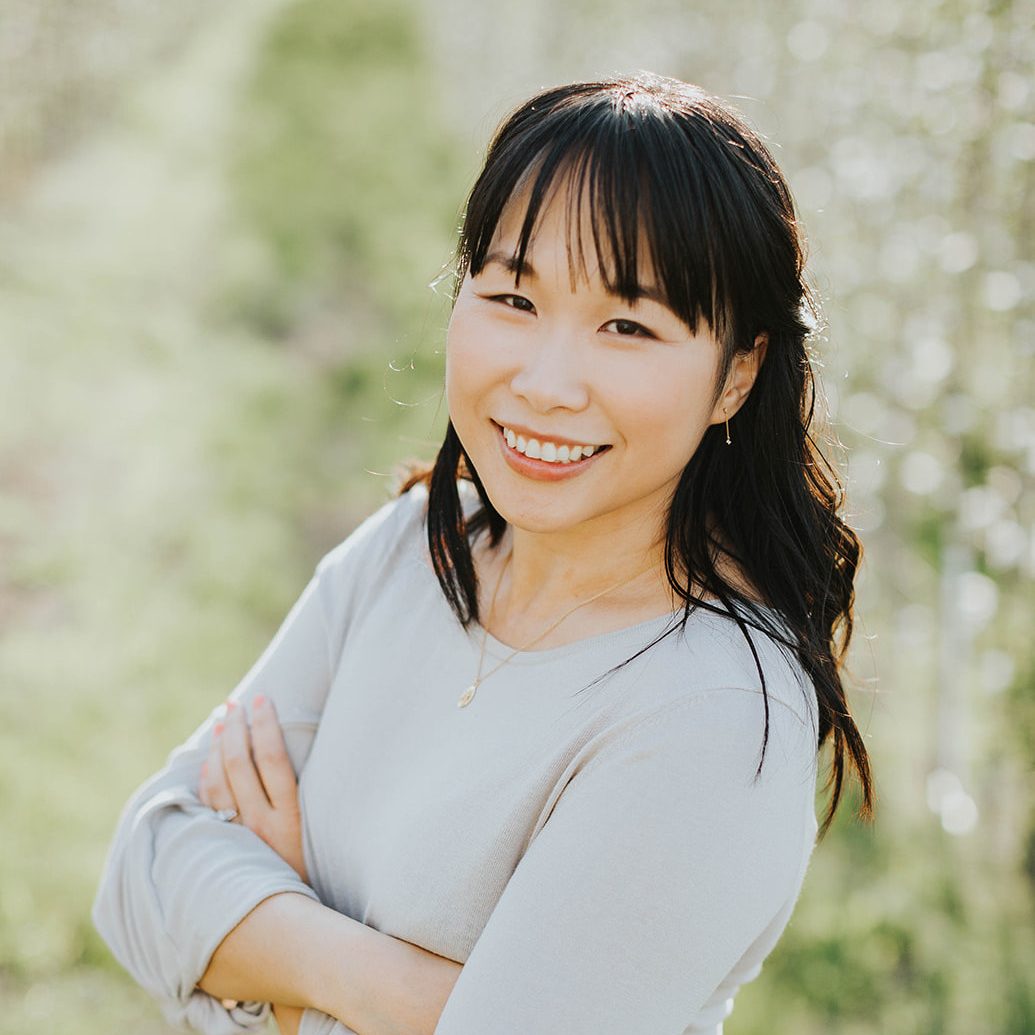
Joanna Chiu is an award-winning journalist, author, internationally recognized expert on China, and Managing Partner at Nüora Global Advisors.
Footnotes
Episode transcript
Joanna Chiu 00:00
It's just, um, people are attracted to kind of simplified narratives and frankly like white faces because it is seen as like safe and objective and a Chinese neutrality to it. Yeah neutral but someone who looks like me like I must have some sort of implied bias right or not seen as much of a neutral expert but there's no such thing as neutrality and it's more having a diversity of backgrounds and life experiences and respecting people who at a very basic level can speak and read Chinese.
Mo Dhaliwal 00:46
What does it mean to carry a passport from one country while your being is tethered to another? Especially when those two places find themselves on opposite sides of a widening divide. There are hundreds of thousands of people from Hong Kong who hold Canadian citizenship. And for them, this question stopped being abstract long ago. This question shows up in the phone calls you're afraid to make, the family gatherings where certain topics have become unspeakable. And this strange grief of watching a place you love become a place where it's no longer safe to return.The diaspora experience has always involved negotiating. Cultural influences, language, distance, relatives. And something shifts when the government of this distant ancestral region begins to view you with suspicion. When your advocacy for people that you love becomes classified as interference. When the very act of remembering publicly what others are being forced to forget starts feeling like resistance. So today we're joined by someone who's lived these contradictions and made chronicling them a large part of her life's work. Joanna Chu is an award-winning journalist, author, internationally recognized expert on China and managing partner at Noora Global Advisors. She's reported for The Economist, AFP, The Guardian and South China Morning Post while providing broadcast analysis for the BBC, NPR and Al Jazeera. Her book, China Unbound, won the Shaughnessy Goan Prize for political writing. Joanna founded New Voices, an editorial collective amplifying women and racialized people who are experts on China. She's a senior consultant for organizations including PEN America. She also serves as an expert witness on China's global influence strategy. Now, Joanna is co-founder and managing partner of Noora Global Advisors, a consultancy providing organizations with critical insights into Asia. Joanna, welcome.
Joanna Chiu 03:03
Thanks for having me, Mo.
Mo Dhaliwal 03:04
So, where are you really from?
Joanna Chiu 03:07
I haven't been asked that for a while, which maybe is a sign of progress in Canada. Where are you from? I was born in Hong Kong. My family immigrated to Canada when I was two, and it happened to be the year after Tiananmen, New Mexico in 1989, so you can do the math. Yeah, so I grew up with kind of the push reasons for Hong Kongers leaving Hong Kong.As kind of part of my, you know, childhood, it was just a fact that a lot of Hong Kongers chose, Canada chose Vancouver because of political reasons, what happened in 1989, but also the fact that the arrangement with the UK was that it would return to China in 1997. And a lot of Hong Kongers, a lot of people around the world were skeptical that Beijing would honor the agreement that Hong Kong would retain its kind of way of life, its freedoms, for 50 years after the return in 1997, and we've definitely seen that happen with the crackdowns and national security provisions now applying in Hong Kong. So I think a lot of that interesting backdrop to my childhood was really one of the things that inspired me to be a journalist and to actually leave the comfort of Canada and spend all my 20s as a journalist in Hong Kong and then Beijing. And returning just in time for Meng Wanzhou to be arrested, that was around the time we met. So even after China, my journalism life was really focused on these tensions and what it means to be a global person of Chinese origin and how ordinary people kind of are part of these bigger stories involving these major powers as well as middle powers, middle power countries like Canada.
Mo Dhaliwal 05:16
You know, it's always interesting to me though, because you'll meet people in diaspora, obviously we have pretty massive diaspora communities here. And a lot of people will sort of be, you know, passively sort of connected to that culture. And you know, it might be just an assumed part of their identity, but they don't necessarily take to it in sort of the way that you did, right, of paying attention and really being affected by the things that you're describing.You know, I can say the Punjabi community as a community that, you know, the Sikh community especially that face persecution and a lot of, you know, full on violence, genocide, and then also just socioeconomic pressures to leave India and there was a sort of exodus to the West and Canada largely, that you'll have people that are born and raised here that, you know, might sort of passively say that they're from a culture or from a place, but not necessarily feeling the pain of what it means for the loss of place. And then there's some that kind of have this thing inside them that, you know, they might be born or entirely raised in the West or in Canada or the US or other places, but they seem to have some sort of like connection, there's some thread that didn't get cut and there's this ongoing pain they feel for this place.
Joanna Chiu 06:36
Yeah, and I wouldn't characterize it just as negative. I've listened to some of the High Agency podcasts, and it seems like you remarked on how it's not a coincidence a lot of entrepreneurs you interview are neurodiverse. And my family immigrated and settled in boring Canadian Vancouver suburbs, like Coquitlam. There was nothing around my childhood home in Coquitlam. I could walk for half an hour to make it to the nearest convenience store. All the houses were quite cookie cutter. So as someone with ADHD searching for novelty and what is interesting about my life, it wasn't around me where I could maybe wander the forest and go for a walk. Really, there wasn't much that was very stimulating about my childhood.It was really what I was able to learn. And the Chinese history books I started taking out of the library and reading obsessively, it was just that's a part of my life and background that was most interesting. And also a bit of a reverse psychology where my parents were like, we took the trouble of moving to Canada. So you could be Canadian and be happy and get a good job here and settle down and live in Canada. But instead, I, from a very early age, decided to self-study. I come from a Cantonese background, but learning Mandarin Chinese and learning all I could about Chinese history and the politics and majoring in history, but focusing on Chinese history at UBC. All of this goal, since I was 12, basically, of being a foreign correspondent in China. And it was a weird draw, like you said. Like something was pulling me. And I remember just first year university struggling with my Chinese characters. But just looking at my shelf of books and you're like, this is all going to lead to my career reporting on the ground in China and being a bridge between what's happening there and here. So I was very focused on that. And also, I think I was right because growing up, we would go to Hong Kong at least once every two years. Back then, it was much cheaper to buy your back-to-school clothes in Hong Kong, like clothes to the Chinese factories. It's very unaffordable now in the city, but everything at the time was like, wow, we were acting like things were free, just the way we would just go around. We can't get this in Canada. This would be so much more expensive in Canada. And so those childhood memories of Hong Kong were just part of my identity. And a lot of people don't get that privilege of being able to go back and forth to their home country when they're immigrants at such a young age. And it's natural to not feel attached. But it was really after I moved back to Hong Kong to start my career as a journalist at South China Morning Post that I really felt like, yeah, I was right. Hong Kong is my home, my second home.And the way working as a very junior reporter is the best way to really learn a city because I was sent all over, all these random neighborhoods. Going up these crazy buildings that weren't marked and having to navigate the city as quickly as possible because you had to write four stories a day.
Joanna Chiu 10:18
So I felt like I, despite not having spent all my life there, working as a journalist for a local newspaper with all those pressures made me feel like I knew the city back of my hand eventually and could just navigate. Hong Kong is kind of seen as kind of a Blade Runner type of city, just all these underpasses, overpasses, these big buildings, but actually it was very satisfying to get to know that city and know how to get around and try to really understand the culture.And as an insider, outsider, try to uncover some uncomfortable truths about society there, even without all of these big events like crackdowns or protests. And it was much more interesting than the Kukwutlim suburbs.
Mo Dhaliwal 11:07
This is fascinating to me. I didn't realize your sort of focus and passion to kind of be a bridge with China was like that early on or started that young.Because from when we met, when you were working with the Toronto Star, my assumption had just been that, oh, here's a person that she's Canadian. She became a journalist. And at some point, later on, when countries started doing problematic shit, she started covering them. But I didn't realize that it was actually such a deep-seated thing.
Joanna Chiu 11:36
Yeah, like, you know, growing up, there wasn't a lot of negativity toward China, lots of governments, including the Canadian one, wanted to figure out how they would get into the Chinese market. In the 90s, as the Chinese economy was starting to boom and open up. So that continues. Yeah, and that continues, especially like more recently.So I was drawn to social issues like one child policy, and as a girl child, while I was reading about what was happening with infant girls being abandoned or even killed, I had that sense of responsibility that I was so lucky to have the opportunities that I had. And just fascination with wanting to understand what was happening.
Mo Dhaliwal 12:26
So, growing up, were you always sort of alive to what China is about, both culturally and politically or was there ever a period where you were studying it but you had maybe some romanticism around what you thought the country was about or what the culture would be like?
Joanna Chiu 12:44
I wouldn't say romanticism because I think just being part of the Hong Kong diaspora community there's a certain cynicism about especially mainland China.
Mo Dhaliwal 12:58
It's funny you say that though, because there's a very similar, like growing up in Jabi, there's a very similar thing with that of your relationship to India.
Joanna Chiu 13:05
it's more not knowing the complexity. So until you spent time traveling around, you know, mainland China, you realize that it's, you know how the U.S. has like these crazy, different microclimates and topographies? Like I think China is even more diverse. It's just so big and I was kind of like the reverse romanticism. Before I lived in China, I thought it'd be just like cities, smog, just human rights, cracked up, like all of that things, all of those things. But traveling in Sichuan in self-western China is just like being blown away by the beauty and also blown away by, you know, just the way some Chinese people are, like how both pragmatic and welcoming and at ease and interesting so many people are.And that you can get into these really great conversations with people and there's not all of the Canadian politeness barriers. I actually had trouble re-assimilating back to Canada because like, yeah, like Chinese people are so direct and so like real. Yeah, so it was like a reverse romanticism where I kind of fell in love with China after like basically a childhood and adolescence of studying it from afar where things were focused more on politics and what was negative. But actually living there, you get a more nuanced view. And that's why I also make the case that it's unfortunate that Beijing has been so hostile to foreign journalists because I don't know anyone who's lived in China who isn't a big fan of some part of living in China, like whether it's karaoke or the food or just traveling to all these beautiful destinations. So yeah, it was more pleasant than I expected in spending time there.
Mo Dhaliwal 15:05
Yeah, I mean, I can imagine like, you know, humanity is humanity at the end of the day, right? And so we're going to be doing wild and interesting stuff wherever we live or wherever, you know, wherever we grow up.
Joanna Chiu 15:15
And sometimes it's nice to be the majority, even like, even though I was a kind of a weird person where I'll jump in a taxi in Beijing and to be like, where the hell are you from? Because my accent would be like a weird mix of foreigner and Hong Konger.And a lot of people thought I was from some weird countryside place in China they've never heard from, heard of because they didn't see me as possibly foreign, which I was really. So it's also nice to, as a minority in Canada, to work and live somewhere where you at least look like, similar to everyone else.
Mo Dhaliwal 15:54
Yeah, part of the majority. So your relationship with China kind of changed over time then, right?Because maybe it was a little bit more cynical and maybe, I know this is definitely a Western media thing, but there's a tendency to just take these massive, incredibly diverse places and just flatten them down to a couple of stats and a couple of issues, right?
Joanna Chiu 16:13
fascinating because lately I'm doing more advising and research and not so much covering the news and also the relationship between Canada and China is becoming friendlier than it was a few years ago.But it was a few years ago when I was writing stories about say Xinjiang like the treatment of Uyghurs or what was happening in Hong Kong because my byline I had a Chinese last name. You know people would be so simplistic and think that no matter what the content or how critical really like stories were that it became like a trope like you're a Chinese spy like a Chinese sounding looking person has to be pro-China even though as my work became more known I think I was more known as quite opposite of that but still I would get a lot of these comments that you know CCP stooge things like that.
Mo Dhaliwal 17:16
Well, it's interesting because I think things actually started to change in really interesting ways obviously in the 90s and the 2000s. I remember years ago reading this article about how academic culture had changed in some major Canadian universities because there was a period of time where if there's classes around global affairs or these sort of political issues on a sort of geopolitical level that critiquing these nations and actually exploring the issues with them was quite normed as a part of academic discourse and especially with people that were Chinese but from Hong Kong making up the majority of those classrooms.But then there was this sort of shift later where there was a greater amount of immigration from mainland China and it actually even changed the academic environment because now suddenly you had actually classrooms where a greater portion of your population are more recent immigrants there perhaps sort of an upper middle class, sort of social economic background and actually we're far more aligned with China's role or its self-professed role and kind of presence in the world and as a result we're quite pro-Chinese government and this article was written by some university professor that was just talking about how over his tenure the political environment on campus had changed where at one point critique and exploration of ideas was like par for the course, it's academia and now suddenly you have actual intellectual resistance in classrooms because of
Joanna Chiu 18:50
more of recent immigrants who, yeah, and not just for China, it was more people from different countries. That's been a subject of debate because a lot of universities are not reliant, but definitely benefit from international student fees and there's been restrictions and more hurdles in Canada and other places and now there's a lot fewer international students overall.
Mo Dhaliwal 19:20
Yeah. Well, I mean, I think reliant was actually the right word because, you know, as the immigration policy changes in the past year, the number of entire university departments that have been shutting down or, you know, these small little colleges that kind of popped up that were like university degree mills in Canada that are now suddenly shuttering themselves.It seemed like, yeah, we were entirely, yeah, entirely, entirely dependent on the influx of international students.
Joanna Chiu 19:45
to schools, but housing, a lot of the impact on the amount of people looking for rental units too.
Mo Dhaliwal 19:55
What do you think people still continue to get wrong about China and, well, I mean, Asia almost, right? Like, because again, there's this flattening that happens when we deal with any issues over there. But is there something that's been our persistent one for you that you've seen over the years and you're like, man, do they just still continue to get this wrong?
Joanna Chiu 20:14
Well, like many things, I think as people, you know, as the economy gets worse or slows down or when it's harder to find jobs where you live in general, there's, you know, just plummeting interest overall in any place outside your own country, or maybe Canadians follow American news. And I definitely noticed as a journalist working for newsrooms that the kind of views that China-related stories would get, they're very different now. It used to be that, say, at the height when China was seen as a threat, when the two Michaels were just arrested, when we wrote anything about China, basically, there would be a lot of leadership. But as this became more kind of par for the course, people kind of, you know, foreign influence has been a topic for a few years. It's getting harder and harder to get people to care and read or watch media about any global issues.As part of why I moved into consulting, and our consultancy is made up of very senior journalists, mostly, both who are partners as well as our global network. I kind of say that I want to find a way for all these unemployed journalists to apply their expertise and research skills to still, like, real world situations, because there's just less traditional avenues for the public to learn about China. And part of that is, you know, I mentioned before caused by the Chinese government being denying or canceling journalists visas, so there's fewer people even able to report on the ground. But a lot of its newsrooms, global newsrooms, like the largest publication, Shrinking and Completely Cutting, they're any staff that publish or follow world news. So at the Toronto Star, as you know, I was Bureau Chief in Vancouver and a lot of our, it just happened, it wasn't a coincidence, like the hiring was made intentionally diverse to reflect a lot of these immigrant communities. And we kind of ended up being known for covering diaspora and global relations and how it played out in Vancouver, which is such a diverse, multi-ethnic place. But the newsrooms shut down because the Star's national initiative was shuttered. And then I joined the national world team. And then that was shut down as well a couple of years ago. And that's, you know, Canada's largest circulation newspaper. And right now, I believe that Canada has no correspondent on the ground in China. CBC had trouble getting a visa and they were the last, basically, I think there's some freelancers. So I think it's really, really hard structurally for people to understand a place when they don't have people on the ground there. So you have to be creative about it, even if you're someone who's interested in learning. So of course, like the general public, it gets a lot wrong about China. And I think recently, it's very like big picture.
Joanna Chiu 23:53
There seems to be very little interest in what's happening domestically in China. It's more, what does this mean for trade for Canada?What does it mean for prices in the west, basically? I think Trump's tariffs has accelerated a lot of this lack of interest of China in a more nuanced way and more, okay, is it of self interest to not push too harder to talk too much about the human rights situation in China? Because now that the US is not going to be a very trusted partner, it makes sense to repair relations with an ex-largest trading partner. So a lot of it's seen in terms of very basic level, like what does it mean for us? What does it mean for business and opportunities?
Mo Dhaliwal 24:52
I mean, it's a pretty troubling trend. What you described about, you know, Canadian media not having anybody on the ground in China because, you know, the other trend sort of on the other side of that, probably exacerbating it is the amount of disinformation, right? That's accelerating and just, you know, exponentially. It's growing exponentially, but that's also, I think, a bit of a testament to how blind we're kind of becoming to it because we've just been like steeped in it for so long that I think the brain's just kind of started filtering it out. But it's quite constant.Is there is there anything specific you've seen in terms of like just, you know, what is clearly disinformation that you think has kind of like sept into?
Joanna Chiu 25:32
Well, I think when we think of disinformation, we think about Chinese bots or Chinese campaigns to spread misinformation, including, say, on WeChat about Canadian politicians. But I think what's also interesting is that a lot of Western actors produce disinformation about China, including false allegations.I'm just thinking about, I think it was called The Bureau, what's Sam Cooper's publication. They had a still of a Chilean fat movie of a casino scene, and it was published as this is a Chinese mafia, some sort of corrupt dealings with RCMP, and then someone was like, hey, this is from a movie. And it was kind of like a non-apology correction, not to knock the body of Sam Cooper's work and his publication. But I've seen some carelessness in Western media when it comes to China, because I think there's opportunity because audiences are primed to be suspicious and want to find things out because there are nefarious activities. And we know that there are foreign interference activities by kind of rushing and not doing the fact-checking and not working with Chinese-language speaking journalists to verify and add nuance. I think it's a problem across the board in all Western or global coverage of China. At a conference, a journalism conference in Malaysia, multiple Chinese-speaking journalists or Chinese-national journalists were saying, well, why didn't you ask a Chinese journalist for help on this project? And definitely, I think the resources of people of Chinese background or people more in my kind of background where you may have grown up in the West but have dedicated time to it, I think this resource of people are routinely overlooked.That's partly why I started my company by trying to get these people platforms and opportunities and connecting them to companies on projects that best suit their levels of expertise because it's just people are attracted to kind of simplified narratives and frankly, white faces because they're seen as safe and objective and a Chinese- Neutrality to it. Neutral, but someone who looks like me, like I must have some sort of- Implied bias. Bias, right? Or not seen as much of a neutral expert, but there's no such thing as neutrality and it's more having a diversity of backgrounds and life experiences and respecting people who at a very basic level can speak and read Chinese.
Mo Dhaliwal 28:36
Yeah. So, you know, from this realm of journalism, now becoming an entrepreneur with the company you started, you're referring to your company, Nuura. Nuura. Yeah.
Joanna Chiu 28:47
The new stands for nuance.
Mo Dhaliwal 28:49
you're for nuance. And that's been a recurring theme as well, because before that you had New Voices.New Voices, a writers collective. So what's the mission of Nowhere Global Advisors? What are your plans like? What are you consulting on when it comes to China?
Joanna Chiu 29:05
Yeah, so our first client is a foundation in Toronto that has hired us to act as project leads to design the foundation's work to elevate Chinese-Canadian achievements and foster like leadership opportunities, mentorship opportunities, design and awards program, and it's again very in line with New Voices because New Voices was an NGO founded in my late 20s and living in China because I saw a lack of women experts highlighted on at events, on TV, with book deals, and we wanted to remove excuses for like ignoring women's contributions to the very broad field of China like media, journalism, arts, academia. So I think my entrepreneurship work is often so far so motivated by like ethics and wanting to have this nuance and wanting to connect the people of the right expertise to the right jobs.So and a lot of it's journalism adjacent so we don't touch PR and marketing. It's really about research and advising and understanding like promoting understanding globally and our partners and our experts they're of all sorts of backgrounds are all over the world from so many different niches. So we would like to remove excuses to not have really dedicated nuanced expertise on the answers you're looking for rather than going for maybe like what's in the news or what you see, what chat GPT says, and it's been really rewarding because I found say like the legal expert witness reports so with the kind of questions that lawyers ask of researchers is you can go deeper than an article and you're not writing of the general audience in mind so you can bring up like really like dense material and put in a lot of detail. And I find that after writing so many like 500 word articles I find like it's really fun so far to do deeper research and to know that someone intends to act on it.
Mo Dhaliwal 31:32
Yeah, and I guess that's really interesting what you just said there are attempts to act on it because, yeah, in consulting there's a, you know, a deep amount of research you'll do but the difference with journalism is whereas it's awareness, in consulting there's an applied action to follow.
Joanna Chiu 31:48
I mean, they're paying for it, so you'd hope that they would at least, you know, take the advice or information. As a journalist, I felt like sometimes I was just saying the same things over and over again.You know, what is for an influence? It's not a new thing, like, you know, and it doesn't only target famous people. Beijing's foreign influence, like India's, it cares about ordinary people and ordinary smaller towns and cities. I was just, like, repeating, like, especially when I was doing my book tour, a lot of the same things over and over again. So yeah, it's nice to go into deeper detail rather than assuming maybe not as much engagement with the topics.
Mo Dhaliwal 32:37
So, I mean, there's a, there's a quote from your book. I'm not gonna be able to find it right now, but it was something along the lines of, um, essentially, you know, just right in the beginning, you're starting to unpack, um, you know, the Western world, Canada, US, UK, um, other countries, their approach to China. And I'm going to actually just extend that to India, especially with what's going on right now, but that there's a combination of self-interest and ineptitude that is damaging to those democracies and even their citizens.Um, how, how is it? I mean, it's, it seems obvious to me, but let's just unpack this a bit. Like, how is it, how's it damaging?
Joanna Chiu 33:17
So the kind of illusion that Canada had that they could have a dual-track approach to China, where they could do human rights reports and push on human rights on one side and really pursue trade deals and business on the other, and one side is not going to affect the other. But you can't just silo it, and the Chinese government isn't going to be like, I want to forget what you said here about Tibet or Hong Kong, and we're going to shake hands and do this trade deal.And it was in Beijing, I think, 2018 when Trudeau went with this big ministry delegation thinking that he was going to clinch a trade deal and was just left humiliated. They had to drum up a very last-minute MLU on environmental collaboration just to have something to show. But basically, not understanding that the Beijing side, they weren't just going to be like, okay, we'll do this deal with you, even though you're asking for all these labor provisions and talking about feminism and things like that. So kind of like this naivete, because what Chinese-Canadian advocates or community groups were telling me at the time was that the government wasn't interested in hearing really a lot of what was happening in Canada. They were interested in happening in human rights in China, because it remains popular for democratic governments who speak up about what's happening elsewhere. But the kind of harassment that, say, people from Hong Kong backgrounds were receiving from 90s, 80s, like the smear campaigns. People would try to report it, talk to local police. They would say, we don't understand it. This is a go to ceases. They would go to ceases. And just kind of running around, maybe sometimes invited to parliament to testify, but kind of feeling like it was so chill because nothing would really change and just a lack of understanding.I myself was targeted with all sorts of death threats that seemed to originate. They were all in Chinese and reporting to police. You're told, oh, there's nothing we can do about it. Me too.
Mo Dhaliwal 35:34
I mean... Fun times.
Joanna Chiu 35:35
Yes, even after whole inquiry business, I'm not really sure what has changed in that regard.
Mo Dhaliwal 35:43
Well, I mean, and this is kind of the infuriating as well thing as well, because China is, you know, it has been always kind of exoticized and also placed up a bit more of a distance, a bit, you know, seen as a bit of a mystery. And then next to it, India has been propped up as like the reasonable. Yeah, democracy. Democracy, right.
Joanna Chiu 36:05
like the alternative to working with China is to work with India and that's partly why I started, like as someone who's not an Indian expert started writing about Indian foreign state foreign influence because it was just so simplistic like okay there's enough evidence that you know Uyghurs are being put in detention camps so maybe like let's not actively pursue deals with Beijing now but India is a democracy and so yeah let's call it the Indo-Pacific strategy and go all in and it's again like ignoring the nuanced views and warnings of the Indo-Canadian community.
Mo Dhaliwal 36:42
And the fact that it's persisting even now, I mean, you know, China hasn't made the headlines in Canada for assassinating a Canadian citizen, right? India has, right? You know, credibly.And you know, at the time of this recording, the premier of VC is David Ebe's in India right now and just doing everything he can to, you know, curry favor with the government job and India in general and try to strike some sort of trade deals. And that duality that you're talking about is like, that's this hypocrisy that they're speaking to constantly, right? Like by the time we release this episode, he'll be back and who knows, you know, what the fallout will be at that point, but they keep deferring to the federal government to be like, hey, the foreign interference and the repression, oh, we're letting the federal government deal with that.
Joanna Chiu 37:30
a comment.
Mo Dhaliwal 37:32
Really.
Joanna Chiu 37:32
Yeah, talking point. I've talked to different levels of government and they say, oh, we don't even get really briefings and our job primarily is to, you know, look out for our businesses and try to create more favorable trade environments.But like I said before, a lot of the foreign governments, their targets are to local governments and such as like bringing people, local mayors on VIP trips to China, which they've done a lot in Canada, because they see like local politicians, local level is more influential than federal on like the hearts and minds of citizens. And in the interview you talked about like the interference and seeing say Hong Kongers who speak up about what's happening in Hong Kong as a kind of dissidents. But in my book, what I also tried to emphasize is that China puts a lot of resources into trying to find allies and to do more soft power and find supporters overseas. And that's really kind of overlooked. People look at the more of the stick rather than the carrots that they're trying to spread around to, but that's definitely a sophisticated part of their global influence strategy that in the past, particularly like Canadian politicians are very naive to, often because they felt it wasn't their responsibility because they were local level politicians.
Mo Dhaliwal 39:14
I mean, I'm sure we present a pretty, you know, easy sort of target for them as well, because when you have our own politicians at different levels kind of pointing the finger at each other and essentially kind of sidestepping any sort of accountability there, I mean, we appear to be very fragmented bunch and you can kind of cherry pick whoever you can get a relationship with, but the converse isn't the same. Like if you go to China or India, like shockingly petty levels of foreign diplomacy where if they're not entirely aligned with like what you said, they're not going to do anything with you. You know, the government of India, like if they don't like the statements you've been making, like you're not getting a trade deal. Like there's a fair amount of kind of cohesion, right, of their perspective. And ours isn't cohesive at all. It's... I mean...
Joanna Chiu 40:02
There is a pros and cons of a democracy versus Not what is the latest of hard-easing measures case? But they proven it was a state order to assassination
Mo Dhaliwal 40:14
Yeah, I mean, it's like the trial is proceeding. So, Harleap signature, obviously, just about two years ago, over two years ago now, assassinated outside of a Sikh Gautar and Suri. And the four people that were arrested, I mean, their trial's moving forward.But on a more systemic level, as far as the foreign interference inquiry or the rest of it, federally, the government's done what appears to be a 180, from specifically calling out Indian agents from specifically referencing the fact that there's credible evidence that the Indian government was involved in assassinations on Canadian soil. And they just seem to have completely fully done a 180 on that. So, that trial is continuing. There's still obviously huge, huge issues there.
Joanna Chiu 41:07
But as far as the government officials are more silent on the topic, they're not pressing it.
Mo Dhaliwal 41:12
Not pressing it at all. In fact, the conversation is entirely about trade deals, and then again, there's all this sort of deferral happening, right?So why trade deals with China or India? Well, Donald Trump, right? And we have to. And it gets lost within all of that because we're still racialized people. And there's a community that I think wrongly the media environment, the political environment will kind of look at you and say, oh, it's just those people over there have some sort of troubles with themselves going on. And that's not our problem.
Joanna Chiu 41:44
Yeah, it's easy to say. It's complicated.It's maybe a bit shady, so yeah. And also if the people who might be harmed are not seen as a majority group or people of influence. And I think that's why even though the foreign interference and harassment of Chinese-Canadians has been longstanding, I think it was a lot to do with the two Michaels that two white Canadian men were taken hostage that led to a lot of that spike in interest. And also it trickled down to more people caring about Hong Kongers or Uyghurs.But these are not household names like the people of Chinese descent who are continued to be detained in China who are Canadian citizens. They don't become like big news.
Mo Dhaliwal 42:41
There was a case just a couple of years ago of three young men, they're sick activists, I think Wolverhampton in the UK, British citizens and very vocal and advocated against the government of India's many human rights violations. And they were like this close to getting extradited to India to face charges, like British citizens. And they were arrested, taken into custody, the case escalated through the various courts. And finally it reached a level where some judge in the UK basically said, I don't know how this even got this far, this is crazy for us to be persecuting our citizens like this. And at that level it got dismissed.But just the fact that somehow somewhere there was enough political machination or some sort of capital somewhere that was being applied to actually have them first of all in custody. And secondly, to actually escalate the case to that extent, that they're just a couple of decisions away from being extradited to a country that sees them as a threat and would probably brutalize them in some fashion.
Joanna Chiu 43:51
Yeah, I think, do you think part of it is assuming that there's a fair legal rule of law system in countries that profess to have them but actually don't?
Mo Dhaliwal 44:02
I don't think it was that at all. I actually think it's like, you know, kind of related to what you said about the two Michaels. I think it's so much more basic than that, where, you know, like this is Britain, right? This is the heart of the empire. And I think to some extent, you know, if you're white, if you're not white, you're not British, right?So you have these three British guys that are, you know, sick and visibly. So it was just not really like somewhere the dots didn't connect. And it was like, well, they're not really British. And actually, we should send them back to the phone call where they were.
Joanna Chiu 44:29
And that's terrifying for people who aren't white, who maybe like are journalists or people who really carefully try to speak up about issues and knowing that likely if something happens you won't really get much attention or support and access to reality.What was I going to say?
Mo Dhaliwal 44:51
And being born and raised here you can't help but feel indignant when you have these foreign missions by our elected officials just pandering to these governments that actually create harm to our loved ones, our families, our communities.
Joanna Chiu 45:04
even institutions like when I returned from China my years abroad to be a Canadian journalist I was given advice by a Canadian journalist to not write about the Sikh community because it's too messy and there are like angry people and just don't go there because it's too hard and you know and I'm like you're just telling me not to cover an entire very very large community and I think that's all it takes.
Mo Dhaliwal 45:30
for intellectual looseness.
Joanna Chiu 45:32
And Canada has the largest community of sick diaspora in the world, or in the world. So I was like, I'm being told not to cover this giant group of people because some of them are angry, like, there's angry white people everywhere.That's so kind of like that convenient excuse of this is complicated, it will take time to understand and nuances, and to just like excuse not paying attention or putting the resources in.
Mo Dhaliwal 46:07
So from your career as a journalist for reporting on the ground in China and that region, to then writing the book, China Unbound, to now starting a company with a very interesting and perhaps difficult business model of building these bridges and consulting on China, have you been worried about just kind of being exiled from China or of actually being targeted all over again or facing some harm as a result of the work that you're doing?
Joanna Chiu 46:43
Well, I've decided for now not to go to the mainland and I was worried about returning to Hong Kong. I did go back to Hong Kong for the first time for late over in November and it was very strange. Things were definitely very muted there, the vibe and just being worried about going to your birth place is just a sad thing that's so common for people of the diaspora internationally.And quite honestly, going into business and advising and trying to apply my journalist skills to consulting is out of self-interest of being a journalist isn't worth the risk. Primarily writing about human rights and foreign influence. And I feel like I've done my part and I've provided a platform for a lot of people and tried to safely tell their stories anonymously and there is a level of risk to yourself. I feel like I'm too old to get deaf friends all the time because I'm a hypochondriac already so I don't want to be googling my cold symptoms and getting actual deaf friends online. It's so actually going into more business is a way to minimize the risk to myself, family, friends, networks and a lot of journalists are making similar calculus, partly I think a lot of newsrooms don't have the resources to support journalist safety. A lot of places don't have even protocols and if there is a China specialist, they're the only China specialists so they kind of have to be designing their own kind of anything safety related. So with the lack of supports, lack of resources, just personally, I'm not stepping away but I'm being very selective when I do reporting. But at the same time trying to maintain my ability to keep reporting so not doing PR, not doing marketing, not connecting Chinese companies to my journalist friends so I can still keep the opportunities open to report on the more sensitive issues.
Mo Dhaliwal 49:15
Well, I mean, you know, the, the incredible thing in your book actually was that, um, there was kind of like a duality to this as well, because, you know, in some places you're speaking directly to your experience of like arriving somewhere, like Athens or wherever, um, and you're almost kind of, you know, intersecting with like the Silk Road, uh, but then other chapters, you're kind of bringing it back to Canada or you're bringing it back to the United States and the U.S. is where a lot of that, um, self-interest and ineptitude was coming up, right?Of how, of how much, how much they're getting wrong about not just China as the monolith, but their influence in so many of these different pockets and how complex it actually is.
Joanna Chiu 49:57
it's not always like people think of the New Silk Road and trying to building highways as evil or like it must be like some sort of it's all like an uncomplicated and a power play
Mo Dhaliwal 50:09
It's binary. It's like either it's like, oh, this is gonna be so productive or oh my god. They're trying to control everything. Yeah
Joanna Chiu 50:15
And a lot of it's a lot more nuanced. And like I said, Beijing is invested in soft power ways to build power globally. And this continues to happen as a lot of Western meaning governments say, focus on very narrow issues. And it's not all black and white.And I tried to report from the ground in middle power countries in the West that are motivated to accept some of the economic deals. And it's not necessarily like you can characterize it as economic coercion. It's quite, it's nuanced and complicated. And that's, again, hard to capture in media stories because you'd be like, why is this a story? What, you know, Huawei going and making, being part of a cloud network in African villages, for example, it's kind of like they have to be like, there has to be evidence of spying or brainwashing for it to be a story, but it's just what's happening on the ground that China and Chinese companies are trying to build capacity and influence and power globally and in all sorts of legitimate or gray area kind of ways.
Mo Dhaliwal 51:34
Yeah. Yeah. No, there's a lot of, you know, that sort of social territorial grab that supports the political interests. Yeah.Scott Galloway, the NYU prof who also speaks a lot to what's kind of going on in the world and in the markets and technology especially, you know, have this sort of interesting sort of insight recently. And it kind of points to like what's old is new again. And, you know, these cycles keep repeating, but it was almost like talking about China, you know, when they were doing the steel dumping in the nineties, but he's referring to AI dumping and the fact that the next wave he sees is China just in, you know, introducing these free open weight models and just dumping them out into the world for everybody to start using.
Joanna Chiu 52:25
like open source AI models.
Mo Dhaliwal 52:27
because the math behind is not really defensible, so they could do that. And it was just so interesting to see that pattern of we're going to dump out our technology and then on the rebound from that will be available to pick up whatever the spoils are because we'll have a dominant role in this market.Since you wrote this book, what's changed?
Joanna Chiu 52:48
Well, I think that itself is a bit of a simplification because there's been a lot of, if he's referring to DeepSeek, which is like a famous company that is open source Chinese and it's free, and allegedly, or they claim that they trained their AI model on inferior trips, and it was seen as like a big triumph because the US has been trying to control advanced Nvidia chip sales to China to try to suppress the AI high-tech development there, but everything we know, DeepSeek was not a for-profit company, it was more like a lab. A research project. Yeah, a research project and they still don't seem to be chasing profit and actually a lot of Chinese companies, they were motivated to, before they weren't mostly free, they were charging. They charge a lot less, but they were charging for their AI platforms, but DeepSeek being this like random outlier that was created in the lab, like investment arm being free kind of forced them to also make their models free, so I think sometimes there's an assumption that it's all more state controlled than it actually is, where it's like, okay, everyone, all these Chinese companies make your things free and then infiltrate the world with your awesome free AI and then we will control it all.It seems like a mastermind thing, but to some extent, Beijing has put in more investments into high-tech and has actually promoted open source, maybe more than the West, especially the US, but I wouldn't say there's like, I'm very skeptical anytime there's like a conspiracy, not saying Scott Galloway is like conspiracies, but more of a simplistic like, this conveniently happened, but when you look into the actual facts and, yeah, because I covered Chinese technology before, so this is like a beef of mine when I would hear kind of things like this because I was like talking to Chinese scientists and engineers about what it was actually like. Yeah, there are a lot of oversimplification and kind of fear mongering around anything to do with China that you don't see with other countries like India or other kind of problematic actors like Russia or other, but it doesn't become like, people don't give so much credit to other governments for steering it all perfectly and I think that's what the nuance you get to see on the ground living in China and like how the mass things all, yeah.
Mo Dhaliwal 55:44
It's not all malice, though. No. There's a lot of chaos that sometimes falls into a pattern. Yeah.
Joanna Chiu 55:49
And sometimes it's people don't even know what the central government wants, and it's a lot of officials overcompensating and trying to do things a certain way to get attention. And it's not so conveniently state controlled and directed.
Mo Dhaliwal 56:05
So, if there's future clients out there that want to better bridge their understanding of China, Chinese community, Chinese diaspora, where should they go and how do they learn more about what you're doing?
Joanna Chiu 56:22
Our website is noraglobal.com and you are N-U-O-R-A global and we have a newsletter so it's all like free insights from that's how we try to spotlight our global experts for our newsletter and our socials and yeah I'm trying to just spotlight their expertise in our platforms and it's a very diverse group and yeah I'm very findable online.
Mo Dhaliwal 56:56
I mean it sounds like a really exciting project for all the reasons that you talked about just going someplace and not being able to call on like marshalling all of these diverse perspectives of talented people that have deep journalistic experience. Yeah, sounds like an incredibly great venture and best of luck with it.
Joanna Chiu 57:17
Thank you. Yeah, trying to match projects with the right people, including people you may have never heard of before or that may not be putting themselves out there as even available to provide advice, I think is valuable because often the people who are most humble and wouldn't think of themselves as experts are usually the people who know the most.
Mo Dhaliwal 57:39
Yeah, journalists probably aren't great marketers. They definitely need some help with that. Yeah. Right. Thanks, Johanna.
Joanna Chiu 57:45
Thank you.


.png)