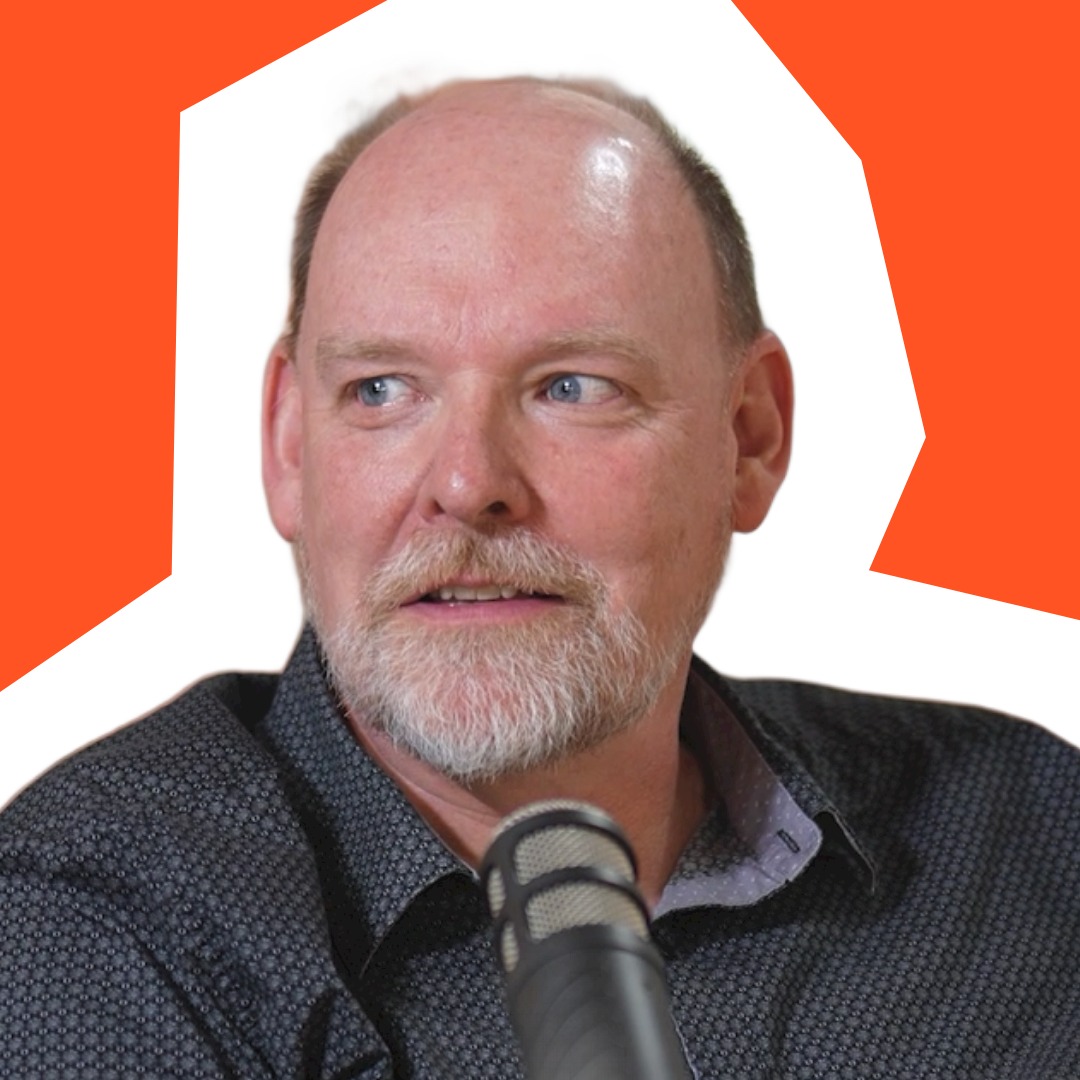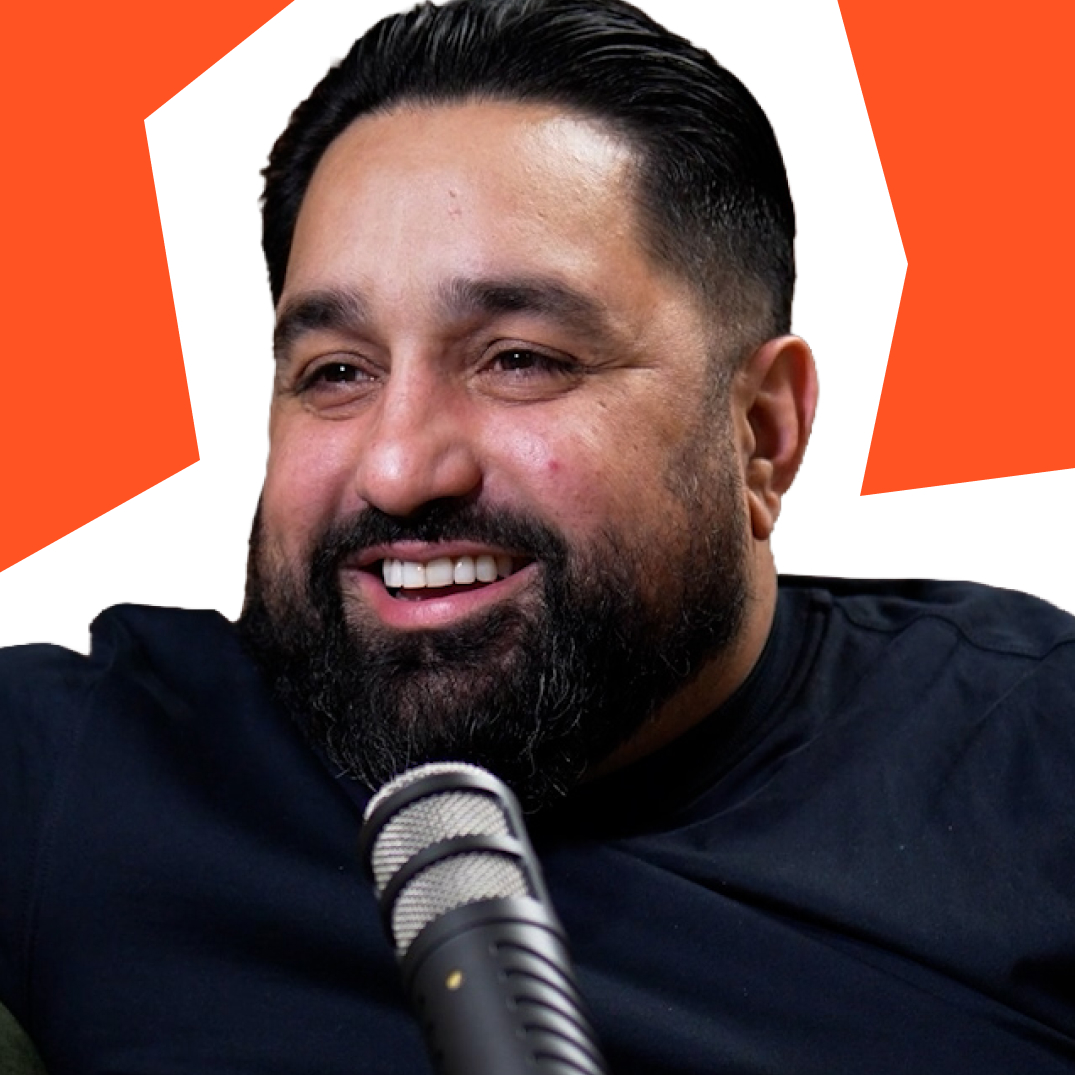


Guest appearance

Prabh Heer is the Chief Operating Officer at Mobio Brands, bringing over fifteen years of leadership experience in sales, marketing, and operations.
Footnotes
Sheryl Sandberg’s complicated legacy at Facebook
Good to Great: A Study of Management Strategies of Companies with Lasting Growth by Jim Collins
Built to Last: Successful Habits of Visionary Companies (Good to Great, Book 2) by Jim Collins
David and Goliath: Underdogs, Misfits, and the Art of Battling Giants by Malcolm Gladwell
Kaizen Method: Definition, Principles and Implementation
Episode transcript
Prabh Heer 00:00
Like, there's the reference of being too big to fail, right? There's a reason why Kodak doesn't exist. There's a reason why a lot of big companies have collapsed because they get too big under their own gloat that they can't move and be agile, like you said.The one freedom I have about being able to have so much autonomy in making my decisions is we get to be super agile about it. And who's to say that we can't rewrite the playbook tomorrow? We don't need to go to a board of directors and be like, hey, we need to vote on this. And by next quarter, we need to release this. It's like, hey, this isn't working. Let's change it tomorrow.
Mo Dhaliwal 00:30
Welcome to High Agency, igniting conversations with inspiring people, leading transformative change. A lot is said about CEOs. As executive-led marketing becomes the norm, we're hearing more and more about and from CEOs. Yet it wasn't the CEO, it was the Chief Operating Officer who transformed a certain wannabe tech giant from struggling startup into a billion-dollar unicorn. And she never touched a line of code. Instead, Sheryl Sandberg, the Facebook COO, revolutionized how 500 employees worked together, proving that operational excellence isn't about perfection, but it's about orchestrating a controlled chaos. And COOs are really the unsung architects of business success, translating moonshot visions into Monday morning meetings. And while CEOs chase the horizon, it's the COOs that ensure the ship doesn't sink.They're reducing costs one day and then investing in AI-driven supply chains the next. The good COOs build resilient operations that can weather everything from cyber attack to global pandemic. But the best COOs don't just manage operations. They're the heartbeat, pumping lifeblood into strategic initiatives, and establishing a culture of working that creates the conditions for success. And today we're joined by someone who actually embodies this evolution perfectly. Prabh Heer is the chief operating officer at Mobile Brands, whose unique blend of business coaching and operational expertise has transformed how organizations scale. His expertise in business coaching and leadership development has been instrumental in optimizing operations and supporting franchise growth. Prabh's strategic vision continues to enhance value across the organization while driving sustainable business success. Welcome, Prabh.
Prabh Heer 02:33
Thank you.
Mo Dhaliwal 02:35
So you're obviously a very busy guy, especially as a Chief Operating Pfficer. And we were just chatting about that briefly before we sat down. So how different is your role now from when you started as a bartender?
Prabh Heer 02:56
Well, that's quite the question to start off with.
Mo Dhaliwal 02:58
About the same?
Prabh Heer 03:00
Yeah, it's about the same. It's so interesting because like earlier on in your career, you're just taking orders, right? And then now instead you're giving orders in a sense, right? Or you're trying to think of a better way to make a decision versus with bartending. It's like, you can't serve a drink any more efficiently than you are, maybe slightly. But then nowadays, all I think about is how can this be done faster or better or cheaper?
Mo Dhaliwal 03:23
Mm hmm. But you've been, I mean, it's been a pretty straight line for you, though, hasn't it? Because, I mean, you went to school for marketing.
Prabh Heer 03:30
Yep.
Mo Dhaliwal 03:30
And then from marketing, you actually took on a number of marketing positions. And that seems pretty divergent from operations, though. So at one point, do you say, OK, you know, growth marketing and actually trying to promote a business this way, I'm going to move more to the internals and actually how it operates rather than the public face.
Prabh Heer 03:49
Yeah, it's a good question like the biggest thing for me was like I thought I wanted to do marketing because it sounded like an Interesting thing and I would think back to like Silicon Valley and people working in marketing agencies The madmen era so to speak I was like this is exactly where I want to be outside of drinking cognac in the office rooms Like I just want to work on cool projects But then I realized that while marketing is fun It didn't pay that well at the time and so I did a pivot into sales for a bit and sales was like kind of the thing I was always good at my high school teachers would always tell me you've got one of two career choices either you become a salesperson, or a lawyer, or you're heading up in jail. Okay. Thank you very much for the vote of confidence
Mo Dhaliwal 04:24
So how long were you in jail?
Prabh Heer 04:27
Good question. I was actually voted most likely to go for jail in my grade 12 year, you know the most, you know, like the best dressed and everything.
Mo Dhaliwal 04:34
Yeah.
Prabh Heer 04:34
And that was my title most likely to sell everything I own on eBay. Yeah, so at least the sales part was right Yeah, and I worked in sales for a long time I really enjoyed it But then at the same time is like if you want to be a well-rounded character, you can have I could I have the degree in marketing I've got the tenure in sales But if I go into operations, I'll have a holistic vision of how the business actually operates and for me That was the natural progression to run a business. You can't just be a good salesperson or a good marketer You also need to know the back end.
Mo Dhaliwal 04:59
So, I mean, I've had the opportunity and I'd say, you know, the blessing of kind of watching you over the course of many, many years. Maybe not front row seats, but kind of, you know, nosebleeds, so we're still paying attention.But I've seen you move, you know, through a variety of roles in what looks like a number of different organizations, but they're all kind of related. But your work experience before that even was pretty vast. Like, I didn't see any real hesitation in your resume from looking at your LinkedIn profile of trying something new, trying out different roles, whatever sales or marketing, or then moving into more operational stuff. But today you're the Chief Operating Officer of Mobio Brands. So what does Mobio do?
Prabh Heer 05:45
Yeah, great question. So what Mobio does is we're a public traded company on TSX Ventures, and we wind up moving companies that are for sale. And we add them into the You Move Me brand. So the two core businesses that we have right now is You Move Me, which is a franchise owner that owns 21 units across North America. And then we also Move Right, which is the CRM the powers You Move Me. So I'm the CEO of Move Right, just to add to the extension of all my job titles. But at the same time, I get to have a direct influence on actually supporting the brand that's generated us so much revenue.
Mo Dhaliwal 06:17
How do you get here?
Prabh Heer 06:17
Oh, yeah.
Mo Dhaliwal 06:18
It's a pretty specific space to be in, right, of these moving brands. I mean, until I talk to you, I didn't even realize actually the size of the business.I mean, I knew a little bit of some of the opportunity of rolling up what are otherwise fairly conventional sort of businesses. Like, you know, 1-800-GOT-JUNK is super famous, right, Brian Scudamore. And that was, I think, my first time looking at something that was super conventional that was rolled up and packaged and branded in such an interesting way. And that seems to have moved into other spaces as well. So I'm just curious about how you got here.
Prabh Heer 06:52
Yeah, great question. So the way I started was I used to read about Brian Scudamore's books, and then I heard that he had a new venture called You Move Me. So naturally I applied for a job there, didn't really know what I was going to do. I started as like an entry level salesperson at the Vancouver franchise. I knew so little about franchising at the time, I thought the person that ran the franchise owned the entire thing. And so naturally I got better and better in doing the sales process, and I was offered the opportunity to run the business, which was great. And it was also my first exposure into how little I knew about operations. I'm happy to admit that I survived one year before I gave up because I'm like, this is too hard.
Mo Dhaliwal 07:28
As a salesperson?No, I was running a business because I was such a bad operator because I didn't know the other side of the business. And when I looked at all the lessons that I gained, like I taught myself finance, I taught myself how to read a P&L, I taught myself how to understand the inputs of variable costs and fixed costs while I was there. And I thought if I failed at something, that means that I'm a failure. But really, you kind of have to fail in order to grow. And when I left there, I thought I was giving up, but really, I was trying to think of what's next. And I took a brief break away, I went to go work for my friend's company that I'd met when I was in university, it was a great experience.But at the same time, it wasn't the right fit for me. So once I got them to a position that they would be able to break even on the investment that they put in hiring me on, I went to go work back at HQ for the franchisor for the first time. When I was there, they had a sales center. It was underperforming and bleeding a lot of capital at the time. It's like I've never ran a sales center. So why not just try that? After a short period, You Moved Me was actually acquired by one of the original founders and he promoted me to field operations, where I had to be a business coach. I think my lifelong dream was to be a business coach, not because I knew what it was, just because of the vanity of being able to say I'm a business coach. And naturally, all the information of me teaching myself about finance and P&Ls really helped in terms of giving guidance and perspective because I had the sales background. And then I also understood operations quite well. So I exceeded there and I was promoted to Chief of Staff because there was another opportunity where we were moving HQ from Vancouver to Kansas City and they needed an executive in Canada to help manage the transition, but also to stay on as like the functional glue of the franchisors.After doing that for two years, I decided I wanted to go do something else because it had been a decade in moving. And the owner that purchases You Moved Me, he was like, Heh, I plan to take You Moved Me public and I want you to stay on board.
Prabh Heer 09:15
I'm like, I want to go do something else. He's like, I think you should stay. You're making a mistake if you accept the other offer. So I rescinded leaving another going to another company, which was the first time I've ever accepted and rescinded an offer within 48 hours.But something that he said to me will haunt me to the end of my days. He's like, don't you want to finish what you started? And so I got the opportunity to work with him as a VP of operations and really take a backseat view of You Moved Me as a business, but not working in the day to day. And it's kind of like if you look at a machine with a series of gears, I understood that I could take all those gears apart, figure out how to rearrange them to work more efficiently. And we could see a big head wind from that. So step by step, I went through every part of the business and I started overhauling certain parts of it. And we started to see huge gains. And we're seeing really formed momentum with You Moved Me. And when Mobio Brands finally went public, they decided to promote me to a Chief Operating Officer where I get to oversee the brand still, but also look at the mergers and acquisitions and also honestly just to drive the moving industry forward.
Mo Dhaliwal 10:14
I mean, you've for as long as I've known you, I mean, you're a guy that's got like a lot of hustle. That's an understatement.But it sounds like you also worked under some good leaders because I think it takes a certain type of leader to look at the hustle, recognize the initiative and actually understand where to take it and create the space for you to actually contribute the way that you want to contribute. So maybe like talk to me a little bit about, you know, was there a point in your trajectory where you can kind of look back at it and say, OK, this was my this was my break, so to speak, of where I actually got onto the flywheel and things really started accelerating? Like, was there a moment with whether it's Brian Scudamore or someone else where they really recognize what you're capable of and then gave you give you a shot?
Prabh Heer 11:03
Yeah, I would say there was two formidable leaders that I've had in my career, especially on the moving side. One would be Mike Dolman, the original franchisee that hired me at You Move Me Vancouver.
Mo Dhaliwal 11:12
And that was the guy that you thought owned the whole thing?
Prabh Heer 11:13
Yeah, exactly. I thought if I screwed up, that he would fire me immediately, right? And I was a great salesperson, terrible estimator in terms of how long would I actually take to do something. So I posted really great conversion rates because I would just say whatever number came up my head. But it wasn't really based on any sort of experience.
Mo Dhaliwal 11:30
Which is based on you being terrified.
Prabh Heer 11:31
Exactly. I was so afraid of failing that I would just do it anyways. I can't tell you how many times I had anxiety going to sleep, looking at, refreshing the job page to see that the jobs are an invoice. And I'm like, oh my god, I'm going to hear about this tomorrow. But he gave me grace and I'd never really experienced failure that often and that frequently that I didn't understand what giving people grace actually was.And so that really allowed me to understand that it's okay to make mistakes, but you also have to look inside to see what the mistake was to try not repeat the mistake. And then the second person would be Laurie Baggio. He's the one that owns You Moved Me now. He's the one that promoted me to field operations. I helped him manage the transition for You Moved Me Being an Independent Company to he appointed me with the board to CEO of Mobile Brands. And a lot of it is, he gives me a ton of autonomy to focus on what I think the biggest problem is. And I often go to him and be like, this is the problem that I'm thinking about. This is the solution that I have. What do you think? And allowing me to have that freedom to actually work through problems and just share information and gain feedback put me in an echo of instead of being like, I don't know if I can do this to be like, I can figure this out. This is how I think I can do it. And it kind of absolved my imposter syndrome and also made me understand that this is it. This is what I'm born and designed to do.
Mo Dhaliwal 12:44
You fully believe that, that you were born and designed to do this.
Prabh Heer 12:47
I didn't realize, yeah. It's honestly like I've never felt more comfortable and more capable of what I'm doing. The only question that I think about now, honestly, to this day is like, how big am I going to go? I've never in my lifetime thought I would be a COO of a public company. I never in my lifetime thought I would run a $50 million organization, let alone look at acquiring multi-million dollar businesses on a regular basis. So all of the things that I never dreamed of, well, I didn't dream of them because I didn't dream big enough at the time. Now I have this conviction, like this burning sensation in my stomach that I'm designed for more. And the only question is how high and how far can I go? Because I have the tools in order to do it because I've proven to myself over my track record. Like you said it best, I don't have like a recipe of like focus and strategy.
Prabh Heer 13:31
It's like I've kind of fallen into roles and figured them out. But if you do it over a long enough period and you show that level of consistency, it's not just luck.
Mo Dhaliwal 13:40
Yeah, I mean, there's a reminder of this quote, I'm probably going to butcher it, but I'll try, it was something like, you know, confidence comes from having no doubt that you are who you say you are. Right.
Prabh Heer 13:53
I mean that resonates perfectly with the way I think right like and that's why I referenced imposter syndrome first because it was it was lockstep with the experiencing ego death as well. I thought being a great salesperson meant you were a great business operator. That's not the case because like I said, no great salesperson terrible estimator. Well, if you're a terrible estimator you're terrible business person because the amount of discounts and refunds that Mike Dolman had to give unfortunately based on my mistakes was at a very very high rate. And if I would have just gotten over myself not thinking that I'm the best salesperson on earth and I should just focus on being a better business operator.I would have experienced getting over the imposter syndrome as well It's like you don't need to fit a certain mold. You just need to be the best at what you are when you show up every day. And if you do that and you believe in yourself everything kind of works itself out
Mo Dhaliwal 14:40
So you mentioned some pretty massive things just in passing, impostors syndrome, but also ego death. What do you mean by ego death?
Prabh Heer 14:47
I always thought that if I could show high conversion numbers or really strong metrics that I was just the best person and people would just want me naturally, right? If I had a green scorecard all of the time that recruiters, headhunters will be coming knocking at my door, well, there was not a lot of knocks at the door.So it's like, okay, well, if I want to be somebody instead of being... If I want to actually be a person of influence or have impact, I can't just rely on other people coming to me, right? I need to create the energy and foster the environment. I need to be the center of the ecosystem and in order to do that, I need to be the most well-rounded person that exists and you don't get that way by having a big ego, right? Being humble has really helped me understand what I need to do, learning from others and being open-minded. If I thought I had all the answers back then and I look at myself 10 years later and seeing all the things I've done, thank god I've experienced that because I don't know where I would have been. I probably honestly still would have been a salesperson doing estimates and maybe praying that I didn't get fired the next day because I still wouldn't be that good at actually getting them accurate.
Mo Dhaliwal 15:49
Yeah, there's an incredible paradox in that, that we see all the time, right? People that are ill-informed tend to think they know everything and they've got it and people that are well-informed are constantly curious and always worried that they're missing something or that they need to learn more, right?
Prabh Heer 16:05
When I first started working at Mobio, there wasn't a lot of work happening at the time, right? So Laurie was like, just learn, right? I'm like, okay, well, that's pretty vague.So I read, I think it was like 58 books that year, right? And it was very, very good because it gave me tons of perspective.
Mo Dhaliwal 16:21
I was doing quick math in my head, 50 books in a year. Yeah, it was, I was at-
Prabh Heer 16:24
I was reading over a book a week. One a week? I would take some breaks, but honestly, it was a book every three days on average.And I read a lot of biographies, a lot of business books about scale. And then what it did for me was not only did it make me go from ill-informed to well-informed, but it also reminded me that there's a lot of consistency and patterns when you look at business. And if you follow the same principles of good business, like if you read any of Jim Collins books like Good to Great and Built to Last, those same principles apply all those years ago and they apply today. The only thing that I was missing was my ignorance to not thinking I didn't need to read was my biggest inhibitor to actually unlocking my growth. But having all that perspective just made it seem so that I have a pretty good understanding of foundational knowledge now, and it's up to me if I want to take it somewhere.
Mo Dhaliwal 17:08
I'm glad you referenced those two books because I didn't read 58 books in a year, but I did read those two. And those two are like the bedrock of like so much of the work that we do.And a lot of the brand strategy actually that we work on, I think I probably mentioned Jim Collins' hedgehog concept, like at least once a week, right? When we're trying to figure out what the big idea is for any company that we're working with. But it was pretty incredible and that's quite the commitment. And it's also, again, you know, I think you were working with a great CEO that just gave you the latitude to be like, OK, you're here to absorb and learn and we'll set expectations maybe later, but for now, just come in and absorb everything.
Prabh Heer 17:49
It's so interesting, like the evolution of it too. It's like, you go from having your one-on-ones being like, what do you want me to do? To, this is what I'm working on. What do you think? To problem, solution, execution, anything you'd like to add. And it goes from tons of input to less input to just go. And to experience that is so validating and vindicating too.Because then you talk to them about like places that you failed or some shortcomings that you might've had. And they're like, it's okay, this is part of the process. But just keep doing what you're doing. So having the freedom to fail and fail fast and fail often has been just as helpful because I tend to not make the same exact mistake twice. And it focuses, it makes me focus. Like anytime a contract negotiation comes up, I think about all those times that I made minor missteps and I'm even more aggressive in it. So although it costs us some money upfront, I'll always save it on the backend. And that's why I guess he always has been negotiator contracts moving forward.
Mo Dhaliwal 18:49
So, the company essentially is in the business of roll-ups, is what it sounds like.
Prabh Heer 18:53
Yeah.
Mo Dhaliwal 18:54
Like you're acquiring smaller companies that are for sale and taking over the operation and then packaging it under the overall brand, is that right?
Prabh Heer 19:02
Yeah, it's a mix of both, right? Like we want to grow as many independent franchises through You Move Me as well. But there's a lot of moving companies that aren't going to scale past the one and a half million dollar mark. And you really start to make money after two million, right? So if you give me a one and a half million dollar business, I can barely, very high likelihood get it to a three million dollar business, a four million to eight million, because the fundamentals of the business are the same. So if we implement our operational knowledge, we can help people scale very quickly. And if someone wants to exit, it's way better to exit through a consolidated number than doing it on your own, because the valuation multiples are even higher. That's part of it.But the other thing that we're doing, which is pretty unique is, I love the example of like David versus Goliath, because local moving, I would say anywhere in our markets, we do a good job of that. We're also now focusing on the long distance side of moving, right? Long distance moves have always been dominated by van lines. Van lines have a distributed model with thousands of agents across North America. So often, whenever I'm going to a conference, I'll stand up and say who my name is, and I'm like, my number one goal is to build the largest independent network of moving companies in North America, doing long distance moves. And I say that to make them scared and get them on notice. And when they come up and talk to me, and I'll be like, I'm David, you're Goliath, but my goal is to be Goliath, and I'm gonna take you down. And so I'm also growing our long distance brand as well. So we started doing long distance revenue, about two years ago, we're scaling it to a multimillion dollar business, we're having a ton of growth, but we don't have representation everywhere, right? Who's to say that if we have a move starting in Salt Lake City, Utah, that we can't do it to Vegas? Well, because we don't have representation in Vegas. Well, I can build the largest network through that, and I build it through a mastermind program. So I build community, because if I build community, I'm the nucleus, if I'm the nucleus, I have the influence, and I've become the person of influence I've always been imagining in my head.
Mo Dhaliwal 20:55
That's incredible. I mean, and you've got a very David vibe about you. Thank you.And actually, I love that metaphor, though, because Malcolm Gladwell did this great breakdown of it. And he like he went fully into the research of the era of David and Goliath and who they were, the biblical references. So I'm going on a tangent here, but I have to tell the story. And he broke it all down and said, you know, from all the descriptions of Goliath, it sounds like he was like a gigantic, strong man, but might have had like some sort of gigantism disorder or something. So large, incredibly strong, but probably slow moving. And as a result, probably have like kind of some bad eyesight as well if he had this these issues. And David and that era that they were in and slingshots, I mean, it sounds like such a, you know, conventional sort of thing to like have, you know, something as small and kind of useless as a slingshot. But he said the way they were used in that era was that, you know, whether it was rocks or some something else and the skill with which they actually used them, that they could hold projectiles at incredibly high velocity. So he said that story, it's actually Goliath was kind of disadvantaged because you have this big kind of lumbering oaf and then you have David, this small spry person equipped with a device that could essentially like a gunshot, just fire up as like large lumbering thing from a distance and knock them down.And I love actually the other side of the metaphor because to be David is actually to be like smaller, agile, highly tactical, but understand where and how to apply force with some power, right? And understanding where the levers are. It isn't necessarily just that underdog story, right? It's like you might look smaller, but there's specific skills actually that you have that are deadly.
Prabh Heer 22:35
Yeah, I agree so much with that too. It's like, you can look at being big, like there's the references of being too big to fail, right? There's a reason why Kodak doesn't exist. There's a reason why a lot of big companies have collapsed because they get too big under their own gloat that they can't move and be agile.Like you said, the one freedom I have about being able to have so much autonomy and making my decisions is we get to be super agile about it. Bandlines might have to go through bureaucracy. I get to decide what we're working on. And who's to say that we can't rewrite the playbook tomorrow? We don't need to go to a board of directors and be like, hey, we need to vote on this. And by next quarter, we need to release this. It's like, hey, this isn't working. Let's change it tomorrow. And if we do enough iterations, it's the principle of Kaizen, right? Continuous improvement.Eventually those bullets will go larger and larger and larger and then they'll impact Goliath and then eventually Goliath will fall.
Mo Dhaliwal 23:26
Yeah, I mean, companies are too big to fail and then the big ones, yeah, like they are slower, but I don't think that's, like, that's definitely one of the reasons.Another example I draw in a lot of conversations is actually Polaroid and the founder Edwin H. Land. And there's a video I played from the 70s when he was, he recorded a video to basically pitch his investors on investing in a brand new sort of production facility for the type of equipment they wanted to create. And he expresses this vision at that time, right? And again, this is like 1974 or something of, you know, the types of devices that they create as cameras. And he's like, they're, you know, they're large machines for a large purpose. And he's like, the vision, but the idea, and he pulls a wallet out of his jacket, goes the vision, is to be able to pull something out of your jacket and maybe like open it and perhaps press a button and then close it and keep it with you and to take that image with you forever and make it an adjunct of human memory. I mean, he was like to a tee almost describing smartphones and cameras, right? Like the way he pulled it out and everything. This is in 1970. And so you would think that they were so far ahead in terms of knowing and understanding what the human interest in capturing beauty, capturing ideas or moments is going to be. But I feel like where they actually, where they actually might have stumbled later was that the company, yes, it blew up and became huge, but they also lost sight of the fact that they were in the business of capturing beauty and moments for people. And at some point they started believing that we're a camera company, right? And when you're a camera company and you produce film and all the chemicals and everything else, then when digital comes along, you're going to naturally look at that as a threat, right? When everything with the internet and sharing and content, when all that happens, of course, you're going to get left behind because you're in the business of creating these little plastic devices, right? But that wasn't his vision. His vision wasn't like, we're going to be the biggest creator of these little plastic devices. His vision was, what else can we do to capture memory for people? Right. So at some point they lost that. They started believing that, you know, we make little plastic things. And then, of course, you know, when digital comes along, they're kind of left behind until, well, decades later, where now it was a nostalgia thing like Polaroids coming back, right? But, you know, in their instance, I don't think it was just size. I think it was also kind of losing the rich picture that they had when they started out of, you know, the clarity of the vision.
Prabh Heer 25:56
It's so interesting to me because like two things resonate when you say that into their two phrases that I say all the time Right. Number one is innovate or die because I'm constantly in my in my head all the time I mean, how can we make this better and it's not like we have to over engineer something But it's like habits change people change you need to be at the forefront You can't be lagging behind ever right?So if you want to think of it as surfing the wave. So I'm always wanting to be surfing on the wave look at the AI wave right now instead of drowning behind it or fall and being fumbled over it and the other one is Credit to reading those 58 books that year was when Jeff Bezos his letters to shareholders He would have each letter to shareholders saying it's still day one And I reference that every time we close one of my mastermind meetings I always tell people it's still day one because we get to define what tomorrow looks like and who's to say that everything is said But stone already. Mm-hmm
Mo Dhaliwal 26:46
Is that ever unsettling for people that are looking for an operating culture where they associate stability and efficiency with things kind of staying the same?
Prabh Heer 27:00
Yeah, I mean, for those types of people, it's just not a good fit for them. Like entrepreneurs are a unique type of person. I'm sure you can relate because you always have to be kind of looking at things way further down the lens. You can't operate in today. You have to operate in next year, five years from now, 10 years from now. And so for those that get unsettled by things not being settled, well, they're just not the right fit.I often say that I'm on a rocket ship and I don't know where it's gonna land because genuinely I have no idea what tomorrow will bring. I have no idea when next year will break. But at the same time, one thing I have is that feeling that I know that something greater is upon the horizon. You know the phrase, like better days are ahead? Well, I think I'll be saying that for the rest of my life because I haven't hit that moment where I think, okay, I've peaked or I've done enough. And I don't think I ever will because the whole expanse of knowledge is limitless, right? So I'm not gonna figure it all out. So every day if I get 1% better, so the whole principle of compound interest is coming back again. Yeah.
Mo Dhaliwal 27:59
Yeah, absolutely. I mean, and I actually experienced that same personality just recently actually sitting exactly where you are. We had Frank Palmer former CEO and chairman of DDB Canada, founder of Palmer Jarvis one of the most like storied advertising agencies in Canada. Worked in advertising for 50 years held these like massive titles that you know carry a lot of clout with them, right? But it was incredible like talking to a guy in his 80s has absolutely no ego about what he did or what he built or what his titles were and he's like, he's freelancing again because he just wants to work with cool companies and like put together teams and like do awesome campaigns And he's going by Brand Frank on his card and I mean to me it was just the most inspiring thing I've been talking about every day. I'm mentioning it on this podcast because it was just so cool.I'm like you had no ego about what he was or where he was He's like, yeah, there's something cooler to do. I'm just gonna try to find the next thing now, right?
Prabh Heer 28:54
I was just at a networking event hosted by a software company called Supermove in Napa Valley. Sitting down at breakfast, we're with the 50 largest moving companies in North America. The guy that's sitting beside me, his name is Lacey. I can't remember his last name, but he is a principal for Coleman Transport, right? We're just talking about business philosophy.I'm sharing my vision about how I'm growing long distance. It was very humble in his offerings and then I asked him about his industry and then he was very restricted in his response, but then he goes up as a panel speaker shortly after and then the other shoe drops that he runs a $375 million moving business with 67 locations, including the military base in Guam. It's like I was sitting with the guy that's doing almost a billion dollars in revenue every three years in moving.
Mo Dhaliwal 29:41
Wow.
Prabh Heer 29:42
And all I could think about is how he told me he was from a small town called Huntsville, Alabama and I just thought he was a good old boy from Alabama. Good old boy generating $360 million a year. It's pretty special. I think that's why those types of people are so successful though because they never lose sight. Maybe they experienced ego death so early that it's never been on their radar.
Mo Dhaliwal 30:03
Yeah, or maybe just an enter into the equation, right? They're humble to begin with so they're not really they don't get focused on how things look.
Prabh Heer 30:09
Mm-hmm.
Mo Dhaliwal 30:10
Because I mean I've seen that a lot as well and I think there were times even I was guilty of it where You get kind of caught up with what the business is supposed to look like or how you're supposed to show up or how? You're what you're supposed to look like and it actually just impedes you and slows you down from from getting something started
Prabh Heer 30:26
One thing that I've been doing lately, especially going to all these networking events and going to all these conferences, is I try to stick out as much as possible. I like to say that I'm always talking shit, but really it's just like, I'm trying to break the narrative of just asking what people do because I don't really care that much, to be honest. I want to have interesting conversations, interesting people that I get along with. And if there's an opportunity for us to collaborate down the road, that's great. But if I go into it with the intention of just trying to figure out who every single person is and what their seat is at the table, I'm not really building a relationship of anything.If you can find a point of common interest in a group of smart people, well, there's a likelihood that you're gonna be able to do some work together in the future. But if you don't stand out, then what do you expect to happen? I think you're probably guilty of this too. Think about how many business cards that we've collected over the years and how many people that we've actually responded to or reached out to from those stack of business cards. Now I collect less. And at the last conference I was at, I had a 90% hit rate of people that actually responded back to me for meetings. That would have never happened to me before. And I can say the one difference was that I was memorable versus just the standard, oh, what can this person do for me?
Mo Dhaliwal 31:33
Yeah, I mean, if you're going to work together, you got to have some sort of relationship. And everybody, like, ultimately, yes, you provide services, you do all these things. We want to work with people we're going to enjoy working with, right? It's you've got to like the person that you're around.Otherwise, I think we post rationalize a lot of reasons, you know, should not work with a particular partner or agency or vendor or whatever. We'll come up with reasons like, oh, well, you know, the campaign didn't perform the way we want it or this happened or that happened. But when you actually kind of dig into it, it's like, well, actually, maybe none of that was that bad. You probably didn't like the person. You probably just didn't enjoy the experience of being with them and you didn't connect.
Prabh Heer 32:14
Yeah, it's like you're always trying to protect yourself and also validate that you made the right decision on ending a relationship or firing an agency or whatever that is, but it's like, that's not how business is really built, to be honest. Like the more longevity you have with a partner, the higher likelihood of success you'll have.If you switch marketing agencies every two to three years, well, the reality is you're not gonna have a really strong business because you have a new partner that you're, it's like dating every two to three years, right? How could you possibly go? Exactly, and I think that's one thing that I'm leveraging a lot more. When I look at even vendors that I work with, I don't sign multi-year deals with any vendors at a principle because I wanna see how the first couple of years go, but if they go, well, I'll sign even longer terms, I genuinely don't mind. But at the same time, it's like, let's figure out what the chemistry is to work together to make sure that we can both actually earn out of this versus us beating each other up all the time, because what's the point? If things aren't going well in year one and we've got four more years of this, well, we're not in for a good time.
Mo Dhaliwal 33:11
I mean, chemistry, critical for anybody you're working with. But let's talk about sort of chemistry inside the business, because what you described in terms of, you know, like constant innovation and treating every day as day one.Like I am curious about how you sort of create that operating culture. Is it something you're worried about or is it something where you just set the standard and other people keep up where they don't?
Prabh Heer 33:37
Well, it's like you take a lot of information, right? You have a lot of conversations and you hear what's working and what's not working, right? And then you take the combination of all the things that aren't working and it's like, well, this sucks and let's make it suck less. And if it's suck less, like what is the impact of the business?And so for me, a lot of my time is spent talking to all the shareholders of the business, whether it's frontline movers, whether it's a franchise partners, whether it's their operations crews or whether it's any of our HQ staff, it's listening to what they're talking about, what the pain points are as like, is there a direct translation for if it improves top line revenue or if it improves bottom line profitability, and if it does either of those functions, then I'm going to focus on that, but I don't necessarily want to create more work for them. I want to try to automate the process or automate as much as I can, because quite frankly, I want every, we hear a lot about people going from engineers to 10X engineers using Copilot and stuff, right? I only want a 10X team. Hell, I want a 100X team. And the only way to get to a 10X team is by absolving all the shit that they don't want to do, right? And if you can make it automated, whether it's reporting or whatever function it is, the likelihood that they'll be happier or work will increase, their engagement will increase, and the performance will. And so you don't necessarily need to continue hiring people if you make them be able to focus on the things that they do best. And I feel like that's what has really led me to my position. So if I've been given so much opportunity to focus on, on growth and efficiencies, well, I'm going to do that for everyone in the business. We can run leaner. If we run leaner, we all run more profitable. And if we're all more profitable, then I think that's, that's all we're actually striving for.
Mo Dhaliwal 35:08
How's automation going in your business? I mean, it's like the most explosive buzzword ever in the past, you know, 24 months, um, everybody has some variant of it.Some think they're automating, but they're not really something they're using AI, but it's just, you know, formulas. Um, how's automation going with what you're up to?
Prabh Heer 35:28
It's so funny because like I look at how people are automating certain things. Like you're automating something that wasn't even a problem for me. Like I don't need a solution to something that I didn't view as a problem. And that's what I find most companies doing out there.So I've been very selective with how I do automation and I have a strict criteria. I look at all the tasks that we do in our workplace and unless it literally, unless it improves top line revenue or improves bottom line profitability, I'm not even going to consider it. I don't really need you to be able to send emails faster. I don't need summaries of every email, but I'll give you an example of one thing that we worked on. So one of the biggest variable drivers that are in the moving industry is the cost of labor, right? So if you have low, the lowest average labor rate per day means you have the highest longevity of a company because your gross profit will be higher. We built an algorithm that will automatically assign our crews to the lowest possible labor rate based on math. Job gets booked, the crew is assigned. No more the operations manager is having to hand select the crew, put people together and then having to reshuffle the crews over and over again. Cause you know what? There's going to be bias. They're always going to put crews that work well together together. Always going to want their friends to be happy with the certain criteria. But if we base it on that, then it's not based on math, right? It's not based on math. It's going to impede profitability. So what we're experiencing is we'll see at least conservatively a 3% drop in overall labor, but maybe a 5%. If we drop it by 5%, that'll be a 20% gain on profitability, just on that one metric. We launch one of these types of things every single month. I told my, I told the ownership group and the board that I have one goal next year and it was to lower 5% of our OPEX. He said it for three years. Now my goal in my head is I'm going to lower OPEX by 5% every year for the next three years. If I lower OPEX by 5% every year for three years, that basically doubles our net profitability number in three years. That means all the franchise partners that have put all of their resources, mortgages, their homes in order to start these businesses will start to reap the rewards of those benefits.And that's everything to me. It's like the ultimate form of servitude to me is paying them back for everything they gave me, because if they weren't there opening these locations, I wouldn't have had the career trajectory I've had. And so people can show me that they can automate anything that they want, but I largely don't care unless it meets two of those factors. And it's also not, I'm not going to pay you to do a Tragic PD wrapper for me. I could just hire a dev to do that. Thank you.
Mo Dhaliwal 37:53
So I'm going to actually just dig into that a little bit further, because when you're talking about lowering operating expenditures, like you're really talking about bringing an automation to get more of the team that you already have. Um, and what's, what's changing in terms of like the culture of, of work with the team that you have, because when you mentioned the labor rates and, um, you know, the teams that you're working with, I imagine that on that end, like is your, is your workforce like fairly transient?Like, is it people are coming and going all the time or is it pretty, pretty, um, pretty stable?
Prabh Heer 38:25
I wouldn't say it's like, it's, it's kind of a mix of both, right? Like you always have your core staff, but at the same time, like our business retracts tremendously in the winter and then it expands very, very, it's very elastic in the summer. Right. So you can't expect to have the same cruise every single year, but at the same time, it's like, if you have your core foundation and then you double your staff size for four months, how are you going to make sure that you can maintain your profitability numbers? And those are the profit generating months.So the good thing is everyone is like a lot more open to hearing about AI and automations if it comes from my mouth, because it goes back to the point of being a person of influence. If I was a guy that was a vendor that was just pitching a room of movers, no one would listen, right? That's why it's cool that we also own our own CRM because everything I implement goes into our CRM, which powers you move me, right? And it also brings a lot of people to wanting to sign up for our CRM. So it creates a cycle of that.And a lot of the information that I take for the features that we develop comes to the mastermind community of the people I talk to where we're sharing problems on a monthly basis of what are, what are we going through as business owners? I'll call it all that information, figure out how I can optimize it and leverage it through MoveRight to sell more of MoveRight, but also to support our franchise partners.And so being the nucleus, once again, is, is the answer in order for people to wanting to be on board with this. I'm not trying to replace their jobs. I'm trying to make them 10 X versions of themselves.I want to make sure every operations person that's running a $3 million business can run a $6 million business without any additional people on top, because if the business generates twice as much profit, that might mean that they're going to get a pretty big raise as well.
Mo Dhaliwal 39:56
Yeah, I mean, that, that, that sounds incredible. Um, and I think it also looks at probably like the, the best side of automation, which is that right. The idea of taking somebody's livelihood. I mean, if you're a small, independent franchise owner, um, I mean, it's, it's a, it's a slog, it's a, it's tough work, right? Uh, so of course you want those people to be more successful.And if you can apply some amount of automation to, to do that, all the better, I just, when I first hear about automation, especially when it comes to labor, I tend to cringe a little bit just because we've heard so many stories about, um, you know, how Amazon runs and how, you know, bathroom breaks are timed and all the rest of it. Um, you might've seen this, but this video, I think somebody had submitted to like Y Combinator last year went viral for a little bit because they had built this automation platform, essentially for sweatshops, right? It was to monitor a grid of, you know, people sitting up cubicles doing menial tasks and essentially a sweatshop. And then the grid would go green or yellow, depending on the performance. And if it goes red, you could like literally, you know, dial in right to that cubicle and like yell at whoever was there and get them into the green zone again and then move on. And it was the most like dystopian, um, like kind of brutally cruel and just inhumane thing you've ever seen. Um, but it was, yeah, it was, it was, you know, pitched as this automation, automation platform for labor was zero irony. Like if this was satire, I'd be like, oh, this is hilarious and dark humor, but it was with zero irony. It was pitched as a solution for businesses to get more out of their labor.
Prabh Heer 41:28
It's interesting because then it looks at profit first, that's profit first versus people first in my perspective, right? Everything I guess I look at doing is people first because I'm trying to get the lowest average labor rate possible to see what our profitability numbers can be.The more money that the business makes, the more money we can pay our average mover. But if we fumble on what we, in terms of managing our labor rate, and it goes up by 5%, well then if we're a business that only makes between 5% and 10% net anyways, if the business isn't making money, there's not really a business there. And so for me, it's focusing on making sure that the people that are functioning in that business get the most opportunity out of it. And I mean, for me, I guess maybe there's some bias for sure because I know the franchise partners quite well, and I know that they would want to pay all of their teammates more, but it's a function of how much money that they're actually earning for that to be a possibility. But if I can double the profit that they're generating on a per job basis, who's to say that we can't do profit share for any of our teammates?
Mo Dhaliwal 42:23
No, I think you answered that right in the beginning. It's completely different, your perspective on automation or anything, frankly, if it's people first rather than profit first.I gotta send this video and send it to you though, because it's just, it's the grossest thing you'll ever see. But again, the tech founders that started this thing, they were doing a demo with zero irony. It was just like, you know, and the rest of the world was just horrified as we watched this thing do its rounds. So I feel like I know the answer to this question, but I was gonna ask specifically if there's something that you're excited by. I mean, it sounds like you're excited in general about everything that's happening, but is there something specific coming up that you're excited by?
Prabh Heer 43:07
That's a good question. Honestly, I don't know what I'm excited about yet because I don't know what it's what's going to come.I guess I think just the future in a vague sense is what I'm excited about because I think I would say for the first time in my life this year, especially in the last six months, I feel like I'm firing on all cylinders, right? Like the culmination of my life's work is all coming to a head at once and all of that effort and lessons that I've gained is all working in real time. And it's just very exciting to see what level one of this will be, but I guess what I'm really most excited about what level 10 looks like. And I just don't know what that looks like, but I'm very excited to be surfing the wave versus catching up to the wave.
Mo Dhaliwal 43:48
Yeah. Is there anything that you're really worried about?I mean, if you look at the other side of excitement, I would think in any industry that is that dependent on labor, like robotics, automation of the physical kind, is that something that is a threat you think down the road?
Prabh Heer 44:08
I don't think labor will be automated through robots in the moving industry anytime soon, but I mean, private equity groups larger than ours could wind up moving companies faster. They could drop their labor rates down, operate at losses to capture market share. But I mean, when have we ever been in a life cycle where there hasn't been threats happening? We're always talking about this AI way that's going to take over and replace all these jobs. What about the industrial revolution, right? There's been countless times, and you know what, the world has not exploded yet.It's good to have, I might regret saying this, but I'm like, I like when bad things happen, because when bad things happen, you kind of learn how to pivot around them, and that's how you get stronger. If everything is good all the time, we kind of get a little sensitive and a little soft to what the world is actually looking like through rose-colored lenses. And I used to be guilty of that, too. I was so stress-avoidant that it actually hindered my performance and my ability to grow, right? Now I often reference to people that are like, oh, how's it going? I'm like, sometimes, actually almost every single day, I feel like I wake up in a toxic barrel of waste, and I'm like, what am I going to solve today? And they're like, oh, isn't that stressful? I'm like, yes, but I wouldn't have it any other way, to be honest, because I'm solving complex problems that are helping people and moving things forward, and that's satisfying to me.In terms of my bandwidth, my wife's like, how much more bandwidth do you think you have? I'm like, I think my scale of bandwidth left is unlimited. So if there's more stuff that you need to put on me, just do it, because I'm designed to do these types of things. And it feels so refreshing to be able to say that, because I would have never said that five years ago. I would have done everything possible to have as little stress as possible. But then I would have been in the same job doing the same thing, in that sense of comfort, in an organization that focuses on comfort and not growth. This is not me. I guess the growth mindset is finally hitting its stride inside of me for the first time.
Mo Dhaliwal 45:58
Yeah, I think sometimes maybe it's harder to recognize things about yourself that others might see in you. I think the first time we met, I could tell you were built for hard things. So I was like, this is a shitty situation. He's taking on a lot right here. But he's doing it and is interested in getting beyond it. So I was like, yeah, props. But I mean, again, that's my observation.I was like, the entire time I've known you, in my mind, you've been built for hard things. There's a jockeling thing as well. Have you met or read much of his stuff?
Prabh Heer 46:29
Um, wha t's it called? Extreme ownership, right? Yeah.
Mo Dhaliwal 46:33
And he has this quote. I'm not sure if it's in there, it might have been, but the idea that anytime adversity came up, he would say good.Or anytime somebody on his team brought him a problem or an issue and said, hey, you know, shit just hit the fan, this thing just went wrong and he'd say good. And now let's go. Let's go do something about it.
Prabh Heer 46:51
It's like having one less problem to solve is like, okay, well now I've solved that so I can focus on whatever the next problem is that comes. But if you avoid things, then it just builds up.My wife hates how focused I am on getting things done all the time, but she's like, why do you feel like you need to get everything done as soon as possible? Well, the sooner I get these things done, other things are gonna come up, so then the more time I have to do those future things. And then the shorter my to-do list remains, because the more constant I am at it. I can't say I enjoy it being this way, but at the same time it's like, this is what it takes in order to be a highly efficient person and that's what I'll do. Because in the long run, it'll serve me well. .
Mo Dhaliwal 47:32
Yeah. And a lot of what you're talking about right now is actually pretty counterculture. Like when I look around myself even is there's a, I think there's a growing sort of aversion to the culture of being like constantly switched on or quote unquote stressed by work. And maybe it's just an alignment issue.Maybe it's that people are solving the wrong problems or maybe they're involved in areas that aren't actually activating them in that way. Like I've been described as workaholic, right? And I don't quite resonate with that term either because if I'm up late at night, multiple nights in a row, solving what to me are like really interesting and cool problems. And I am like enjoying it and I'm on a bit of a high, like I'm not sure you can call me a workaholic. Like I'm doing something that, you know, lights me up actually, right?
Prabh Heer 48:19
You hope that they find something that lights them up just as much. Exactly. And then would you call them more alcoholic? I don't think so.
Mo Dhaliwal 48:25
No. And, and so, you know, so the workaholic thing is one thing I've resisted a little bit. Um, and then the other one is the idea of work-life balance, right? And when I first tried, yeah, exactly. You, you, you, you get it exactly. I knew you would. Is, you know, and when I've tried to talk about it with a, with a team, I think in the past, it always kind of landed as, um, all of this guy just wants us fucking working around the clock. Right. Um, and what I was trying to say was that the, the entire metaphor around work-life balance or that phrase, it always felt to me like you're trying to hold something at bay of like, Hey, there's a shitty thing. Make sure you have enough of the good stuff to, you know, have both the shitty and the good. And that never really made sense to me.Cause I'm like, if anything is bad, why would you have that at all? And it, it, it was more about work-life integration for me. Right. And that's a term I picked up from, you know, a previous, uh, mentor and actually my boss from years ago. And I saw him live his life this way, right? It was work-life integration where he was constantly in a sort of, you know, state of play and exploration. And if that meant emails on the weekend, if that meant having to meet somebody off hours, like it wasn't even a thing, right? It was just, that was a part of his life and it was all sort of integrated and just how he, how he rolled with things. Um, and that was really interesting to me and seemed like such a former healthier approach because there was no resistance, right? It wasn't like he woke up in the morning and was like, okay, I can hopefully do the good stuff later. Right. And maybe that's just the alignment that's missing.
Prabh Heer 49:53
It's so funny because like the work-life balance, the reason why I chuckle at that is every year for like the last five years, I would go speak at Qualton, my former university, to have marketing students about to graduate. The two questions that they ask me the most is like, what should we do in order to get a job and how do I maintain work-life balance? And every time they said the work-life balancing, I'm like, I love them. I'm like, I don't.And if you think you're going to and having a successful career, it's not going to work out for you. And I'm not trying to be negative, but you have to understand that hard work is how you succeed. Like I put an out of office on when I'm away solely because I want people to understand that there's going to be a slower response time, but I never go dark. Because if I were to go dark, even for six days, I would come back to 350 emails at least, and I'd probably have an anxiety attack crying on my kitchen floor, being like, how am I going to deal with this? So typically when my wife and kid go to bed, I'll be answering emails and addressing everything that needs to happen, or I'll be at least in the loop of what's happening, it doesn't really impede my vacation. I'm still out in a beautiful area doing whatever I want. And when I come back, it's not like I have so much to catch up on. It's like a very soft landing. So I'd rather take a soft landing every single day over crying on my kitchen floor every day.
Mo Dhaliwal 51:11
Just because you mentioned it a couple of times, I imagine your wife sounds like a pretty understanding person.
Prabh Heer 51:18
I think the most understanding at this point. It's hard, because it only continues to get more challenging, right?Like when I took this new role on, I'm like, I'm gonna be traveling a lot more. She's like, okay, that's fine. She's like, this is what we set out to do. And it goes back to what you just said about work-life integration. It's kind of like family integration. It's like, this is kind of what you sign up for with the person that you're gonna be with, right? It's like marriage is like an integration, too, to be honest.
Mo Dhaliwal 51:42
I'm sure she knew you before you got married. Yeah.
Prabh Heer 51:44
Yeah, that's fair, but I guess she's seen my trajectory in my career growth as well. And she's like, it's one thing to see something in someone, but it's another thing to actually see them reach that potential and then live in that reality. And then what comes with that reality? The pressure is never greater.There's a lot more phone calls. There's a lot more emails on the weekend, but none of it largely matters because we understand what the core purpose of it is. But it's also the integration being present when you need to be present, right? I don't mind taking a call on a Saturday or sending emails on a weekend if I can show up to all the things I need to show up with you as a parent as well, right? It's largely inconsequential to me. I'm not in this role just to clock in and clock out because if I was, I wouldn't be in this role, to be honest. My number one goal is to figure out how to keep doing everything that I'm doing and fire on all cylinders for as long as I can to make the most of it. Because otherwise I'm doing the disservice to myself in terms of realizing my own potential.And that's another thing that people will experience trying to achieve work-life balance is they're not going to realize their full potential because they're going to focus so much more so on their personal time that it's going to get in their way of their growth.
Mo Dhaliwal 52:54
Why is that so important to you, do you think?
Prabh Heer 52:57
What part just realizing my potential? Yeah, I think like I have a tremendous amount of respect for my parents for Immigrating from India to Canada.I often tell my dad that I'm like if you didn't bring me here I would be selling cell phones and like a stand in jalinda or something
Mo Dhaliwal 53:13
But, you know, that cell phone stand would probably be killing it.
Prabh Heer 53:16
Yeah, I appreciate that, that's a fair metric. But at the same time, it's like, you've made such tremendous sacrifice to bring me here, and well, to get here to raise a family here, right? So in order to pay you back for what your sacrifices were, I'll do it for the next generation. And I have a lot of admiration for anyone that has that story, but especially South Asians.I was just talking to a group right before I came to this event, right? Part of the mastermind thing that I mentioned, I was at Canadian Association of Movers, I was launching my mastermind there. Two Indian guys came up to me, they're like, hey, we'd love to talk to you. I'm like, sure, yeah, what do you want to talk about? And they mentioned that in 2017, they launched a moving business in Ottawa. Fast forward, they're doing $7 million a year with satellite offices in all throughout the GTA, Ottawa, and they've expanded to Vancouver, and they're just now expanding to the US. And they're like, we came to Canada in 2013 to finish our master's degree in electrical, something. They worked in Okea, they would do furniture deliveries before they would go to work and after they would go to work. And now they've built a $7 million business. It's like, the servitude that we pay for the generations prior is what fills my cup with so much joy and respect, and that gives me so much pride in my heritage and my upbringing that that's why I keep wanting to do it. And now I'm a father, right? I have a kid that I want to set an example for. You always hear the expression of like, one generation makes it, second generation spends it, third generation squanders it, or whatever that expression is. I don't want that to be my story, right? My story is supposed to be not just generational wealth, either, it's just generational growth. Generational growth will be the ultimate indicator of success for our legacy. I don't need it for my own pride. It's more for them to have as many opportunities as possible, and you know what? The more you grow yourself, the more people you'll touch. Like, I can't tell you the amount of support that I get from other people from things that I'm doing now, and it's actually overwhelming in some cases, but it's also so validating that so many people see it out of you, and if you serve as an inspiration to others, they want to work harder, and then you're kind of doing their purpose, right? In Indian culture, the term is seva, right? I feel like I'm doing seva every day just by trying to get to my potential.
Mo Dhaliwal 55:25
Yeah. The idea of selfless service. Yeah. Um, yeah, whenever I hear an immigrant hustle story, I mean, you've got them, you've, you know, uh, from these guys that you bumped into recently, like, you know, my parents, um, I mean, in comparison, I often feel a little soft when I, when I look at the way they work and what they did and what their story was compared to, um, you know, the luxury and privilege that I'm in and what I consider to be quote unquote struggle, right? It's a, it's a pretty far cry.Sure. Yeah. And, you know, there's also this thought that actually it's the, it's the struggle that creates some of that prosperity and success. It's like, if you don't have enough tension and pressure, um, you actually don't grow, right? That we're very much like the human race, like as a, as a, as this, as this animal that's evolved over millions of years, we're really akin to that weed that needs a lot of stress, right? It's like, we're happier coming up through like concrete, right? In a really arid setting, like scratching and clawing for water and sunlight. Like there we seem to do well, but whenever there's too much space, space, the soil is too soft and, um, you know, there's, there's just this abundance. We kind of like shrivel and kind of rot away. Right. And I, you know, the more, the more I've actually talked to people, I've talked to entrepreneurs, you, you hear the story is often given to you as, um, you know, despite all of this adversity, I was able to do X, Y, and Z. When you actually look at their story and you look at the patterns on this, um, you know, it's, it's not despite that it's actually because of that. It's because you went through some really shitty times, right? It's because your parents went bankrupt and you were like struggling to figure out how to make some money and make ends meet, but those adversities actually cause the growth to happen. Um, but I do think that there's a period of time in which there's a lot of resistance to that level of thinking. Um, because, you know, stress is bad and you want to be more comfortable.
Prabh Heer 57:32
We've also lost sight of it, right? We're so used to being comfortable that we forgot what it's like to be uncomfortable.Right? In the last, I don't know, 18 months, I probably lost about 25 pounds, right? And it wasn't because I started working. If anything, I worked out less, which is ironic. And the biggest thing for me was I started fasting, right? So what time is it now? It's 3.15 in the afternoon. I haven't eaten since dinner yesterday. I'm not with it in the way. I'm not dying inside, right? It's like your natural reaction is to eat the sense you feel sense of discomfort, but it's like you don't actually need to. Hunter gatherers didn't eat every three hours or whatever it is of having five meals a day with snacks and stuff. It's like the more you feel discomfort, the stronger you actually gain willpower as well, in my opinion, right? Like you gain restraint, there's so much more out of it. Versus if you're always trying to absolve yourself from feeling any pain ever, well then all you're going to seek out is that work life balance. Because you're so worried about being stressed that you just don't want to be stressed. That's the limiter of growth.South Indian cultures, we didn't have the opportunity to be too stressed out to seek work life balance. I can't begin to think of any parent when I was growing up that had one job, right? It was like two jobs as a standard. So they were doing two jobs and here trying to make sure that you could have a work life balance. What is that saying for the previous generation? How is that showing respect to them? I wouldn't call ourselves soft. Either society continues to evolve, but it's always important to remind ourselves of where people were at before and where we're at now.And so it's good when we feel uncomfortable because that's actually being homage to them being uncomfortable for their entire lives. I love talking to older people because hearing their stories fills me with so much joy. When I talk to an older person and they say that their home got bought by a developer, I hug them immediately because I'm so happy for them. Because I know how hard it would have been for them to first get that house and for what that money would have meant for them because finally they can, like they're a clenched fist and they can finally unclench that fist. It's like, what a special moment. And when you embrace someone like that and show them such like happiness for them, they feel a sense of comfort and like that's how connections are made in my opinion.
Mo Dhaliwal 59:44
So this generational curse you're talking about of, you know, there's one generation that really struggles and it creates some opportunity for the second generation to perhaps struggle a little bit less, but take advantage of some new opportunities. But then by the third generation, it's been like too easy for too long and now it just kind of languishes.How are you going to break that with your kid?
Prabh Heer 01:00:06
I wake up every morning talking to myself about how I'm not going to let her control me basically. It's hard. It's only two and I feel like she's already manipulating me. But at the same time, I really want to reference all of the hardship that the previous generations went through and to remember, if you want to be a good person, this is how it was built. And honestly, I'm going to set up a living well where you'll get certain tranches of cash depending on the things that you do. But I'm not going to let it be squandered. I'm not going to let my parents legacy be squandered based on lifestyle versus based on work life balance. It's just not going to work for me.I always thought I would soften up a lot more after I became a parent, but at the same time, I just, especially with my parents still being around, it further just validates that I want to be this way. I was very, very, it's contrary to for what people would think, but I was very, very lazy in my teenage years, extremely unmotivated. I would do nothing, right? So when I look back at how I am now, if I was just, if I was more appreciative earlier in life and I understood the opportunity that was at hand, who knows how far I would have gone by now, right? But I had an opportunity to basically hit the reset button at age 19 and thank God I figured my shit out, but I did. And I want my kid to be very aware of that. I think it's a lot more about coaching, right? It's like, don't look at like where I am. Look at where I was and what I went through to get there. And don't ever lose sight of that because I think especially even in South Asian cultures, kids are getting lazy. I tell my aunts and uncles sometimes, like the thing that angers me the most about you guys is you haven't kicked these kids out and charge them rent or kick them out. Get them out on their own. Cause like if you don't charge them rent, they're not, they're not saving any money anyways. The money's all just being squandered. It doesn't really set us up to be successful later. Like yes, we're very grateful that we can live with you, but at the same time, what's a, what does that say about their own independence?
Mo Dhaliwal 01:02:00
Yeah, culturally, I think, I mean, maybe there's like a, some sort of intergenerational trauma or something, but I've definitely seen and heard a lot of that, of like parents almost having an aversion to applying any stress to their kids of being like, actually, we went through this, so we don't want you to have to deal with any of this.
Prabh Heer 01:02:16
That sounds like my dad in a nutshell. Like when I was talking about my travel schedule, he's like, oh, it's like, that's a lot of stress. I'm like, yeah, well, in order to live in Vancouver and have the lifestyle that I have, which is modest at best, I have to do these types of things. He's like, doesn't it stress you? I'm like, sure, I guess.Like I largely don't feel stress in that sense. Sure, I might have a million thoughts going on in my brain at this time, but I don't seize up. Like I'm not like in fight or flight mode. I'm just like, okay, what am I gonna do? What problem am I gonna deal with next? But yeah, they're very, very against you having any form of stress, but they want you to be successful. So how is this supposed to work?
Mo Dhaliwal 01:02:54
Yeah. Um, I think my mom's the opposite actually. When I, when I look back on it, maybe, I mean, I'm only child as well. Um, but in her seventies now, like, I think she hasn't fully reconciled the fact that she's aged to a point and it's like, she's slower than she remembers from even like 20 years ago.So still willing to take on ridiculously hard things. Right. Um, like insanely so, um, you know, my mom worked as a, um, uh, a care aid and home support worker for like 26 years. So when I talk about the immigrant story, it's like my, you know, most of my life, my memories of my mom were, uh, her working 16 hours a day, right? She had this 30 minute cutover where she would stop her shift at a nursing home and then be working as a, as a care aid. And if that was it, she just double shifted literally for a decade, right? And there was very limited amount of time that, you know, we would call it downtime. When she shifted from that to being single shift, like that was a huge move, right? Um, but then she was still working full time, set up an assisted living center of her own, like in her sixties or late fifties, I guess at that point, right? Decides to start her entrepreneurial journey at that point and just scare the shit out of all of us. Um, but just, you know, had, had no qualms about starting these hard things. Still a foster parent, you know, during all of this, right? So, you know, full time care aid, assisted living, um, and, and foster parent. And meanwhile, I'm just watching at a distance, like just stress the fuck out as I'm like, ladies slow down. Like how the hell are you hammering all this shit? So then when she retires, she's basically left her job and now she's just, you know, running the assisted living place full time. Um, and now at like, you know, 71, I still have to, I think reminder sometimes that like, actually like I get it, but you have ambition and there's things you want to do, but maybe, you know, let's start enjoying some downtime and, you know, spend some time with your son and maybe, you know, chill out a little bit. Um, but I feel like she's much like, you know, what I was talking about, Frank Palmer, uh, almost to a fault, still kind of looking into the horizon and being like, okay, what's next? Well, what else could I do?
Prabh Heer 01:04:57
I mean, she's got gas in the tank and she's doing what she wants to do, right? Well, whether we agree with it or not.
Mo Dhaliwal 01:05:05
No, there's gas in the tank, it's the transmission we worry about.
Prabh Heer 01:05:08
It's fair. I don't know. It's it's interesting like I think this is all the all they know right so they're not gonna really restart hobbies at this point either but I mean there is there is something to be said about longevity like the reason why I started fasting was to have better control of my health I get my blood tested every three months because I'm like if I want to be here for as long as possible I need to make sure that all that stuff is in high order which is good because like I feel like it's so easy to miss on something and yeah everything is work and everything is it's a lot to do a lot of different things but at the same time if you want to give yourself the best opportunity to go do something this is it
Mo Dhaliwal 01:05:50
I think that's a great note to end on. Yeah.
Prabh Heer 01:05:52
Awesome, thank you for having me.
Prabh Heer 01:05:54
Yeah, thanks Prabh that was fun.
Prabh Heer 01:05:54
Yeah, that was great. Thank you.
Mo Dhaliwal 01:05:58
Hopefully we've given you a lot to think about that was high agency like and subscribe and we will see you next time.


.png)