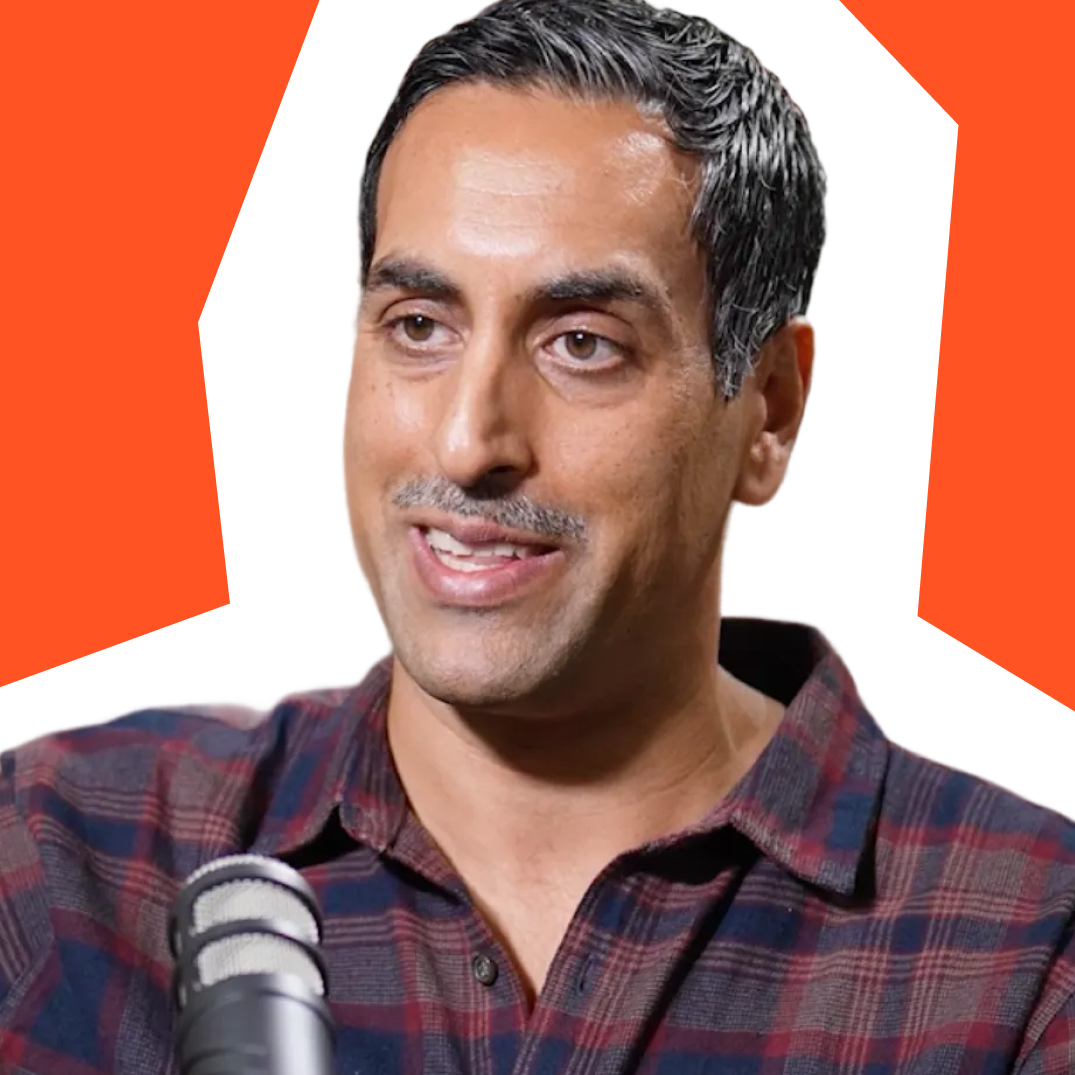


Guest appearance
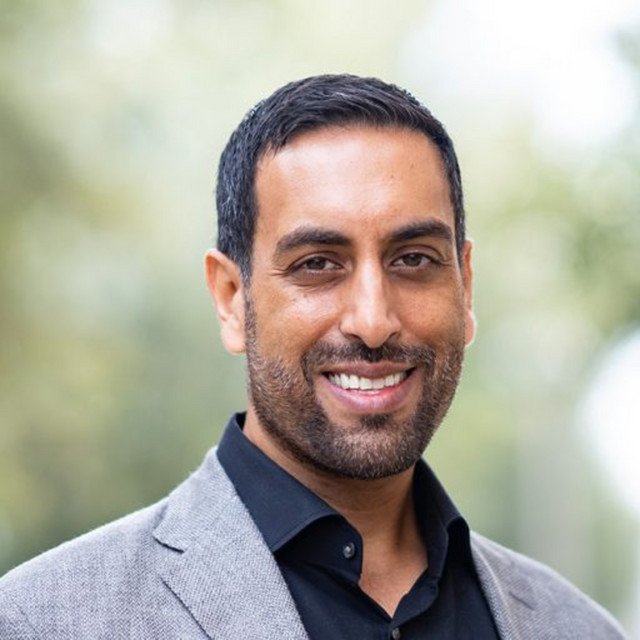
Dr. Gagan Wig holds a B.S. in Behavioral Neuroscience from the University of British Columbia (2001)[1], followed by a Ph.D. in Cognitive Neuroscience from Dartmouth College (2006)[1].
Footnotes
Episode transcript
Gagan Wig 00:00
We are in a time where there's a lot of distrust of science and then the value and the veracity of science. But at the same time, I think it's important for people to be able to ask questions and to contribute.So I like the renewed enthusiasm towards empowering people to believe that they have control over their whole health because I think that's critical and that's important for my message as well. But what I hope is that it's grounded in objective and scientifically plausible ideas that have been tested.
Mo Dhaliwal 00:44
Welcome to High Agency, igniting conversations with inspiring people, leading transformative change. Your brain isn't just aging, it's actively rewiring itself. And the way it reorganizes might predict your cognitive future decades before symptoms appear. Scientists have discovered that human brains form roughly 12 to 14 interconnected networks that operate like coordinated teams rather than isolated regions, which changes how we think about memory, attention, and the aging mind. Years ago, researchers took this discovery further by turning brain data into sound. Through a DARPA-funded project, fMRI, that is functional MRI, scans were transformed into audible patterns, allowing scientists to literally hear the difference between resilient brains and those heading toward decline. This sonic approach revealed hidden signals that visual analysis alone might miss. And that's what this area of research is all about, identifying patterns that could revolutionize our understanding of change in the brain.And perhaps most surprising is that where you live might matter more than your DNA when it comes to brain health. An NIH study tracking middle-aged adults across Dallas-Fort Worth found that socioeconomic factors were creating detectable brain signatures decades before cognitive decline, patterns that challenge long-held assumptions about genetic destiny. And today, we're joined by a scientist leading some of these breakthroughs, Dr. Guggen Wigg, who directs the Wigg Neuroimaging Lab at the Center for Vital Longevity. Dr. Wigg is the program head of cognitive neuroscience and associate professor at the University of Texas at Dallas, with appointments in the School of Behavioral and Brain Sciences and the Department of Psychiatry at UT Southwestern Medical Center. As director of the Wigg Neuroimaging Lab, he leads research, exploring brain organization and aging. Dr. Wigg earned his PhD in cognitive neuroscience from Dartmouth College and completed his postdoctoral fellowships at Harvard University and Washington University School of Medicine. Dr. Wigg, Guggen, welcome.
Gagan Wig 03:11
Thanks Mo, thanks for having me.
Mo Dhaliwal 03:13
So, how many memories can the brain hold? Some say it's four. I disagree. Care to respond?
Gagan Wig 03:23
Four is the correct answer.
Mo Dhaliwal 03:24
Perfect. Moving right along.
Gagan Wig 03:28
Do you want to answer for that?
Mo Dhaliwal 03:30
Yeah, because it's like taking a very cursory view. I'm obviously not a neuroscientist of your research and the work that you do. It's very different than, I think, maybe some of the metaphors of the brain that we've grown up understanding of thinking of it. Oh, your brain's like a computer, and your memories are like the RAM, and long-term memory is like the hard drive. And I think a lot of what you guys are doing is, changing how we even understand how the brain works. So yeah, I mean, as we think about aging and having long lifespans, yeah, let's start there. How many memories could the brain hold? Is there a limit?
Gagan Wig 04:11
Yeah. I mean, that's a great question. I think that's, you know, it's one that we don't have full understanding of. And maybe the short way of answering that is that it seems unlimited.Even as we age, we tend to lose our ability to rapidly recover memories, and we might even lose some. But we do acquire new memories as we grow older, and it seems unlimited to some extent. So the idea of holding a memory and what the capacity of that is, I don't think we have a firm grasp of that. Yeah.
Mo Dhaliwal 04:49
I think even the idea of memory being something that isn't maybe as static as we thought it was, is a little unsettling, because actually I learned from you years ago that memories are actually reconstructed every time that they're accessed, and I think for anybody that has even a little bit of an OCD tendency, right away that just seems messy and disorganized, because it's like, what do you mean? It's changing and reconstructed every time I access it.Because it is a little unsettling, right? We like to think of a lot of our perception and our reality as being static. We like to think about our childhood, our memories of our past selves as being something that we can access at any time, and knowing that we have an understanding of ourselves. But the idea that that is actually changing and it's in flux over time, I find it a little unsettling. Has it changed your appreciation of the brain, or how you think about maybe your own memories?
Gagan Wig 05:43
It has. And I understand the unease that comes with that.I think when you realize it's more of a feature than a bug, the fact that memories are reconstructed means we're able to edit them, we're able to reevaluate what might have seemed like a given experience that had a certain emotional bend to it or something that was unsettling and reevaluate that memory to give it another perspective. And that's critical, right? And that's critical over the lifespan, to be able to reevaluate memories and even reedit memories. The reconstruct of nature also allows us to imagine future selves that haven't happened yet, right? Without memories of things that had happened and being able to put them together in different ways, we wouldn't be able to imagine what's possible. So I think there are a lot of reasons why that feature is critical and allows us to be flexible and think flexibly and plan flexibly and imagine destinies that haven't happened yet.
Mo Dhaliwal 06:44
mechanisms. How does the brain decide? I'm a very nostalgic person. I like to think about what happened, these cool moments in my life. Why can I only remember certain birthdays?
Gagan Wig 06:58
Yeah, I mean, it's, it's remarkable, you know, again, you know, aspect or character of memory that seemingly, you know, the seemingly mundane things we remember with like such vividness and the things that you really want to remember, they get lost. Uh, and it's not clear why that happens.You know, there are ways to, to promote memory. If, if there's something that you really want to remember in the future, there's ways to try to improve the likelihood that that would happen, um, you know, by revisiting them, by thinking about them often, the act of retrieval really supports, uh, you know, the storage of memory, but, uh, there isn't a quick, quick solution for this, um, and any attempts to do this, you know, via like pharmacological, you know, interventions or brain stimulation, those have fallen short. Um, so it's, it's, it's a longstanding question in cognitive psychology and cognitive neuroscience more broadly.
Mo Dhaliwal 07:51
Well, I feel a little bit better now because no matter how many podcasts I listen to or how many products I've bought based on Instagram reels that I saw that were promoting, you know, neuron development or something like that, I can tell you for the past two years, I think they've had like close to little to no effect. It can improve my mental state or ability to access memory.Um, but what causes somebody to actually like study the brain? Um, I mean, it's fascinating now that you're here, uh, you obviously had a long history in cognitive neuroscience now and some very deep research in this field. Um, but what, what set you down this path in the first place? Like, was it some early childhood fascination with the brain or did you trip into it accidentally one day because you sat in the wrong class?
Gagan Wig 08:34
Yeah, I mean, I think it's more of the latter. It was much more organic. You sat in the wrong class. I sat in the wrong class. No, you know, I think my trajectory early on, I took seriously some advice that my dad had given me, just about how to pursue a career or think about what you want to do. And my dad really pushed the idea of focusing on things that you enjoy and that you excel at. So I took that to heart. And I was really young when I got that advice. And that message got reinforced several times. So even in university, I was on a particular path that was a little bit more geared towards medicine. And I got some good advice from a family friend that resonated in the same way, that ultimately you want to do something that you enjoy. And then if you enjoy something, you'll succeed at that thing. And then that opens up doorways to you. And I identified psychology as an area of interest. And the brain as an area of interest that I didn't know much about. And I ended up really enjoying studying it as an undergraduate. And things just progressed in that way. I realized I have a joy in research that wasn't being met in other areas and that this was my calling. So that's really how it started.And in terms of the exact questions of neuroscience and psychology, the brain and space are the two frontiers that it's just uncharted territory that we don't have full comprehension of. So it seems like such a rich sandbox to explore and understand and try to learn better.
Mo Dhaliwal 10:24
That's actually really interesting. I've never thought of those two things together like that, right, of like the inner world and kind of like the outer universe of the brain and the space is being, as being uncharted territories. So you say you enjoy psychology, but why? Right?I mean, I think it's cool that your dad gave you that advice. I think sometimes it can be seen as a little bit of a platitude as well of like, oh, you know, follow your passions, do what you enjoy. And there's a lot of broke artists that will tell you that sucks. But, you know, here, obviously there was an area that you had a passion in that also you were able to express some excellence at. But what was it about psychology? Like, you know, what was it early on that that actually attracted you towards it?
Gagan Wig 11:08
Yeah, you know, I think, I think, again, having, like, I think we all have an, we have, we all have a hypothesis about how the brain works, how our mind works. Right. We all have ideas about our own inner workings. Um, and we're all able to test some of those ideas sometimes, uh, and evaluate our cognitive function or sensation or perception. Um, so I think, you know, just that, that intuitive sense of, oh, this is a, an area that I, I might, I might, you know, have an intrinsic interest in. Cause I have the cognitive capacities that I'm studying. Um, and I have some insight, it might be wrong, um, but I have some insight as to how things might work and what that means is I can generate ideas and questions and hypotheses. Um, and I think that was really what kind of led me to it, uh, that there was, you know, I didn't have to, I didn't have to study a lot to have an idea about this field. Uh, so I think maybe that was, you know, is you're able to dip your toe in. I don't think we all have pet ideas about how the brain works. Uh, and just that comfort, uh, gave me an opportunity to enter the field.And then as I learned more, I realized how little we know, um, and, and how much, um, you know, there remained to be discovered. What do you mean by you didn't have to study a lot?
Mo Dhaliwal 12:19
a lot to enter this.
Gagan Wig 12:20
I mean, I think we all have ideas about how the brain works and how cognition works, so it doesn't take a lot of background knowledge to have a hypothesis about, you know, the inner workings of the mind. And they might be wrong, but it means that we have the opportunity to learn and discover once we engage in the science of it.
Mo Dhaliwal 12:39
Um, so if you were headed early on towards, um, I'd say maybe some, you know, a bit more of a classical career of like medicine, um, as you know, a young brown kid of immigrant parents, uh, I am as well, many others are, there's sometimes a lot of pressure to like fit into certain career paths, but it sounds like your family gave you a lot of latitude to do what you wanted. Maybe do what you wanted as long as it sciences, or was it literally do whatever you want?
Gagan Wig 13:08
You know, I was fortunate where it really was the emphasis was on doing something that I enjoyed that
Mo Dhaliwal 13:15
so it could have been anything it wasn't like. I think so. As long as it's sciences, do whatever.
Gagan Wig 13:20
I guess we'll never know because I pursued a path that excited me and that kind of did fit a mold of sciences. But I felt comfortable and secure in what I was pursuing and I didn't feel like I needed to uphold someone's requirement or my family's, you know, what they expected of me as long as I did well and enjoyed it and was happy. So I think having that comfort was really critical.
Mo Dhaliwal 13:51
Did your family understand what you were doing when you when you embarked on this path or was it just kind of like well You know as long as you're happy, okay, right?
Gagan Wig 13:59
to some extent. They knew I was studying the brain. They knew I was interested in science and research. My dad's an engineer, so he understood the research, the pursuit of research and the importance of it.But even to this day, it takes a little bit to really communicate what exactly we're studying. They understand we study aging and Alzheimer's disease and the way we're approaching it.
Mo Dhaliwal 14:26
Is there any additional or new urgency around studying aging in the brain? Cause I mean, it can be a pretty, like, I still find the whole field unsettling.Like I like to read about consciousness and, you know, quantum physics at a high level, uh, that almost borders on the metaphysical because it's abstract and it's far away, um, but really talking about like the gray matter of like how it's aging, how it might be declining, how it might be reorganizing as you get older and potentially even failing, like these are all very unsettling things for me. And I think, um, I, you know, perhaps just come home depressed from the lab every day if I was studying aging in the brain, but is there anything in particular that's driving this particular urgency or has it just been an area of fascination?
Gagan Wig 15:10
Yeah, that's a great question. Um, I think there are several things that make it, uh, a critical area of inquiry. Uh, you know, demographically we're, we're living longer, right? Um, the, the, the population is, is reaching ninth, eighth, ninth decades, uh, in greater and greater proportion. That's, um, largely due to, you know, the, the innovations in, in other systems of, of, of body and health, right? Cardiovascular function, immune function. Um, so our bodies are living much longer. Um, brain sciences is behind though, right? Um, we, you know, as we, as we advance in decades, we're more and more vulnerable to age-related brain disease. Uh, so there's, you know, there's this disconnect, right? Where our bodies are living longer, but, uh, what we're still vulnerable in terms of mental and neurological health, um, adverse effects of mental and neurological impairment.So that there's a pressing need to, to really better understand aging brains and, and the factors that, that, uh, minimize the deleterious effects of, of that advanced age. So that's one big one. I think the other thing is kind of relevant to what you mentioned, right? We think we tend to think of aging as a decline in cognitive function. Uh, that's, you know, stereotypical for how we think, you know, our years are going to progress, but that's not entirely true. There are a lot of ways in which we maintain our, our cognitive functions either maintain or even improves or over age. And that's, that, that's like seldom discussed, but it becomes such a critical element about aging process and understanding aging individuals because there's a major opportunity then once we acknowledge that there's an opportunity to leverage that and to promote, you know, a society where everyone can contribute in different ways and contribute their unique skills and their unique abilities, which might be age specific.
Mo Dhaliwal 17:00
I didn't think anything about the brain improved actually with age, but there's, you're saying there's areas and functions that get better over time.
Gagan Wig 17:06
Yeah. So like, you know, a classic way of thinking about it is, um, if you look at like typical cognitive measures of like memory and attention, speed of processing, right? Those are, those are like these hallmarks of cognition that do decline with age, where we're a little bit slower to respond to a stimulus or a thing in front of us or to recover a memory, to do a mental calculation. And that's the classical curve that we all think of when we think about aging, right?It lines with, you know, physical fitness, it lines with, with, with other aspects of health and wellbeing. Um, but if you look at other measures of cognition, like your world knowledge, your vocab, those things actually even increase over time, right? Um, because we continue to build those and we continue to store those. So whether these, all these ways in which our cognitive function are improving, right? We might not be able to access them as quickly or as expediently, but then they nonetheless exist and we nonetheless have access to them. Um, so I think tapping into that, right, is a critical aspect of, of understanding, uh, how to promote a society where the elderly are really reaching their full potential.
Mo Dhaliwal 18:15
Yeah, I mean, like I'm reading a lot about, um, I think maybe it's just also a function of having like an aging parent, um, like my mom's not crazy old, but you know, 71 turning 72, I think this year, uh, losing count. Um, but you know, you read these things about the gut bacteria and how diet is, um, having some sort of effect on like Alzheimer's. Uh, but there's all these other factors where I think for a long time, it was just lumped into a category to say, Oh, you're getting older. And as you get older, there's, you know, the brain starts fucking up and that was it. And now discovering that even like, yeah, things like diet have such a massive impact on it.Uh, but then there was something interesting that I was reading about, um, you know, in regards to your team's research and the work that you're doing, which was around like this zip code analysis that you guys did of the social economic factors. And you know, as somebody that has a little bit of an activist bent in me, like, you know, the socioeconomic impact on brain, like, you know, um, brain health that immediately, like, you know, I got like radicalized immediately about, Oh my God, what the hell? Um, you know, the system got us again. Uh, but can you speak to that a little bit of like, you know, what your data showed and what you're actually finding, um, in terms of the impact that your, um, geography has on, on how your brain ages over time.
Gagan Wig 19:39
Yeah, no, thanks for asking that. I think that's an important edit on thinking about this. We can describe trajectories of aging in general, but as we all know, the reality is we all differ in how we age, starting 20s and 30s into midlife, into older age. Some people start declining pretty quickly, and others seem to maintain cognitive function throughout their adult years. And others even, as I said, there's aspects where they'll improve. There's immense variability.In the same way, there's immense variability in physical strength or endurance. And so that's a reality, that there's differences. But I think the striking thing is that some of those differences are related to identifiable exposures, so environmental exposures, wherein you can see disparities in brain health that are related to socioeconomic factors, to education, to places where people live. Which tells us that there are elements of what we're being exposed to that are either creating greater vulnerabilities to paths of aging, or possibly even allowing us to remain resilient. So there's a flip side to it all as well. Thank you.
Mo Dhaliwal 20:59
Is there any sort of linear comparison where you can say, okay, there's a particular type of socioeconomic environment that has this outcome, or is it not that conclusive?
Gagan Wig 21:09
It's not that conclusive. This all rests as well on like epidemiological data. You look at dementia rates as a function of educational attainment or neighborhoods and dementia incidence is lower amongst people who have higher educational attainment. It's higher amongst individuals who are living in poverty and that's within a country but also across countries.So I think a lot of these things speak to some of the knowns that we've always thought to be a reality where access to healthcare, nutritious food, access to health services, access to time to be able to sleep and get exercise. Those things are all factors that are critical towards promoting brain health much in the same way that they're critical towards allowing you to maintain cardiovascular function or immune function. And unfortunately, there's certain communities that don't have that privilege and some of it is due to structural inequalities and kind of identifying the factors is important towards both alleviating and allowing them to overcome those challenges but also identifying the things that matter for a broader populace.
Mo Dhaliwal 22:34
Can we back up for a second here? If you cannot look back over your career, because I mean, you've had the neuroimaging lab at the Center for Longevity. Center for Vital Longevity. Center for Vital Longevity for a number of years now. But if you look back at the start of your career, was this always the sort of target, or has that evolved and shifted over time?
Gagan Wig 22:56
That's evolved and shifted as well. I entered this field with an interest in studying memory. The first question you asked was about memory. So in graduate school, I studied human memory systems and how we encode new memories, how we retrieve old memories. And in doing that, through that process, I realized that I was really interested in how memory breaks down with age.So during postdoctoral training, I studied aging memory systems, looking at older age populations. And during that time, I was doing a lot of work that's focused on localizing functions of the brain, looking at cognitive functions in the brain, and understanding how they differ between younger and older adults. And it's a very important and quintessential paradigm for cognitive neuroscience, to identify what spots of the brain support what cognitive functions and then how they differ across age groups or healthy individuals versus patients with impairments. But during that time, I also started to read a lot about an area of math and science that was referred to as network science, understanding interconnectedness of things and how important that is towards understanding large-scale systems. And the brain is a large network, as we all know. It's a network of interacting neurons. And there was teams of researchers that had started studying the brain in this very network-centric approach and learning new things about the aging brain and how it develops over time. And that just excited me. I was like, this is a way to study aging. Aging is certainly a breakdown of networks. It's not a breakdown of a particular region. It's a breakdown in how sets of regions interact because cognition, memory, attention, language, emotion, those aren't products of a region. Those are products of sets of regions. The brain is a large network. And much of those things that we think of in terms of cognition are emergent properties of that network. So to study aging then, I felt would really require an approach that leveraged that science of networks. So I transitioned to a second postdoc. And during that time, I really learned about studying networks of the brain. And that's kind of what took me off, right? I moved from there to my first faculty appointment at UT Dallas, and I've been there since then, where we've taken that framework of thinking about how to measure brain function and brain structure from this network-centric approach. And we've leveraged it to better understand age-related changes and disease and the environment. So that's...
Mo Dhaliwal 25:47
in the path. So was that like a particular like Eureka, this idea of looking at networks in terms of how the brain's aging or have that been done before and you just took it further?
Gagan Wig 25:57
No, I mean, the brain's been described as a network for, you know, for, you know, decades. And we've known that it operates in this way, right? We knew that just by looking at the anatomy, right, you know, you know, some of the early neuroscientists who studied individual neurons realized that neurons are heavily connected, right? So you have aliens of neurons that are supported and their interactions are supported by connections. So it was clear that there was a network based aspect to how, you know, how these things are, this thing's working.In human neuroscience, you know, we're limited. We weren't, we weren't able to, you know, you're not able to, you can't take a living individual and look at an isolated neuron with some exceptions. But our primary tool has been brain imaging, noninvasive imaging. And we were limited in that we couldn't look at individual neurons, but we could look at groups of neurons or areas of the brain. And so the, it wasn't, the idea wasn't a eureka, but where the innovation came was the development of tools that allowed us to study that interconnectivity across areas in living human individuals. So that's really been like the thrust of the last, you know, 15 years, not just in my lab, and lots of labs are studying development and disease. And that's been where, you know, all our innovations have come in. And it's allowed us to really also interact with other communities that we previously didn't interact with, right? And these physicists and mathematicians were studying other interconnected systems and really leverage all the things they've learned in those systems to better understand the brain.
Mo Dhaliwal 27:31
What was it in your earlier education that you think set you up for success in this field? Was there anything that specifically really set you up for success? Was there anything specifically that you had to almost unlearn as you enter these different domains and were learning to navigate the academic realm?
Gagan Wig 27:53
Yeah, that's a good question. You know, I think I'm, uh, I'm inherently curious. Um, I, I, I ask questions about everything and I want to learn more. And, uh, uh, I have this very kind of, I'm driven to just continue to explore and I'm this innate curiosity in how things work. I think that's, that's one of the key elements of, of being a scientist.Um, I enjoy working with people, groups of people, uh, and thinking about ideas and thinking about how what we're working on has relevance to broader, uh, societal and, and, and, and universal issues. Um, I enjoy seeing connections between things, right? Maybe unironically. So, you know, even now our own work on, on the brain, uh, as you mentioned, where we're not thinking about the brain anymore as this, this siloed organ of the body, but we're trying to understand how this network of, of areas and neurons interacts with other networks of, of the economy of social systems of, of, you know, um, environmental systems of, of, of other body systems. So it's really, you know, that, that, that, that idea, it kind of, it's permeated how we're approaching our science and how we're trying to link with other communities and better understand, uh, this, this organ that we're interested in.
Mo Dhaliwal 29:11
So I want to jump off the network idea, but actually, as ironic as this might sound, let's leave the brain behind for a second, because there's another type of network you have to navigate as well, which is just the professional sphere, right, of, you know, you went to school at UBC, and then Dartmouth, you did your PhD, and then where'd you go after that? It was to Harvard at Harvard, and then WashU, so we're talking about, you know, a lot of institutions that are very different spheres that likely have different academic cultures.And this isn't just, you know, you, as a scientist working by yourself. You know, it's a very Hollywood-esque picture, right, of the guy with like beakers everywhere and just in the lab by himself researching, and then there's a breakthrough. But there's people that you're working with, right? There's collaborators, there's, you know, people you're learning from, there's people you're mentoring. But what was it like navigating the professional networks of the side as you kind of moved through these different spaces?
Gagan Wig 30:13
Yeah, I've been lucky to work at some great institutions and train in great institutions. And I think I've also been lucky to train in communities that were all different from one another. So as an undergraduate, I majored in biopsychology. I was in the Department of Psychology at UBC. And my PhD and the first half of my postdoc were also in psych departments. But then I transitioned to a medical school in the Department of Neurology. And now I'm currently in a center that's a little bit more integrated across numerous units of the school. So it's not a med school, but it's also not a psych department. And I think the diversity of those experiences, where there are different cultures and different ways work and research and scientific questions are asked, that's really allowed me to think more about how I run a team and how I run a lab and what I want to accomplish. And I've been lucky in that way.I'm really thankful for that. Not only does it expose me to being able to work in different organizational frameworks, but also be exposed to people from just phenomenal backgrounds and having phenomenal skill sets and ways of thinking about this common problem. But they're all different, but all unique and critical. And that's allowed me to appreciate the importance of that diversity in thinking.
Mo Dhaliwal 31:52
I mean, looking back on it now, when you look at your experience and what you've done, it all just seems like this really gentle, long master stroke of one thing just moving from strength to strength, from one area to the next. But was there ever a time or an area where you got stuck where you went down a road and were like, oh shit, that wasn't it, and you had to back up and start over and head in a different direction?
Gagan Wig 32:16
Yeah, I think, you know, I think, um, yeah, I thought I knew what I wanted to do initially, um, in terms of studying memory systems and, uh, focusing on them and aging, um, and I, you know, I just felt that that wasn't my calling at the time, though, the way I was studying, you know, studying the brain, uh, but I wasn't sure why I felt like I was limited in the types of questions I could ask and my own creativity. Um, and that was really like a me thing, you know, because the field has moved, it moved since then.And then they're doing remarkable work. Uh, but I got really excited and inspired, uh, by this other way of thinking about brain function and brain organization. And I think it renewed my sense of enthusiasm. Uh, and, uh, it was, it was somewhat of a risky transition, right? Because I was on, I was on like an idyllic trajectory. Um, but, uh, I can feel the momentum slowing down. Uh, so I think being able to recognize that, uh, and then make a move and be able to make a move, you know, having an opportunity to make a move, uh, that was important. And that really did allow me to, um, to build a career that, that I, that I, you know, that now I'm just, uh, I'm very much immersed in and I, you know, I'm thankful because I'm, I'm excited every day about the work we're doing.
Mo Dhaliwal 33:33
Just for comparison, what was the idyllic trajectory that you were on?
Gagan Wig 33:37
in terms of like the institutions I was going to and like the, you know, it was like very quintessential cognitive neuroscience, you know, studying localization of cognitive operations and approaching the brain in this very, not a reductionist way, but trying to map functions to specific spots.
Mo Dhaliwal 33:55
So, what was the risk of going into a different or a new area at that point?
Gagan Wig 34:00
Right, because anytime you reset and have to go learn a new method, you're essentially resetting your clock in academia in some ways. When you're in that postdoctoral phase, after you've done a PhD, it's normal, especially back then it was normal to transition to a faculty appointment, but rather than taking that typical path, I identified the fact that I had this gap in my inspiration.So then going and learning a new skill set and learning a new way of thinking about the brain, that was the important inflection. That prolonged my training, so that meant I essentially doubled the post-PhD training period and that could be really risky.
Mo Dhaliwal 34:44
What did your contemporaries or your mentors at the time say? Were they generally supportive or was it any skepticism of what you were planning to do?
Gagan Wig 34:52
Again, I think I was lucky in that even the people I was working with were really supportive of me transitioning to something different. They recognized my interest in it and I think they also recognized the value of thinking about the brain in different ways. So yeah, I think, again, I'm fortunate where I didn't feel as much resistance as I certainly could have.
Mo Dhaliwal 35:16
And so I mentioned before the idea of the quintessential Hollywood image of the scientist working away in a lab by himself. You're obviously bringing a lot of people with you.So what does your lab look like today? How many people are you leading? What does it even mean to lead a lab like this? How does that work?
Gagan Wig 35:34
Yeah, you know, every lab in science looks different, right? And depending on the discipline, it could range from one person, you know, in front of a Bunsen burner to like, you know, a team, you know, a team of hundred. And even within my discipline of quantum neuroscience, there's a broad range in the number and then in the kind of the types of trainees and lab members. And I think people have different philosophies and what works for different people just varies.For me, I've really enjoyed being directly involved with all the projects in our lab, which has put, you know, what that's led to is a constraint, right? I know my capacity is for managing scientific projects. So we have, we tend to have a team that's kind of allows that, it allows me to not be spread too thin. And that's, you know, it takes, there's like, you know, active, you know, you have to actively evaluate that, like, what am I comfortable with and at what point am I going to be spreading myself too thin? So currently there's, you know, one staff scientist who, she has a PhD that she's been, we've been working together, you know, since she got her PhD. And then there's another postdoctoral trainee and then there's three PhD students and then several research assistants and that tends to be the composition of the lab. And everyone has their own projects, but we work as a team and we collaborate on all the, you know, all the, on the research we're doing. So that's the local environment. You know, the beautiful thing is that we, you know, we get to work with lots of other researchers and other institutions and through collaborations. So that, you know, it does kind of increase the social network of what we're doing. But you know, it allows us to ask lots of different questions and engage with people working in animal models and disease models. So that, you know, so we have a more of a local community that's sitting in the lab, but then in a broader scientific community that engage with.
Mo Dhaliwal 37:30
What'd you have to learn about working with people? Because I mean, it's obviously very natural to have a curiosity about your field, of course, right? There's a lot of learning that happens there. But was there anything that surprised you?Where as you were kind of progressing in your career and now not just being trained by or learning from mentors, but actually starting to become a mentor yourself and learning to actually bring people along with you. Was there any specific moments or any specific skills that you remember as having to learn as completely new? Like, oh, shit, this is different. This isn't just research anymore.
Gagan Wig 38:08
Um, well, um, I think it's, it's kind of an ever evolving, ever an evolving thing. I think I'm constantly realizing my, you know, areas after development and, uh, my strengths and trying to create some balance across, um, you know, what a leader means, you know, be it someone who's in the weeds versus someone who's more visionary versus someone who's connecting with the team socially, uh, and, uh, and just like, you know, on a personal level, um, and, uh, you know, the funny thing about academia is, is you, you train, um, your training is all about the science.
Mo Dhaliwal 38:43
Yeah, because it's so focused, but when you're in a leadership role, it's like there's a whole slew of other skills you actually need to be effective there now.
Gagan Wig 38:52
Yeah, there totally is, and we reflect on it often, especially when we're hiring new faculty. One funny example is that if you're in an academic institution, you're as a professor, and it's a research institution, typically you're getting hired based on your research, but you're also being hired to teach, yet a PhD doesn't afford you formal training typically in teaching.You're just thrown into it once you get the job, and then you have to learn how to teach, which is not trivial, and many people can't teach effectively.
Mo Dhaliwal 39:31
as a teaching function to what you're doing as well.
Gagan Wig 39:32
Sure. I teach a couple of courses a year. And that's very normal for someone at a teaching research university. I think the exceptions would be if you're in a research group that's like in a medical school where there's no teaching, but normally most academics in research universities are teaching a few courses.So there's an element of teaching, which was, it wasn't a surprise, but it was a little bit like getting thrown into this this thing that I never received formal training on. There's an element of HR, understanding how to navigate dynamics of into people and finding the right people to hire to build your team. It's not something you train in as an academic. Again, we don't wear lab coats in cognitive neuroscience, but you're typically really hunkered down from your computer and you're focusing on the data and you're just like nerding out about science. And there's quirky personalities everywhere and most scientists are pretty quirky. So now figuring out how to build a team with all these quirky personalities and accomplish this goal, this vision, that's challenging. And we make mistakes doing that because what works really well in science might not work in team science. And that's a constant learning process. Even like business management, running a research lab, you're essentially overseeing a large scientific budget or a scientific budget. You have to range from thousands to tens of millions of dollars and understanding that, the accounting and projecting into the future of what our resources need, what our resource and staff needs are going to be. You train in none of these things as you pursue your scientific degree, but you have to quickly figure it out.
Mo Dhaliwal 41:30
So that's a pretty massive section of things that you're learning on the job, basically. Is there, I mean, you mentioned science and team science, and I guess the question I was actually asking was around the team science side, right?Do you ever run into a situation where you made a bad hire or there was a personality that was maybe a little bit too quirky introduced to the team and you had to like figure out the dynamic?
Gagan Wig 41:55
Yeah, it does happen. I mean, that's, that's the reality. And you know, and it's, I think, you know, the, the funny thing is, you know, because as someone who's ultimately making the hire, right, the last say in like, who comes into the lab or who doesn't, there's a lot of ownership of like that decision, right? You have to have ownership because you're responsible.And I think that the challenge is, is recognizing when, when it's not working out. And there are, there are lots of circumstances when it doesn't work out, right? Either because there's a clash between you and that individual or the team and that individual, but it's, you know, I think it's humbling to like, because what you're ultimately doing is you're saying, because no one, everyone has the potential to succeed in, in, in, in, in, in like most things, but it, it might not be the right environment for you. For them to succeed, and it might not be the right dynamic. And then just being able to say that, okay, this, you know, this, this isn't working. And we have to, we have to, you know, figure out to transition away from, from this relationship. That's, that's, that's challenging, you know, in science, people are committing, especially if you're doing your PhD, you're committing four or five, six years. And then being able to, you know, a few years into it, being able to say like, okay, this might not be the right lab, this might not be the calling. And, you know, that's, that's difficult. And as a principal investigator, it's, it could be, it could be tough to like, you know, have that conversation, but it's a necessary conversation. And it, you know, it's important to have those conversations, just to understand like, where the person's at, and, you know, where the dynamics at.
Mo Dhaliwal 43:32
Yeah. I mean, what you're describing is what we often talk about as culture fit, right? I mean, this is like my common refrain is that you can have the best strategy in the world, but for whatever your plan is, whatever the strategy is, that's typically governing like maybe a half dozen decisions. But then culture is driving like the 10,000 decisions in between all of these moments, right? So we're constantly trying to navigate and shape our culture.What sort of culture do you think you create? Like your team that's around you now, how would they describe your leadership style if we were to ask them?
Gagan Wig 44:07
Oh, I don't know. I mean, I think we talk about it informally. I think I pride myself in being present in our lab, which, you know, again, that might seem like it should be obvious, but it's not always the case that people who are running labs are always around for everything. But I enjoy being involved.I enjoy, you know, we all sit together. I have my own office, but I tend to sit with the lab and when I can, I enjoy doing that. We do, you know, people don't have independent projects, but we work together. You know, you know, one of the aspects of our science is that we're bringing together tools and approaches that vary and that they're pretty complex. So I think it's, you know, what it requires is for everyone to recognize that they can master one technique or one approach towards studying the brain, but that ultimately they're going to have to come together as a group in order to leverage each other's strengths, you know, where other people have mastered other techniques. And I'm part of that, right? Where, you know, I know how to do certain things and even, you know, to analyze the brain in certain ways, but then there's others in the lab that have been there longer than me now that are much better at different things. So we do really kind of focus on our team oriented science. And I guess that's the major theme of like our culture, just being able to be open and humble with one another so that we can like achieve the goal.
Mo Dhaliwal 45:37
Mm-hmm. Yeah, openness is pretty huge. I also talk about this study that Google did like years ago. I think it was called Project Aristotle, where they studied like, you know, thousands of companies. And of course, Google being the massive company they are, they have so many teams, and they're always trying to figure out how to improve and how to actually, you know, get the most out of their people. And I think what they'd actually narrowed everything down to was a single factor, which was psychological safety, right? They found that, you know, many other factors, of course, will impact a team's performance. But psychological safety was the one thing that could point out time and time again, right? Are people able to open their mouths and challenge an idea or share what they're really honestly thinking and feeling? Because I think in team environments, especially like I've definitely been guilty of at times creating environments where it was like high trust, but low honesty, where people believe we're all here for the same reason, but weren't that sense of openness wasn't necessarily there.So then you kind of have like blind faith, right? Where nobody's really clear on where they're at or other people are at, but we all trust each other, right? So we're just kind of going for it. And trying to cultivate more of a sense of having trust, absolutely, but like a real open and honest environment as much as you can, and making people feel safe to actually fully express themselves, right? That's, you know, pretty, pretty huge. Um, so yeah, can I add to that? I think
Gagan Wig 47:00
That's like, that's such a critical aspect of, of, of any team. And in science, it, you know, it's, it's so inherently important for that to be part of the culture. You know, science is ever evolving, even within our lab, right? Like there's, there's, there's constant editing of our ideas based on new evidence. Um, and some of that is, is because, you know, you have hypothesis and you test it and, you know, something pans out or doesn't pan out and you edit your hypothesis or go back to, you know, go back to the basic idea. But it also happens due to errors, right? Errors in analysis and errors in, in the kind of scientific process. Um, and, and, and that's been, it's, you know, fortunately the lab, we have established a culture where we, we, um, we applaud the identification of errors and, uh, it's promoted transparency, right? And then there isn't a fear of making mistakes.Some of those mistakes can be costly, right? In terms of how much work has been put into them, right? In terms of resources. Um, and, uh, you know, one thing that I'm really proud of the lab is that they've, you know, we, we identity, you know, when we identify errors, we talk about them very openly and really quickly, uh, and, you know, and, and then the lab comes together and goes back and then it works as a team to fix those errors. And some of these things will take, you know, reprocessing data or, you know, or, you know, reevaluating the study design to begin with, and it can cost months, you know, six months, seven months. Um, but that, that, uh, that, that ability to like, um, to communicate that, I think that's, that's been really important for us and, you know, establish that early enough that, um, you know, it minimizes, you know, the likelihood of occurring over and over again.
Mo Dhaliwal 48:43
Yeah, and I imagine like in academic spaces, especially that we feel that culture of critique that I'm sure like, you know, if the name names or point anybody out, but I'm sure there's plenty of environments or maybe, you know, teens that exist where maybe the culture is a little bit more like a cupboard or an Like, have you been a part of a situation like that ever where the culture wasn't around, like, openness and transparency and psychological safety, but was maybe a little bit more, like, critical to the point of accusational?
Gagan Wig 49:23
I think that's, that's actually really common in science, right? Like the, you know, your peer review process, both at level of journal publications and grants, they're typically anonymous, right? So that creates this barrier to really allowing, you know, a place where you could have constructive criticism, right? Because there's less back and forth when you have these systems in place where there's, you know, someone submitting a document or an idea and then some critiquing it, and there's seldom opportunities to like kind of revisit and kind of revise with some exceptions.You know, one thing we, I think we've identified in our lab is that we are, we're probably our biggest, you know, we're most critical of our own work. So it takes us longer to get things out. But we really enjoy taking the time to be the biggest, you know, have the biggest critiques of our work coming from ourselves. And I think that's important. That that's allowing, you know, it allows us to kind of evaluate our assumptions and then what we're doing in ways that we might not receive from a broader community, right, because it's kind of cloaked by the process.
Mo Dhaliwal 50:35
What have you learned about yourself as a function of having to run teams and run people?
Gagan Wig 50:43
I mean, I'm pretty detail-oriented. I've learned that about myself. I think I'm a bit of a control freak. I think that's an honest reality that I'm coming to terms with and that I'm having to let go of.I think earlier on, and I don't think this is abated, but I think I was micromanaging. And I think I enjoyed micromanaging. But coming to terms with being able to let go is kind of a critical thing I'm trying to evolve into. So I've learned that about myself. I think I've learned that I really enjoy big ideas and I enjoy thinking about, I enjoy thinking about application, but I also spend a lot of time in the sandbox of what we're doing, maybe to a fault, right? Where we spend a lot of time on the science and ultimately our questions have a lot of translational value for thinking about health and longevity and aging, but we haven't really thought too much yet about how to take that step. Speaking to like, I know there's the running theme of entrepreneurship here, but that's something I still have to cultivate, right? Like how do we make that transition and think about scaling these ideas or promoting these ideas or making them accessible and deployable in a way that allows them to be leveraged in healthcare settings.
Mo Dhaliwal 52:06
Yeah, I mean, the micromanaging, that definitely resonates with me because I'm not sure if you're the same way, but I'm challenged, you know, personally in pretty much only being able to sort of function in two modes, which is either I'll walk into a room and do like the vision at 30,000 feet and tell a story, or I'm like, get the fuck out of my way, I'll do it myself. I have vastly between those two, but the idea of, you know, sharing that middle layer of knowledge and information and disseminating and collaborating and bringing people along and being a part of the team, I still struggle with it, right?
Gagan Wig 52:43
that's tough. Yeah. And then like, um, yeah. And I think like, you know, relaxing the, the judgmental, you know, when you, when you operate on those two levels, then when things don't work out, there's a lot of judgment, right?Uh, so then it's like, well, why don't I just do it then? Uh, but being, being comfortable with giving the, you know, giving, giving people the latitude to, you know, figure out their own path towards getting to that high level vision is, is important. And I think, I think, you know, we, we, we, we can have a vision of how to get that was, we have a vision of a goal and, uh, you might know how to implement it, but then we, we also tend to have this idea of how to get to that goal from the implementation. Yeah. And it's, it's easy to, to fail to recognize that there are a lot of paths to that goal and it doesn't have to be your path. And if you're giving, um, no, no, giving the opposite path, uh, but yeah, I think, and that's, that's space that, that, that those other paths are where the opportunities are too, right? That's where we might, you know, discover, you know, other goals or other, you know, other hidden factors or opportunities.
Mo Dhaliwal 53:46
Yeah, oh man, this is, um, yeah, I mean, this last part is hitting pretty hard because, um, actually just before we started recording, I was just catching up on some work and some, you know, messages from, um, from the past few weeks. And I was looking at like my tasks and our project management system and literally like the top three high priority items are all things that I don't need to be doing, but I literally just ran in and snatched away from somebody, but like, give me that, I'm going to do it. Yeah. Um, but I don't need to be doing that.Yeah. There's, there's multiple paths to get there for sure. So how are you, how are you like negotiating that, uh, on a day to day, like they, you know, are you, uh, are you reformed fully?
Gagan Wig 54:25
I'm fairly informed. I think it's a process.The funny thing is it gets reinforced outside of the lab, and I don't know which direction it's coming from. How does that? I think just in my life even, thinking about childcare and things, there's this reinforcement. I think this idea of understanding multiple rungs of the processes can allow for self-improvement in family and friendships, and even just self-care.I've come to realize that as much as I thought work was compartmentalized, it really isn't because the way I am at work might spill over into the way I am in lots of other things.
Mo Dhaliwal 55:18
Yeah, one of my favorite phrases is the way you do one thing is the way you do everything. Um, cause you know, you might not know this, but, uh, the neurons that fire together, wire together. So there's, there's that.So, um, so like getting back to your work for a second of, of, you know, the aging the brain, um, there's also this really hype machine out in the world. Right. And I mean, you guys are obviously doing really deep work, very critical. And obviously very sincere. Um, but how do you kind of negotiate that with what's happening with like the hype machine of the world with, you know, the don't die movement, Brian Johnson, and all the rest of it, um, you know, is there any amount of that like impacts you, your funding or like even the narrative around your work, or do you just kind of leave that at a distance and continue doing your thing?
Gagan Wig 56:11
Yeah, that's a good question. I'm a cynic for a lot of the hype because I think a lot of it still isn't based entirely on grounded science, but I'm also interested in it because I think there are signals out there related to some of these things. If there wasn't, there wouldn't be as much hype around them, right? There are at least some signals.But we do think a lot about some of this biohacking in terms of what that means and how that might be if there's an opportunity to better understand signals from other body systems and how they interact with the brain. You mentioned at the outset our project on midlife. I think that's another area where we're not trying to innovate necessarily in this science, but we're trying to innovate in where science asks questions. Typically studying aging meant studying older age individuals and comparing them to younger age individuals. But in older age, a lot of the things have already been set in motion in terms of disease or cognitive decline. The big question is, can we detect those things earlier? Are there factors that are predictive of older age decline that you could identify in middle age adulthood? And that might not seem surprising because that is the case for other systems of the body. You can identify risk factors for cardiovascular illness in the 30s and 40s and you can intervene on them. We go get our annual checkups and we do that. Our general physician will measure blood pressure, measure cholesterol, but what do they do for you in terms of your brain function? Nothing until intervention time. I think some really recently they asked you about mental health, your mood and your well-being. There might be a cursory question about your memory, but most of it is left to self-report. At that point, there are some follow-up tests, but it's not part of a standard battery. The reason there isn't much that's done is because we haven't identified those signals yet that we can measure to see if there's any risk factors. Part of the work we're doing is to really focus on midlife as a period, as a time to study aging because I think a lot of the things that we see downstream are set in motion in your 30s and your 40s and your 50s. There's enough plasticity where there's an opportunity to intervene at that time where you can modify your behaviors, you can modify your lifestyle, and much in the same way that you can start to slow down cardiovascular illness or illness in other domains, you can hopefully do things that will promote healthy brain aging.
Mo Dhaliwal 59:10
Is that a part of your guys' work at all? Like the communications, the advocacy side?Um, cause I mean, even just thinking of like the, you know, number of, you know, foundations and government grants and the funding that it takes to do this sort of like deep science, um, is there a type of advocacy you have to do for yourself to like communicate what you're thinking about and even some of the things you're sharing here?
Gagan Wig 59:30
Uh, to some extent, um, you know, we, we have, you know, the, the, the, the, you know, part of the messaging is to convince, uh, federal agencies and, uh, foundations that the science is worth pursuing. Um, and, and that, you know, entails, um, making a code and scientific arguments that a reviewer will read and say like, oh, there's value in this. Uh, but then in terms of, you know, promoting the, uh, you know, the findings, I think, you know, um, it's interesting because a lot of what we find in terms of maintaining brain health and cognitive function are the kinds of things that, you know, the, where the messaging has, has, has been there for a long time, right? A lot of the things that support brain health are the same things that support cardiovascular health. And unfortunately people don't want to hear it, right?They want to hear there's a pill. They want to hear there's a stimulator. They want to hear there's, there's give me an app. Um, uh, so I think, you know, this is a little bit of this, like a slow burn where it's like, well, I think the more and more that we're able to demonstrate that, okay, there's, there's, these are the factors that matter and that they're, they're pushing these signals in these specific ways, I think that would, that would allow that quanti that quantitative nature of things to really permeate the mindset, right? I think that that's why, you know, in other health systems it works, right? You see, you, you measure your cholesterol and you can see those numbers changing or, or, or, you know, your triglycerides, uh, and then you act on it, right? But with the, in the absence of those measures of those biomarkers of function, I think it's hard for us to take the messaging, right? It's hard for us to really adopt a lifestyle of, you know, promoting sleep, uh, promoting exercise, promoting socialization and, uh, mental stimulation. Uh, but having, having those markers, those measures is critical. And that's the, that's the focus of a lot of the work we're doing. And we're, we're coming at it from lots of different angles.
Mo Dhaliwal 01:01:17
Is there like a specific hypothesis or is there like any specific intuition you have where you've been trying to get a particular answer or at least try to get a particular question answered that's been like elusive to you? Like do you have a white whale of some sort?
Gagan Wig 01:01:34
Um, I think, you know, I think the more we, the more we explore, um, these measures of brain function that we're interested in, the, the more we're, we're interested in the, you know, the underlying mechanism of what's leading to the changes, uh, and, uh, and, and the more we're appreciating the limits to some of the, you know, work that we do in, in human neuroscience and that there's an, where there's a need for other model systems to better study the mechanism. Um, you know, so just, so just to kind of clarify it. So like you at the outset, you mentioned that the brain is a large network, right. And that's composed of, um, I think, I don't know if you use the word communities, but it's essentially there's, there's a modularity in the brain, much like there's modularity in other social systems and other technological systems, uh, and that modularity is critical, right? So you have sets of areas that, that contain many, many neurons and those sets of areas in the brain, um, what they allow you to do is, you know, recall the past to attend to something in your environment, right? So they, they all have functional specializations. Um, and, uh, in a, in a healthy young adult, right? There's, there's a very reasonable amount of modularity, right? Where you have, uh, tight interconnectivity amongst areas in those systems and then sparser connectivity amongst them. Right.So that the system, the brain network as a whole is interconnected, but you have these functionally specialized sets of regions that are interacting more so than they are interacting with other systems. Uh, and, and we see that in lots of other, you know, in domains, right? That's not a surprising idea, but what's, what's surprising, uh, is that as you look at healthy aging, um, that modularity decreases. So the system has become less and less segregated or independent. Um, so they start blurring. There's a lot more interactions between things that would other, otherwise be very differentiated. Uh, and, uh, we, we think that has consequences for cognition and we know what that it does based on at least correlational evidence. Um, so that a lot of the cognitive decline we see is probably because you're starting to lose that functional independence of, of things that should be. Independent. Um, so that that's been the big signal, right? And developing markers of that signal that are non-invasive, that are using imaging based technologies. Um, we also see that same signal of decline that has as having relevance to, um, predicting Alzheimer's onset. Um, we see that same measure of decline as being relevant when we look at disparities in brain health. Um, we see it relevant towards looking at people who vary in cognitive function. So it's got all these features. So, you know, there's a lot of evidence now that we've been building, other groups have been building that have been pinpointing this aspect of measuring the brain and, and now what's needed is to understand like what's causing it from a, from a cellular level.
Gagan Wig 01:04:11
Um, so that's, that's, you know, that's what we're, that's what we're exploring now to understand if there's other, uh, systems where, which we can interrogate to understand these markers.
Mo Dhaliwal 01:04:21
So we can see the change happening, but we don't know what, like the very specific drivers for that change. That's right.
Gagan Wig 01:04:30
And at a certain level, depending on your question, that might be fine, right? Because again, as a diagnostic biomarker or as a measure of function that you would want to use in a clinical setting, that might be sufficient.But then if you're interested in thinking of interventional technologies or pharmaceutics, then you need to understand the mechanism.
Mo Dhaliwal 01:04:49
What are you excited about next? Like, is there anything new that is a complete refresh area that you guys are exploring or branching out in that is exciting?
Gagan Wig 01:04:59
I mean, so one big one and relevant to, you know, the thing that I kind of alluded to is we're really excited to explore these patterns that we see in human aging in other animals and we have evidence now that some of the ways in which the brain ages in terms of its network organization is also present in mice and in marmosets or monkeys, in macaque monkeys as well. So it seems to be a very general phenomena, at least in these other mammalian systems.So I'm excited about that because therein lies an opportunity to explore other model systems in different ways and they all have different features of aging that would give us more insight. So I think that's really exciting. I think, you know, thinking even more broadly, I'm just interested in the degradation of networks and the change of networks over time. That's not limited to biological networks, you know, even thinking about synthetic networks and how synthetic networks might evolve and what that means for functioning and whether or not they show similar patterns of aging. And if we could learn about brain aging based on how other model systems work, I think that'd be exciting in terms of having some like crosstalk across these sciences.
Mo Dhaliwal 01:06:10
Is there anything on the horizon, like culturally, socially, that could derail any of this work? Like, is there, I guess the question is, like, what's the biggest risk to the knowledge creation and like science that you guys are doing right now?
Gagan Wig 01:06:25
Um, the biggest risk to knowledge creation or science, I mean...
Mo Dhaliwal 01:06:30
Like some of my politics are showing up through this question, right, is like, we're just, you know, the American situation is a little bit different than Canadian. Canadian one's not that far behind.It's like so much is governed by funding and where it flows and for what, right? And what's seen as quote unquote relevant science and what isn't. And it's so much, you know, supposed orientation towards market dynamics. So I just, I just wonder if you guys are affected by any of this, like, is there a political or social climate that can change the trajectory of your work?
Gagan Wig 01:07:05
Yeah, I mean, I think, you know, obviously we're in a unique time, maybe it's not so unique, but maybe we are in a time where there has been, there's a lot of distrust of science and then the value and the veracity of science. And I think that, you know, that has impeded, you know, federal support for funding of research. And, you know, some of the do-it-yourself science that's being done, I think that can undermine the scientific enterprise, but at the same time, I think it's important, right? It's important for people to be able to ask questions and to contribute.So, you know, I like the renewed enthusiasm towards empowering people to believe that they have control over their old health, because I think that's critical and that's important for my message as well. But, you know, what I hope is that it's grounded in objective and, you know, scientifically plausible ideas that have been tested using the scientific method. So I think that those are the two things culturally, I think that kind of, you know, they put a spin on things.
Mo Dhaliwal 01:08:22
Mm-hmm. I mean, looking back on the trajectory of your career, assuming that your memory can be trusted, is there anything you would have done differently?
Gagan Wig 01:08:35
I don't think so. I mean, I'm really thankful that I've, you know, maybe, maybe there are things that, and there are certainly things that could have done differently, but I don't have any regrets in what I've done. And I continue to enjoy what I'm doing.I have sincere joy of, you know, I enjoy getting up and going to work. I'm excited by it. And I love talking about science with friends and colleagues and the ideas that we're pursuing. So I don't regret any of the decisions. And, you know, I'm also simultaneously excited to the openness of like branching to new territories and seeing where this takes us.
Mo Dhaliwal 01:09:18
If somebody wanted to learn more about your work, where would they go?
Gagan Wig 01:09:23
I mean, there's a huge, you know, there's a huge community of excellent scientists doing work in, in aging and in the brain more broadly. Um, you know, our own work is, you know, featured on our website. Um, but, uh, you know, I think, uh, um, you know, there's obviously sources that you can, that are available online. I would just, I guess I'd recommend just, you know, scour the sources, the veracity and where they come from. And, uh, I mean, I think.
Mo Dhaliwal 01:09:49
That's a scientist's response. Yeah, I'm not about to do that. I guess the question was like, has somebody written a blog post that I can reach? That was actually the question.
Gagan Wig 01:09:58
There's a really good tweet I'll send you that pretty much summarizes everything we've done.
Mo Dhaliwal 01:10:04
Yeah, so it's the Wig neuroimaging lab at UT Dallas. And thanks for coming on, I really appreciate it.
Gagan Wig 01:10:14
Thanks for having me, I love the time of chatting with you.
Mo Dhaliwal 01:10:19
Hopefully we've given you a lot to think about that was high agency like and subscribe and we will see you next time


.png)